






Trump Pledges US Support for Iranian Protesters Amid Rising Tensions
Former President Warns Tehran Against Using Lethal Force on Demonstrators
In a significant foreign policy statement that could reshape US-Iran relations, former President Donald Trump has declared that the United States would take action to support protesters if the Iranian government employs deadly force against demonstrators. This announcement comes as waves of anti-government protests continue to sweep across the Islamic Republic, presenting one of the most serious challenges to the regime in recent years.
The former president’s comments mark a potential escalation in America’s approach toward Iran at a time when tensions between the two nations have already reached concerning levels. “We’re monitoring the situation very closely,” Trump stated during an impromptu press conference. “The Iranian people are demanding basic freedoms and accountability from their government, and the United States stands with those seeking peaceful democratic change. If the regime chooses violence against its own citizens, there will be consequences.”
Understanding Iran’s Latest Wave of Civil Unrest
The demonstrations currently unfolding across Iran represent the latest chapter in the country’s complex history of civil resistance. Unlike previous protest movements that were largely confined to urban centers, the current unrest has spread to dozens of cities and towns across the country, crossing socioeconomic, generational, and geographical boundaries. What began as localized demonstrations over economic grievances has evolved into a broader expression of discontent with the political system, corruption, and restrictions on personal freedoms.
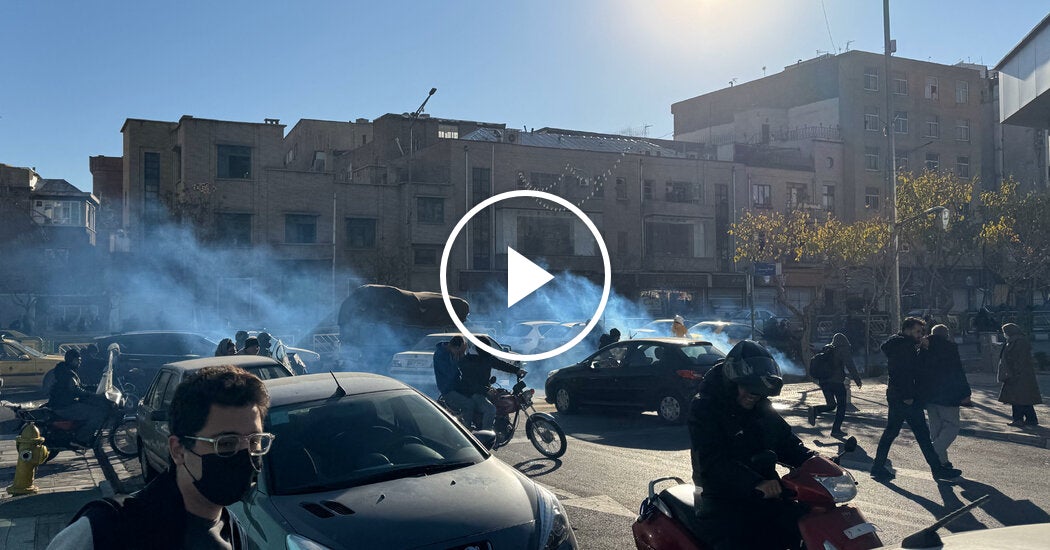
Videos circulating on social media platforms show dramatic scenes of confrontation between protesters and security forces. In one particularly striking image, smoke billows across a Tehran street filled with cars and motorcycles as pedestrians navigate the chaos. The sun shines above the city’s buildings, creating an almost surreal backdrop to the unfolding tension. Despite internet restrictions and attempts to control information flow, Iranians have managed to document these demonstrations extensively, allowing the world unprecedented real-time visibility into the situation.
Diplomatic Implications and International Response
The international community has responded with varying degrees of concern to the unfolding events. European nations have generally expressed support for the protesters’ right to peaceful assembly while urging restraint from Iranian authorities. Meanwhile, Russia and China have characterized the situation as an internal Iranian matter, warning against external interference. Regional powers like Saudi Arabia and Israel are watching developments closely, as any significant change in Iran’s domestic politics could alter the Middle East’s strategic landscape.
Human rights organizations have documented numerous cases of arbitrary detention, excessive force by security personnel, and communication blackouts aimed at disrupting protest organization. “The patterns we’re seeing are deeply troubling,” noted Sarah Leah Whitson, Executive Director of Democracy for the Arab World Now. “The Iranian authorities appear to be employing the same playbook used in previous crackdowns, but this time, the protesters seem more determined and better organized than before.” These organizations have called for international pressure to prevent a repeat of previous violent suppressions, which resulted in hundreds of casualties.
The Complex History of US Involvement in Iranian Affairs
Trump’s statement cannot be viewed in isolation from the complicated historical relationship between the United States and Iran. American involvement in Iranian politics dates back to the CIA-backed coup that overthrew democratically elected Prime Minister Mohammad Mosaddegh in 1953, an event that many Iranians still cite as evidence of American interference. The 1979 Islamic Revolution and subsequent hostage crisis at the US Embassy in Tehran severed diplomatic relations between the countries, creating a deep mutual distrust that persists today.
More recently, the Trump administration’s 2018 withdrawal from the Iran nuclear deal and implementation of “maximum pressure” sanctions significantly damaged Iran’s economy and heightened tensions. Critics argue that these policies have primarily harmed ordinary Iranians while failing to modify the regime’s behavior or nuclear ambitions. Supporters counter that the pressure campaign exposed the government’s corruption and mismanagement, contributing to the current unrest. This complex backdrop makes any US position on Iranian protests particularly sensitive, with both action and inaction carrying profound implications.
Potential Consequences and Strategic Considerations
What form American “aid” to Iranian protesters might take remains deliberately ambiguous. Previous US support for opposition movements in authoritarian states has ranged from public statements of solidarity to covert funding, technological assistance, or even military intervention. The Biden administration had generally pursued a less confrontational approach toward Iran, particularly while attempting to revive nuclear negotiations. Trump’s statement appears to signal a potential return to a more assertive posture should he regain office.
Experts caution that overt American support could be a double-edged sword for the protest movement. “External backing, especially from the United States, risks undermining the indigenous nature of these protests and playing into the regime’s narrative that they are foreign-instigated,” explains Dr. Mehrzad Boroujerdi, Director of the School of Public and International Affairs at Virginia Tech. “At the same time, international attention can sometimes provide a measure of protection by raising the political cost of violent crackdowns.” Iranian authorities have consistently blamed foreign “enemies” for domestic unrest, with particular focus on the United States, Israel, and Saudi Arabia.
The Path Forward: Balancing Support and Sovereignty
As smoke continues to rise over Iranian cities and the standoff between protesters and authorities intensifies, the international community faces difficult questions about how to respond. The United States must balance its stated commitment to human rights and democratic values with respect for sovereignty and the complicated dynamics of intervention. Whatever approach prevails will likely have lasting consequences for US-Iran relations, regional stability, and the Iranian people themselves.
The protesters, meanwhile, continue to demonstrate remarkable courage in the face of significant risk. Their demands—which include greater political freedom, economic opportunity, and social liberalization—reflect universal aspirations that transcend geopolitical rivalries. Whether they achieve meaningful change will depend on numerous factors, including the cohesion of the protest movement, the response of security forces, potential divisions within the regime, and the stance of international powers like the United States. As one young demonstrator told journalists via encrypted messaging: “We know the path forward is dangerous, but remaining silent has become more dangerous than speaking out.”