





Tragedy in the Snowy Backcountry: A Fatal Avalanche in Washington’s Mountains
A serene winter afternoon in Washington state’s backcountry turned tragic when an avalanche claimed the lives of two snowmobilers and left two others fighting for survival. On that fateful Friday around 4 p.m., four friends—Paul Markoff, 38, Erik Henne, 43, Ian Laing, and Patrick Leslie—were enjoying the pristine snow near Longs Pass, a popular spot nestled within the Okanogan-Wenatchee National Forest. Without warning, the mountain unleashed its fury, sending a wall of snow crashing down upon them. In an instant, what had been a day of adventure became a desperate struggle against nature’s overwhelming power. The remote location, while beautiful in its isolation, would prove to be both a challenge for the survivors and the rescue teams who would risk their own safety to respond to this emergency in the wilderness.
When the snow settled, Laing and Leslie found themselves in a desperate situation—stranded in the deep backcountry with their two friends buried in the avalanche debris. In a testament to modern technology’s life-saving potential, they managed to send a distress call using a Garmin satellite device, alerting authorities to their dire circumstances. This critical communication set in motion a challenging rescue operation. First responders, equipped with snowmobiles and specialized winter backcountry gear, navigated the treacherous terrain to reach the survivors. One of the rescued men had been partially buried in the avalanche and sustained injuries that required immediate attention. Despite the fading daylight and hazardous conditions, the rescue teams successfully transported both survivors out of the backcountry that evening, providing them with the medical care they desperately needed after their harrowing ordeal.
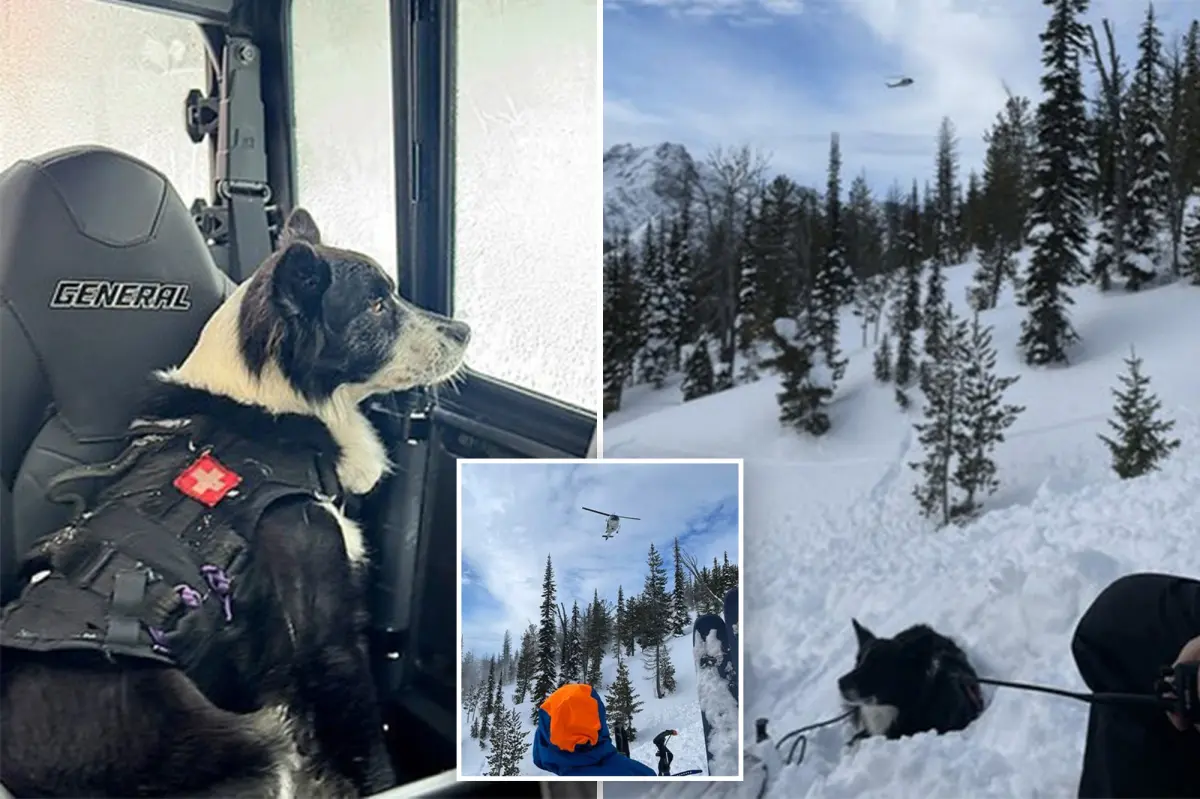
The recovery operation for Markoff and Henne proved even more challenging, highlighting the dangers that both avalanche victims and rescuers face in these remote wilderness settings. As darkness fell and conditions worsened, officials made the difficult but necessary decision to suspend recovery operations overnight, prioritizing the safety of the rescue teams. The following morning, rescuers returned to the scene with three specialized avalanche search dogs, whose training and keen senses would prove invaluable in locating the buried snowmobilers. The terrain was so rugged and remote that rescue teams eventually had to request air support to complete their mission. The investigation revealed the desperate final moments: one victim had been partially buried, and his surviving friends had frantically tried to dig him out before help arrived. The second man was discovered about four feet beneath the snow by one of the K-9 units, a sobering reminder of an avalanche’s crushing power. Along with the victims, rescuers also recovered the group’s personal belongings and two snowmobiles—silent testaments to the adventure that had ended in tragedy.
Behind the statistics of this tragedy lie the human stories of four friends whose love of adventure brought them to the mountains that day. Paul Markoff and Erik Henne were not just names in a news report—they were fathers, sons, friends, and community members whose lives were cut short doing what they loved. The survivors, Ian Laing and Patrick Leslie, now face the difficult journey of physical and emotional recovery, carrying with them not only their injuries but also the memories of friends lost and their own brush with mortality. In their official statement, the Kittitas County Sheriff’s Office and Kittitas County Search and Rescue extended heartfelt condolences to the families and friends of those lost, acknowledging the ripple effect of grief that spreads through communities after such a tragedy. These simple words recognize the profound human impact that extends far beyond the snow-covered mountainside, touching the lives of everyone who knew and loved the victims.
The Northwest Avalanche Center, a nonprofit organization partnered with the US Forest Service that provides avalanche forecasting and safety education throughout Washington and northern Oregon, sent investigators to the scene to analyze what caused this fatal snow slide. Their expertise helps build understanding of avalanche patterns and contributes to safety education that may prevent future tragedies. In their own Facebook statement, they expressed that their “hearts go out to the family, friends, and community of those involved in this accident,” acknowledging the human toll behind the technical analysis. The investigation into this incident will likely examine multiple factors, including recent weather patterns, snow pack stability, terrain features, and human decisions that might have contributed to this deadly outcome. This knowledge, though it cannot bring back those lost, may help save others through improved understanding of avalanche risks and behaviors.
The environmental context surrounding this tragedy reveals how quickly conditions can turn dangerous in mountain environments. In the week leading up to the incident, heavy mountain snow had blanketed Washington state, with the National Weather Service reporting accumulations of up to 27 inches at nearby Snoqualmie Pass in the same national forest. Just a day before the avalanche, on January 10th, meteorologists had issued warnings about additional snowfall and rain expected across the region—conditions that can significantly increase avalanche danger by adding weight and instability to existing snow packs. These weather patterns created the perfect storm of conditions for avalanche activity: substantial new snow accumulation on top of existing layers, combined with changing temperatures and moisture levels that can weaken bonds between snow layers. This tragic incident serves as a powerful reminder of both the beauty and danger of wilderness recreation in winter, where conditions can change rapidly and even experienced outdoorspeople may find themselves facing nature’s overwhelming force. As communities mourn the lost snowmobilers, many will also reflect on the precarious balance between enjoying the backcountry’s freedom and respecting its inherent risks.