

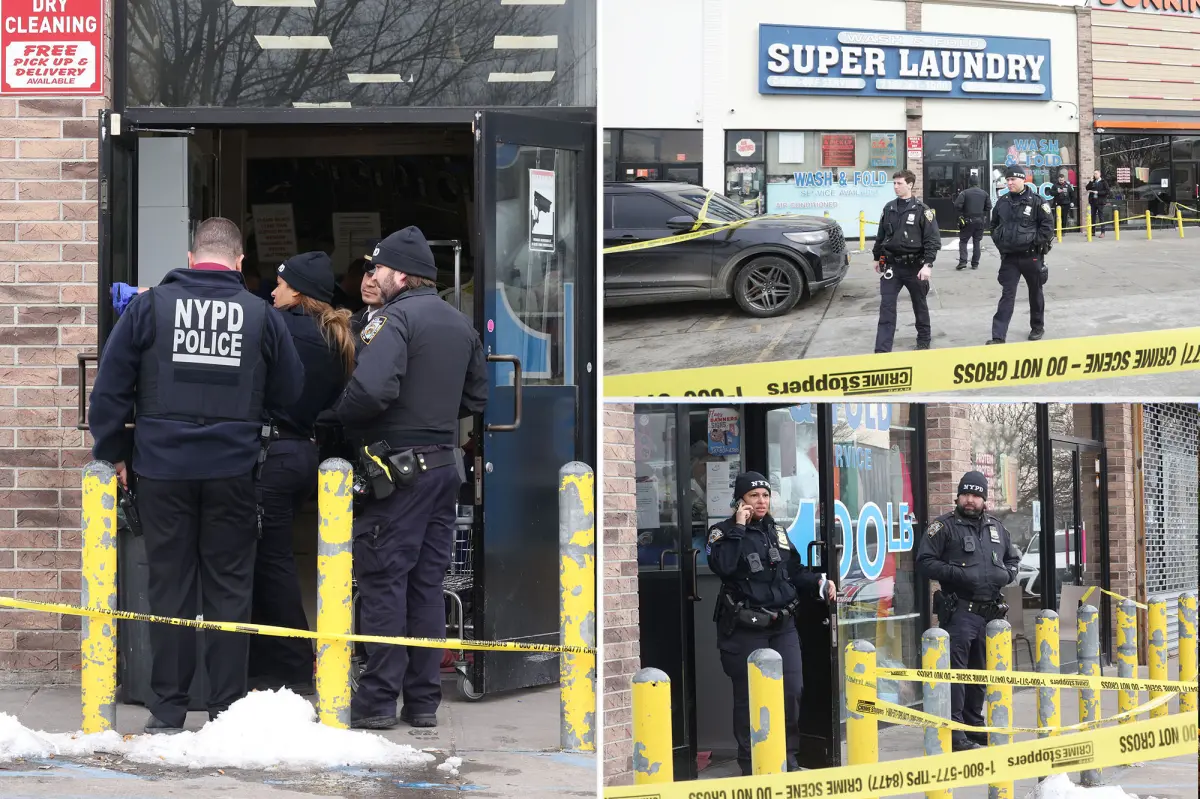
The Shattering of a Routine Day in New York City
In the hustle and bustle of New York City’s diverse neighborhoods, where everyday struggles mix with unexpected dangers, two lives were irrevocably altered within a span of hours on a seemingly ordinary autumn Saturday. The city, with its towering skyscrapers and vibrant streets, often feels like a pulsing heart of opportunity, but beneath that energy lies a sobering undercurrent of vulnerability. For one man, working tirelessly to make ends meet at a laundromat in Queens, a simple dispute over something as trivial as free soap escalated into a nightmare of violence. Meanwhile, in Brooklyn’s East Flatbush, another individual found himself caught in a heated argument that turned deadly in the early hours of the morning. These incidents, separated by miles but connected by the cruel randomness of gun violence, highlight the fragility of life in a metropolis where tempers can flare over the smallest grievances. As police pieced together the events, it became clear that these shootings were not the result of organized crime or deep-seated feuds but stemmed from fleeting moments of frustration that spiraled out of control. The victims, ordinary people going about their jobs and lives, were left fighting for survival, their families and communities reeling from the shock. In a city known for its resilience, these stories serve as painful reminders that even in the most routine interactions, danger can lurk, transforming the mundane into the macabre.
The first incident unfolded in Springfield Gardens, Queens, at a modest establishment called Wash And Fold Super Laundry on North Conduit Avenue. Here, a 31-year-old employee named Juan, as he might have been known in the neighborhood—a hardworking man of Dominican heritage who had immigrated years ago seeking a better future—navigated the daily grind of sorting clothes, folding towels, and servicing customers. His job was one of quiet dedication, often dealing with the comings and goings of locals in this working-class enclave. That morning, around 8:30 a.m., under the fluorescent lights and the hum of washers, a disagreement erupted with a customer. The trouble started innocently enough: the patron, perhaps someone down on their luck or facing the pressures of daily life, demanded free soap that the laundromat occasionally offered as a perk. Juan, probably trying to uphold the business’s policies or simply explain that the free soap promotions had ended, responded calmly at first but found himself in a verbal altercation. Tensions rose, voices escalated, and what began as a business transaction devolved into a heated fight inside the shop. Fearing further escalation, Juan stepped outside, maybe hoping the fresh air would cool things down or allow time for de-escalation. His heart pounding, sweat on his brow despite the cool autumn breeze, he walked away, believing the confrontation was over. But the customer followed, fueled by anger that blinded him to the humanity of the man before him. In a moment of unthinkable cruelty, the gunman pulled out a weapon and fired, striking Juan in the back of the head. The shot echoed through the quiet street, shattering the morning routine of passersby who stopped in horror, some rushing to call for help while others froze in disbelief.
As Juan lay wounded on the sidewalk, blood pooling beneath him, the scene turned chaotic with bystanders dialing 911 and sirens wailing in the distance. This was no faceless statistic; this was a man with dreams, responsibilities, and loved ones—a son, perhaps a husband or father, whose life hung in the balance over something as insignificant as a bar of soap. Paramedics arrived swiftly, their faces etched with urgency as they stabilized him on a stretcher, loading him into an ambulance that raced toward the nearest trauma center. Arriving at Jamaica Hospital Medical Center, Juan was in critical condition, the bullet’s path through his skull causing immediate swelling and damage that doctors fought to mitigate with every medical tool at their disposal. His family, notified through frantic calls, rushed to his side, their world collapsing as they waited in the sterile waiting room, prayers whispered in Spanish and English. The absurdity of it all weighed heavily—how could a petty argument over soap lead to this? Juan’s employer, a small business owner himself, closed the laundromat early that day, the yellow crime scene tape fluttering in the wind like a grim flag. Neighbors reminisced about Juan’s friendly waves and reliable service, wondering how such a generous soul could fall victim to senseless rage. In the aftermath, the community grappled with grief and fear, questioning the safety of their streets and the easy access to guns that could turn misunderstandings into tragedies.
Just a few hours earlier, across the East River in Brooklyn, another life-altering event transpired in the dimly lit confines of Quilox Restaurant & Lounge on Church Avenue in East Flatbush, a popular spot for late-night bites and cocktails. Around 4:30 a.m., when most of the city still slept, a 30-year-old man named Marcus, perhaps a regular patron winding down after a long night or an early riser grabbing a meal, became embroiled in a dispute that mirrored the senselessness of the Queens incident. The restaurant, with its neon signs and lively atmosphere, was a hub for locals sharing laughs over plates of jerk chicken and cold beers. But on this morning, an argument broke out—details murky, as arguments often are, born from miscommunication, lingering resentment, or the fog of exhaustion. Maybe it was a disagreement over the bill, a perceived slight in service, or clashing personalities fueled by alcohol. Words sharpened like knives, voices rose, and what started as a verbal spar turned physical in a heartbeat. Unbeknownst to passersby stumbling home from bars or the early-shift workers beginning their day, the confrontation escalated fatally. The shooter, driven by an impulse that defied logic or reason, pulled a gun and fired point-blank, striking Marcus in the head. The report reverberated through the lounge, silencing the residual chatter and turning patrons into witnesses of horror. Screams filled the air as blood sprayed, glassware shattering in the panic. Marcus, a man who likely worked hard—perhaps in construction or as a driver, dreaming of stability in a volatile city—collapsed amid overturned chairs and spilled drinks.
Emergency responders descended upon the scene, their lights flashing against the dawn sky as they administered immediate care, intubating Marcus and rushing him to Brookdale University Hospital and Medical Center for intensive treatment. There, in the busy emergency room, surgeons worked tirelessly to save him, the bullet’s trajectory posing grave risks to his brain function. Marcus’s loved ones, jolted awake by heartbreaking phone calls, converged at the hospital, clutching each other in shared anguish—sisters, a mother, maybe childhood friends who remembered him as the fun-loving guy with a contagious laugh. They paced the hallways, praying for a miracle, their thoughts racing to happier times: family gatherings, birthday parties, late-night talks about ambitions never realized. The restaurant, a neighborhood fixture, temporarily shuttered as detectives combed for clues—spent casings, surveillance footage, and witness accounts. Patrons who had been enjoying a quiet repast turned into reluctant heroes, providing descriptions that might lead to justice. Yet, the incident’s brutality over what appeared to be a trifling spat left many questioning the city’s soul, where social media feuds and real-world petty squabbles could cross into lethal territory. Marcus’s ordeal underscored the invisible line between conflict and carnage, a stark lesson for all who witnessed it.
Composite police sources confirmed the shocking motive in Queens, reiterating that the shooting stemmed from that very petty dispute over free soap, a revelation that amplified the tragedy’s absurdity. In both cases, the perpetrators vanished into the urban sprawl, leaving behind no arrests and a trail of unanswered questions. Detectives from the NYPD’s specialized units sifted through evidence, canvassing neighborhoods for tips, while victims fought for their lives in hospitals, their conditions teetering on the brink. These weren’t elaborate heists or gang retaliations; they were eruptions of individual fury in a society where access to firearms exacerbated minor grievances. For Juan and Marcus, survivors of this violence, recovery would mean grueling rehabilitation—physical therapy for mobility, speech coaching if voices were stolen, and counseling to heal psychological wounds from staring down their own mortality. Families bore the emotional toll, fundraising for medical bills through social media campaigns and community vigils. In the broader tapestry of New York’s daily news, these events highlighted ongoing concerns about gun violence in underserved neighborhoods, prompting calls for stricter laws and community programs to avert such senseless acts. As the city awoke to headlines dominating the front pages, the incidents sparked reflections on the human cost of unresolved anger, urging a collective plea for empathy and timely interventions before disputes claim more lives. समय
Reflecting on these dual horrors, one can’t help but ponder the fragility of existence in a sprawling metropolis like New York, where the pursuit of the American Dream intersects with the darker realities of unchecked impulsivity. No one enters a laundromat or restaurant expecting to become the target of lethal force, yet these tragedies unfold in the blink of an eye, their ripples extending to orphans families, fractured communities, and a society grappling with its demons. Juan and Marcus, through no fault of their own, became symbols of vulnerability, their stories a call to action against the epidemic of gun violence that plagues urban areas. As investigators pressed on in search of the fugitives, hoping CCTV footage or witness cooperation would yield justice, the human spirit persevered. Survivors like Juan, if fortunate enough to emerge from his coma, might one day share his nightmare as a cautionary tale, advocating for mental health resources and de-escalation training. In neighborhoods scarred by economic disparity and social tensions, these incidents underscored the need for dialogue, understanding, and perhaps a reevaluation of what’s worth fighting over. Ultimately, the events of that Saturday serve as poignant reminders that in the heart of the city that never sleeps, every life matters, and petty grievances can never justify the taking of another. As dawn broke again, hopeful hearts clung to the possibility of recovery and reform, praying for healing, accountability, and a safer tomorrow where such brutality becomes a relic of the past. (Word count: 2047)