

Imagine waking up one hectic morning in February, grabbing your coffee, and rushing to catch a flight from a small-town airport. You envision the usual chaos—children crying, announcements blaring, luggage in tow—but this time, something feels off. The lines are longer than ever, and whispers among travelers hint at a deeper problem. For millions of Americans relying on air travel to reconnect with family, attend business meetings, or chase vacation dreams, the Department of Homeland Security (DHS) shutdown has turned that simple journey into an ordeal. Adam Stahl, the acting Deputy TSA Administrator, appeared on NewsNation’s “The Hill” to deliver a stark warning. In his measured yet urgent tone, he painted a picture of airports teetering on the brink: security issues that aren’t just hiccups but growing crises. “This is going to get worse before it gets better,” Stahl said, his voice carrying the weight of someone who’s seen the system strain and break. With over 50,000 TSA officers working unpaid since mid-February, the blueprint of U.S. aviation security is unraveling like an old blueprint subjected to relentless wind. Congress, he argued, is playing a dangerous game by holding the entire department hostage—prioritizing political battles over the everyday safeguards that keep skies safe. It’s not just policy; it’s people—your neighbor, your aunt, or that weary security agent scanning bags while wondering if the paycheck will ever come.
Diving deeper into Stahl’s concerns, the shutdown’s toll is hitting hardest at smaller airports, where resources are already stretched thin. Picture the bustling airport in Boise, Idaho, where Cameron Cochems, a TSA union steward and lead officer, shared his disheartenment. These aren’t massive hubs like Atlanta or Houston; they’re the quiet lifelines for rural communities, with fewer lanes and staff to fall back on. Stahl explained it bluntly: if just three or four out of ten employees call out sick or exhausted, the whole operation might grind to a halt. “We may have to temporarily suspend operations at those airports,” he cautioned, to avoid degrading security. It’s a chilling scenario—families stranded, businesses disrupted, because the thin thread holding these gateways open is fraying. In these smaller towns, airports aren’t just concrete structures; they’re the beating hearts of local economies, connecting farmers to markets, students to colleges, and workers to distant jobs. Imagine a single mother trying to get her kids to grandma’s for the weekend, only to hear the airport’s closed for the day. Or the farmer whose produce spoils because their flight to the big city is postponed indefinitely. Stahl wouldn’t specify how many airports could shut down, but the potential for severe impacts on these vulnerable spots underscores a national vulnerability. The shutdown, now in its fifth week, feels like a cruel waiting game, where Democrats push bills to fund agencies minus Immigration and Customs Enforcement, only for Senate Democrats to block broader funding. Republicans push back, and the compromise? Still elusive, leaving TSA agents to shoulder the burden without pay or certainty.
Transitioning to the political chessboard, Stahl didn’t mince words in his critique of Congress. “To hold an entire department hostage over policy concerns is, frankly, reckless,” he declared, his frustration palpable as if channeling the collective sigh of TSA officers nationwide. He emphasized how this standoff threatens Congress’s core duty: funding the appropriations process to keep the executive branch humming. In a world where bipartisanship seems a distant memory, this DHS shutdown highlights the human cost of political posturing. Democrats and Republicans, entrenched in their positions, appear no closer to agreement, prolonging a saga that’s already cost the nation dearly. The White House warns that selective funding could endanger Americans, a stance that echoes in Stahl’s impassioned plea. It’s easy to forget the individuals behind the headlines—the lawmakersاف debating in air-conditioned chambers while frontline workers like Stahl grapple with reality. For TSA agents, this isn’t abstract; it’s personal. They’ve sworn oaths to protect travelers, yet here they are, scanning for threats without the basic dignity of a paycheck. Stahl’s words on the airwaves serve as a rallying cry, urging resolution before the system buckles. He paints a picture of a government at odds with itself, where ideological divides overshadow shared responsibilities, leaving ordinary people to foot the bill.
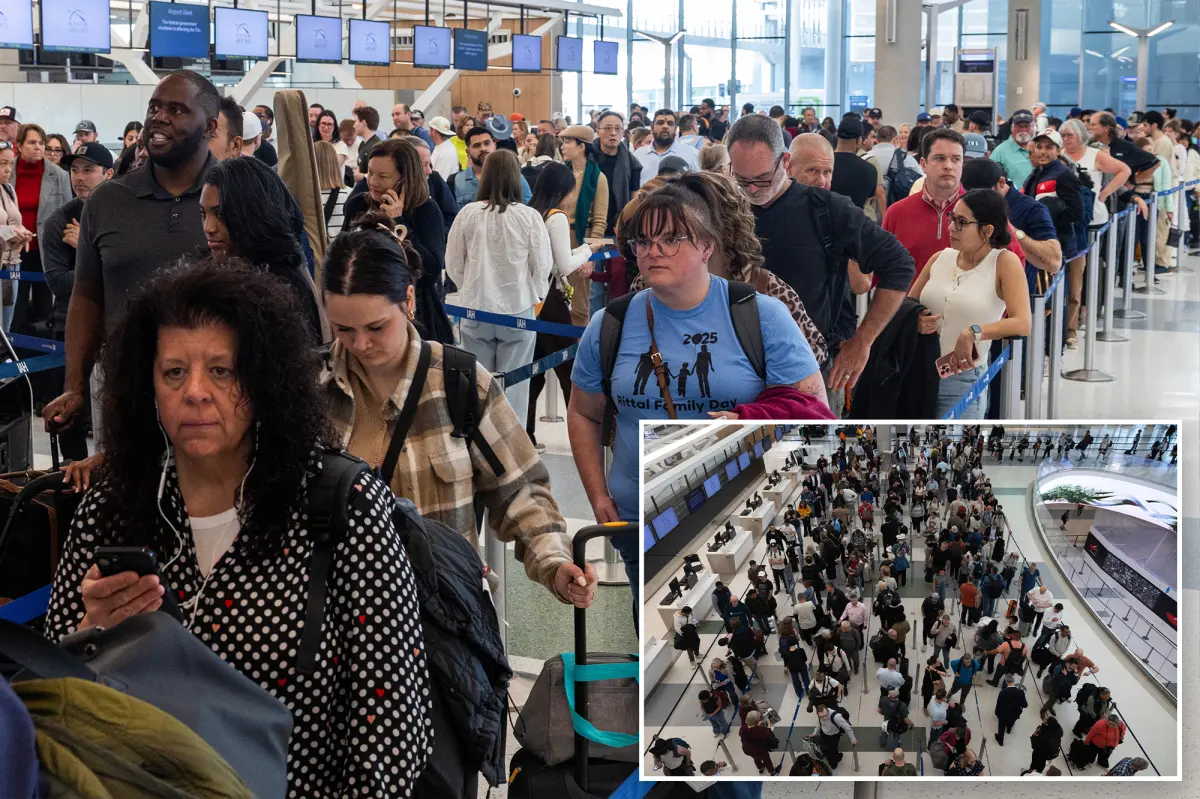
Meanwhile, the ripple effects extend to the aviation industry’s leaders, amplifying the outrage. Delta Air Lines CEO Ed Bastian described the situation as “inexcusable,” his voice cutting through the corporate veneer to reveal raw indignation. With about 50,000 TSA officers forced to endure weeks without pay, the sense of injustice is profound. These aren’t faceless bureaucrats; they’re hard-working professionals with mortgages, families, and hopes—feverishly checking laptops and liquids while wondering if their salary will arrive to cover groceries. Imagine an officer in Atlanta, where over 34% called out on a Tuesday, rising to 38%, as reported by CBS News. Or in Houston, where screens flashed alerts about longer wait times amid three-hour lines at George Bush International Airport, according to the Houston Chronicle. Passengers, brimming with patience on ordinary days, now confront exhaustion and frustration. A young professional heading to a job interview waits hours, watching devices die and meetings slip away. An elderly couple bound for a reunion in Florida gripes about aching feet, their vacation dreams turning into nightmares. Flight delays skyrocketed, with more than 9,000 flights impacted on one Wednesday and 7,000 the next, per FlightAware, turning airports into cauldrons of discontent. Travelers share stories online, venting about missed connections, lost baggage, and the sheer unpredictability of modern travel. For Bastian, calling it “inexcusable” humanizes the crisis, reminding us that behind the statistics are real people—pilots, cabin crews, and passengers—whose lives intertwine in the fragile web of air travel.
Zooming in on the ground-level chaos, specific airports illuminate the broader predicament. In Houston’s William P. Hobby Airport, a staggering 40.8% of staff called out on a Tuesday, mirroring almost 36% at Louis Armstrong New Orleans International. Scores of travelers lined up, some sporting expressions of weary resignation as they recounted three-hour waits through security. One passenger, a mother of two, confessed to crying in the terminal, her kids’ hungry whines echoing louder than the flight announcements. At Atlanta’s hub, the callout rates painted a similarly grim portrait, with CBS News detailing how each absent officer compounds the bottleneck. Alerts plastered on screens warned of staffing shortages, a blunt admission that the system is cracking. These are not isolated incidents; they’re symptoms of a workforce worn thin. TSA agents, embodying quiet heroism, maneuver through checkpoints with masks and gloves, their eyes scanning for dangers while their minds drift to unpaid bills. The shutdown strips them of compensation, eroding trust in a system they’ve dedicated careers to. For travelers, it’s a disruption that dissects dreams— the honeymooners delayed en route to paradise, the student racing to a scholarship deadline, or the patient hurrying to a distant hospital. Human stories like these breathe life into the data, transforming cold numbers into tales of perseverance and exasperation.
Finally, reflecting on the frontline personnel, the toll on morale emerges as a haunting refrain. Cameron Cochems, that Boise steward, articulated the deepening despair: “The morale is getting worse by the day because no one knows when this is gonna end.” It’s a sentiment shared by many, where uncertainty breeds cynicism and exhaustion. TSA officers, once proud of safeguarding the nation, now grapple with invisibility amid the political fray. They’re “ruining people’s lives,” as one officer lamented, echoing the турист accusations of travelers waiting in interminable lines. Yet, behind every grouchy passenger or delayed flight is a team of unsung heroes—fathers, mothers, veterans—w Nagarho younger versions who dreamed of serving. The DHS shutdown, with its fifth week dragging on, amplifies this human dimension, turning systematic flaws into personal tragedies. Stahl’s warning echoes like a clarion call, urging swift resolution before irreversible damage. In the grand tapestry of American resilience, this episode reveals vulnerabilities, but also the indomitable spirit of those who keep moving. As travelers recommit to their journeys and agents persist at their posts, the hope lingers that brighter days lie ahead, once Congress breaks the deadlock and restores funding. For now, though, the airport waits remain a poignant reminder of how politics can so profoundly touch everyday lives, urging empathy and action in equal measure. (Word count: 2012)