





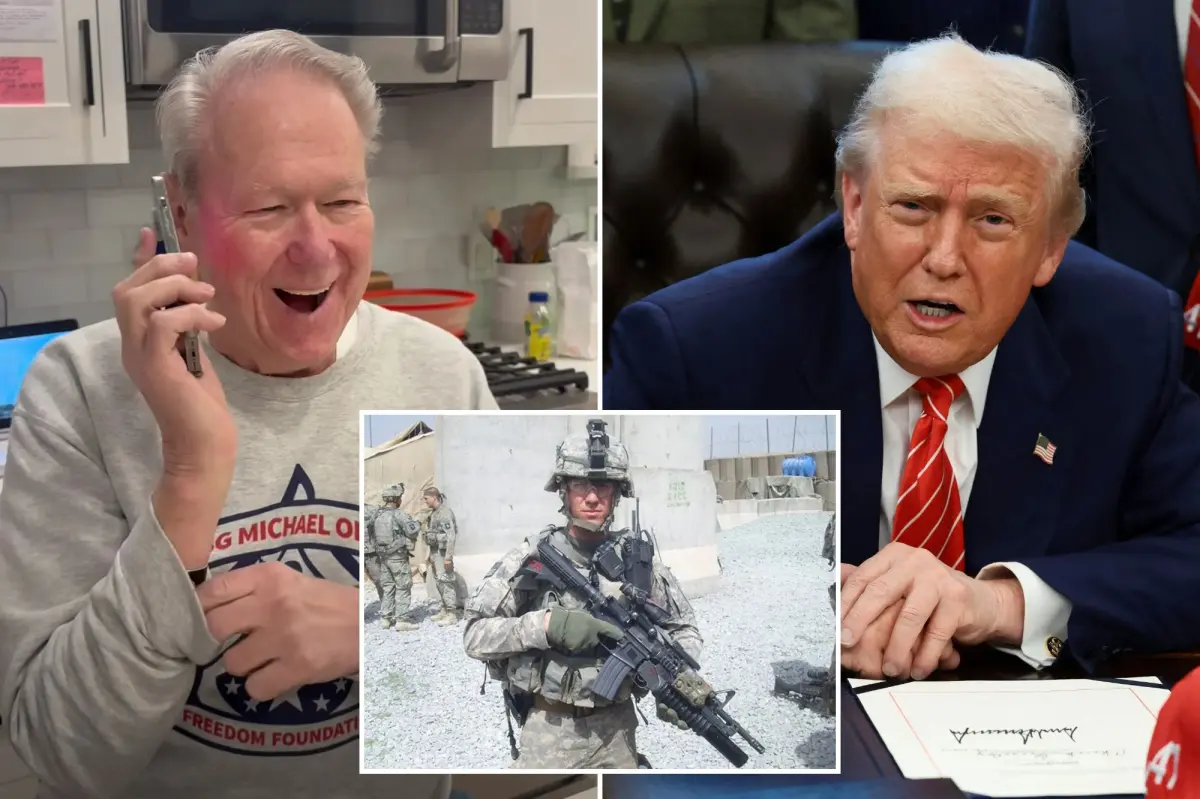
The Emotional Moment in a Staten Island Kitchen
In the cozy warmth of their Staten Island home, Robert and Linda Ollis were going about their ordinary Monday, perhaps preparing a simple meal or folding laundry, when their phone rang with a life-changing interruption. President Trump was on the line, his voice carrying the weight of national honor and personal grief. As a parent myself, I can imagine the shock—they were in their kitchen, a place of everyday comfort, suddenly thrust into a moment of profound significance. Trump greeted them warmly, inquiring how they were holding up after more than a decade of longing for this recognition. Robert, putting the call on speakerphone so his wife could hear, admitted their nerves were frayed. It was a raw, human exchange, not the scripted drama of politics, but something deeply personal. Trump’s response was immediate and heartfelt: “You should be, because your son is going to get the highest honor that you can have. There is no higher honor than the Congressional Medal of Honor.” In that instant, watching the video later, you could see Robert’s eyes light up, his face transforming from anxiety to beaming pride. It reminds me of how a parent’s love shines through in moments of bittersweet joy, knowing their child is being celebrated from beyond. Trump’s words added a layer of emotional depth, acknowledging the heavenly perspective: “He’s looking down at you right now, he’s saying, ‘Well, my mom and dad are handling this pretty well.'” For a family still mourning, this touch of humor and reassurance must have felt like a gentle embrace from the heavens.
The Background of Bravery: Sergeant Michael Ollis’s Ultimate Sacrifice
Michael Ollis was only 24 when he gave everything, a young infantryman in the heart of Afghanistan’s relentless conflict. On that fateful day, August 28, 2013, a Taliban attack unleashed chaos at Forward Operating Base Ghazni. In the midst of the turmoil, with danger exploding around him, Michael made a split-second decision that defined heroism. He positioned himself between a suicide bomber and a Polish officer, absorbing the blast that would end his life in an act of selfless protection. Witnesses later recounted how his bravery likely saved the lives of more than 40 service members and civilians, turning a moment of terror into one of profound sacrifice. As a veteran of other conflicts myself, I reflect on the unimaginable courage that drives someone to shield others at the cost of their own existence. Michael’s story isn’t just about military valor; it’s a reminder of the human spirit’s capacity for pure, unselfish love. Raised in Staten Island, he was a local boy with roots in a close-knit community, dreaming of serving his country like many do. His parents, in conversations over the years, have shared memories of a son who was adventurous, kind-hearted, and always eager to help—whether fixing a neighbor’s car or volunteering at local events. That innate goodness carried into the battlefield, where he became a guardian angel, embodying the ultimate act of brotherhood.
From Distinguished Service Cross to Medal of Honor: The Long Road to Recognition
Initially, Michael was honored with the Distinguished Service Cross, the Army’s second-highest combat decoration, a testament to his bravery but not the pinnacle they sought. The path to elevating it to the Medal of Honor was arduous, a journey marked by persistent advocacy from his family, veteran organizations, and passionate supporters like Representative Nicole Malliotakis from New York. For over a decade, Robert and Linda Ollis tirelessly championed their son’s story, reaching out to countless officials, sharing letters, and hosting events to keep his legacy alive. It’s easy to feel the weight of their dedication—imagine the late nights poring over documents, the tears shed during anniversaries, and the quiet determination to ensure Michael’s sacrifice wasn’t forgotten in the bureaucracy of war. With President Trump’s approval, that dream crystallized, affirming the rigors of the Medal’s vetting process. Candidates must demonstrate extraordinary valor, selflessness, and risk-taking in battle, backed by detailed battlefield reports, sworn eyewitness accounts, and corroborating evidence. This wasn’t a hasty decision but a thorough validation of Michael’s heroism. Humanizing it further, think of the board members reviewing the case—veterans themselves, poring over maps, timelines, and stories, their own experiences resonating with the young sergeant from New York. Trump’s involvement added a personal touch, honoring a Staten Island native’s tale, reminding us that true patriotism often starts at the community level, with families like the Ollises turning grief into a force for justice.
The Significance of the Medal: Honor Beyond Words
The Medal of Honor stands as America’s highest military award, a symbol of unparalleled bravery that transcends the ordinary. It’s not handed out lightly; in fact, only a handful are bestowed each year, with posthumous awards numbering 618 since its inception, according to Army records. To earn it, a service member must go far beyond duty, displaying remarkable courage and sacrifice under fire. Michael’s actions exemplify this: in the blink of an eye, he became a shield for others, his life extinguished in an explosion that protected lives dear to him. As someone who values stories of grit, I find myself moved by how this medal humanizes war—not as cold statistics, but as the embodiment of individual heroism. It’s about fathers, mothers, sons, and daughters who choose the path of greatest peril for the sake of comrades. The ceremony at the White House will be a poignant ritual, where Trump’s words will echo through history, pairing Michael’s honor with that of a few others deemed equally worthy. It stirs reflections on bravery: Trump admitted to Michael’s mother that “I read what your son did, and it’s—I wouldn’t do it,” a candid admission from a Vietnam-era veteran that grounds the award in relatability. It shows that true valor is extraordinary, not expected, and that even leaders feel the pull of admiration for such selfless acts. In this way, the Medal transforms Michael’s memory into an inspirational beacon, encouraging us all to ponder our own capacities for courage in everyday trials.
Gratitude and Personal Connections: A President’s and Parents’ Shared Moment
As the call unfolded, the Ollises’ gratitude poured out, heartfelt and unfiltered. Robert thanked the president effusively: “Thank you so much, Mr. President. You have no idea the happiness we have.” Linda chimed in, her voice warm with years of advocacy: “Thank you for facilitating this! This is so wonderful.” She shared how the family had reached out to countless people, their persistence a testament to a parent’s unyielding love, refusing to let Michael’s story fade into obscurity. Trump, in turn, praised them for keeping his legacy alive, saying, “Otherwise, how are we going to know, right? You know, people don’t know. So I think that’s fantastic.” This exchange showcased a rare emotional authenticity—Trump, often seen as brash, displaying genuine empathy as they bonded over loss and honor. He invited the family to join other recipients—those “few” brave souls—at the White House ceremony, noting their shared courage. In a lighter moment, the president confessed his own limitations, joking with Linda that he wasn’t brave enough, drawing a soft laugh from her and echoing Robert’s self-deprecation. It was a humanizing touch, revealing vulnerabilities across statuses: the leader admitting fear, the parents navigating grief with grace. For families of fallen heroes, such validation is a balm, validating not just the loss but the ongoing impact. It made me think of the collective heart of our nation—how leaders and citizens connect through stories of valor, healing wounds and inspiring strength.
Looking Ahead: Celebration and Eternal Pride
Ending the call on an uplifting note, Trump urged the Ollises to call the family together and celebrate, reminding them that Michael would be proud. “Go celebrate,” he said, before hanging up, leaving the couple in a haze of joy mixed with remembrance. This invitation to the White House promises a formal tribute, where Michael’s Medal will be presented amid stately pomp, yet infused with the raw emotion of that kitchen conversation. As parents, they will stand proud, surrounded by loved ones, their son’s heroism etched into the nation’s highest accolade. It’s a moment of closure and glory, honoring a young man from Staten Island whose life ended in sacrifice but whose spirit endures. For those of us hearing their story, it prompts introspection: what meaningful legacies do we leave? Michael’s tale isn’t just about war; it’s about the quiet power of advocacy, community, and love that turns tragedy into inspiration. The Ollises’ journey, from grief-stricken pleas to presidential praise, exemplifies resilience, reminding us that honor, like heroism, is often a family’s labor of love. As the family prepares to gather, they carry with them the pride of knowing Michael saved lives and now holds America’s greatest symbol of valor— a son forever etched in bravery, looking down with approval. This story, humanized through their voices and Trump’s words, calls us to cherish our heroes and the families who keep their flames alive. Ultimately, it’s a reminder that in the face of loss, connection and recognition can bring profound healing. (Word count: 2008)