







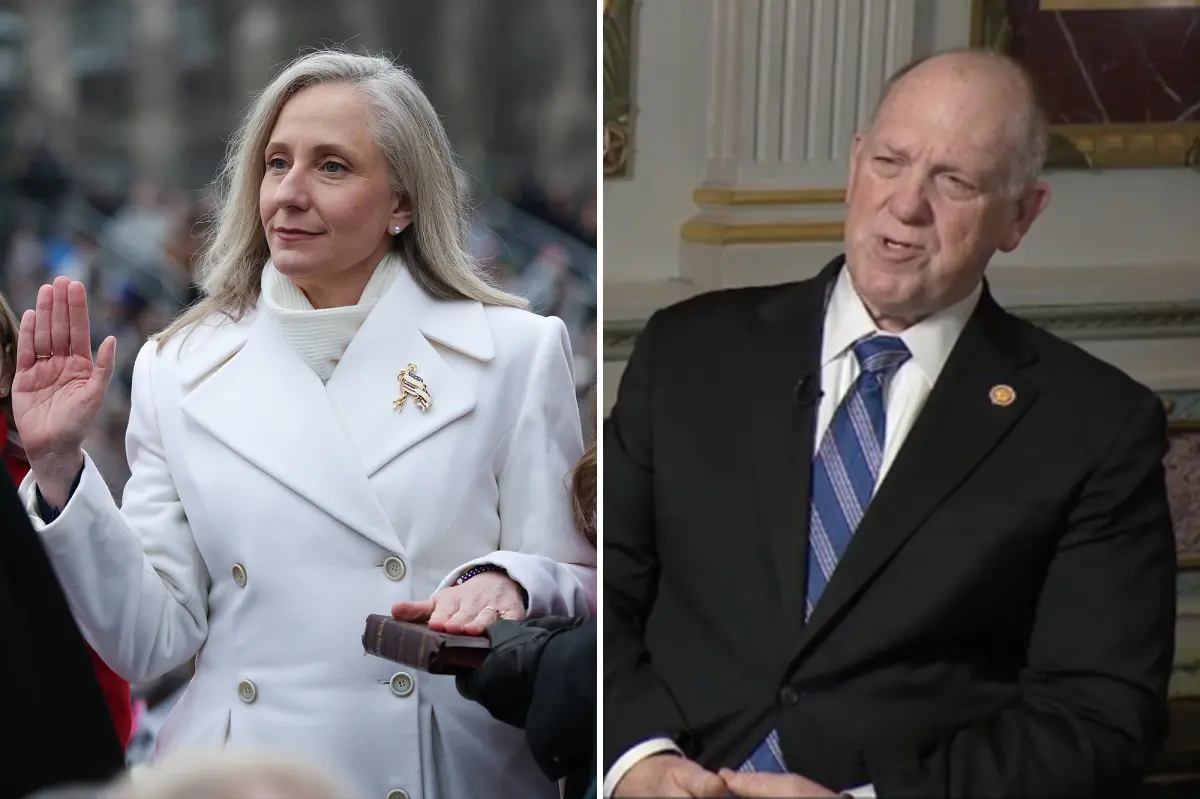
Trump Administration’s Border Czar Confronts Virginia Governor Over Immigration Policy
In a developing story that highlights the ongoing tensions between federal immigration enforcement and state policies, White House border czar Tom Homan has declared that the Trump administration will continue its deportation efforts despite resistance from Virginia’s newly elected Democratic Governor Abigail Spanberger. This confrontation represents the latest chapter in America’s complex immigration debate, with significant implications for both law enforcement cooperation and community safety. The clash emerged after Spanberger, who took office with a reputation as a moderate Democrat, signed an executive order prohibiting Virginia’s state and local law enforcement from cooperating with U.S. Immigration and Customs Enforcement (ICE).
Speaking on the “Ruthless” podcast, Homan expressed personal disappointment in Spanberger’s policy shift, noting that as a Virginia resident, he had witnessed her campaign messaging that heavily emphasized her law enforcement background and commitment to protecting children from trafficking. “I remember her campaign ads. ‘I’m a law enforcement officer. I rescued children from sex trafficking.’ I’ve seen the commercials,” Homan remarked. He suggested that Spanberger had abandoned these principles on her first day in office, transforming from a law enforcement advocate into a politician. Homan highlighted the Trump administration’s efforts to locate 130,000 missing children, many victims of sex trafficking and forced labor, and their work dismantling trafficking networks – contrasting these accomplishments with what he views as Spanberger’s inconsistent approach to law enforcement cooperation.
While acknowledging respect for Spanberger’s previous service as a CIA officer, Homan expressed disappointment that she had seemingly “forgotten” this background upon becoming governor. When asked about working around Virginia’s executive order, Homan confidently stated that ICE would adapt, as they have in other non-cooperative jurisdictions like New York, California, Oregon, and Illinois. However, he emphasized that such policies create inefficiencies in immigration enforcement, requiring the deployment of additional federal resources to these states. Homan explained the practical implications: “One agent can arrest one illegal alien in a county jail. Give us access to the person that you locked in a jail cell, and they’re in the country illegally. When you’re done, you give them to us. That’s the most efficient way to do it.” Without this cooperation, ICE must deploy entire teams to locate individuals who could have been transferred directly from local custody.
The border czar outlined the administration’s strategic response to sanctuary policies, stating that they plan to “flood sanctuary cities” with the thousands of agents being brought on board. His justification centers on public safety concerns: “We have to because you created a problem when you released some public safety threats in the streets.” This approach represents an escalation in federal immigration enforcement in jurisdictions that limit cooperation with ICE, setting up potential conflicts between federal authorities and state and local governments. Homan’s message was resolute: “They’re not going to stop us. They can stand on the sidelines and watch. Shame on them, but they’re not going to stop us from doing this mission.”
This standoff between federal immigration authorities and Virginia’s state government exemplifies the broader national debate about immigration enforcement. On one side, the Trump administration argues that cooperation between local law enforcement and ICE is essential for public safety and efficient immigration enforcement. They contend that restrictions on such cooperation hamper efforts to remove individuals with criminal records who may pose risks to communities. On the other side, supporters of sanctuary policies like Spanberger’s executive order argue that separating local law enforcement from federal immigration enforcement builds trust with immigrant communities, encourages crime reporting, and prevents families from being torn apart due to immigration status alone.
The situation in Virginia will likely serve as a test case for how the renewed Trump administration approaches immigration enforcement in states with Democratic leadership. As the administration prepares to ramp up deportation efforts nationwide, similar conflicts may emerge in other states with sanctuary policies. The outcome of this federal-state tension could significantly influence immigration enforcement practices across the country, community relationships with law enforcement, and ultimately, the lives of millions of immigrants. While Governor Spanberger’s office did not immediately respond to requests for comment on Homan’s statements, this confrontation represents just the beginning of what promises to be a contentious period in American immigration policy as state and federal authorities navigate their often conflicting approaches to this divisive issue.