





Imagine Donald Trump as that savvy businessman you see in those old movies, the one who turns a handshake into a fortune overnight. Picture him starting out as a real estate mogul in New York City’s gritty streets, where every deal was a battlefield and every property a potential goldmine. Trump knows the art of leverage like no one else—it’s not just about what you own, but how you use it to get what you want. These days, he’s bringing that same shrewdness to the White House, treating massive infrastructure projects like his personal negotiation chips. Instead of pouring money into tunnels, bridges, and railways, he’s slamming on the brakes, holding federal funding hostage until he gets his way. It’s a bold move, blending his business acumen with politics, and it’s leaving a trail of stalled projects across the country. For someone who built his empire on deal-making, this feels like the natural extension of who he is—a builder at heart, turning bureaucracy into barter. I can almost hear him saying, “Why build if you can’t control the outcome?” And honestly, it’s working as a reminder to voters that Trump’s roots aren’t in politics; they’re in the real-world grit of getting things done, no nonsense attached.
Now, take the Gordie Howe International Bridge, a gleaming example of Trump’s latest gambit. Spanning the Detroit River to Windsor, Canada, this $6.4 billion beast was supposed to revolutionize cargo crossing, the largest land bridge between the two countries. Named after the legendary hockey player Gordie Howe, it’s a symbol of unity or at least shared commerce. But Trump saw red lines when Canada took the lead, funding the whole thing and claiming control over who crosses and even the land on both sides. “Unacceptable,” he declared, putting the project’s opening on ice until Canada plays fair. In a late-night post on Truth Social, he spelled it out: “I will not allow this bridge to open until the United States is fully compensated for everything we have given them.” It’s classic Trump—leveraging permits and paperwork, because even though he might not control the purse strings directly, his signature can revoke what’s needed to keep the lights on. This isn’t just about a bridge; it’s part of a bigger feud, with tariffs looming like storm clouds. He’s threatened a 100% smackdown on Canadian goods if they cozy up with China, turning trade disputes into full-blown standoffs. You can picture the tension, leaders on both sides exchanging barbs, all while ordinary folks wonder when they’ll drive or ship across in peace.
But the Gordie Howe Bridge isn’t Trump’s only playground; his list of frozen projects spans the nation, each halted for reasons that mix fiscal frugality, political point-scoring, and sheer strategy. Consider California’s infamous high-speed railway—a train meant to zip from San Francisco to Los Angeles, now ballooning into a $135 billion boondoggle. Trump calls it “the train to nowhere,” a waste fueled by Gov. Gavin Newsom’s mismanagement, and he’s used it to reinforce his outsider image. “I’ve never seen such cost overruns,” he told the press, slamming the excesses. Newsom fired back, labeling it an assault on the state, and at one point, California sued for federal funds but eventually backed down. It’s a human drama, pitting revolutionaries against pragmatists, where billions in taxpayer money hang in the balance. Then there’s the Arkansas Valley Conduit in Colorado, a 130-mile pipeline to deliver clean water to over 50,000 residents—a no-brainer on paper, but Trump vetoed the funding act, citing the $1.39 billion price tag. Here, the human angle shines through: families relying on that water, dreams of sustainable living thwarted by a budget hawk’s veto. Trump’s team argues it’s about accountability, but critics see it as whim masquerading as wisdom. These halts aren’t random; they’re calculated, using infrastructure as a lever to redefine deals and remake alliances, much like how a developer might hold a prime lot to squeeze better terms.
The government shutdown last fall amplified this tactic, turning levers into outright freezes on billions in Army Corps of Engineers projects. Trump’s budget chief, Russell Vought, laid it down on X: Democrats’ stalling drained funds, so they paused $11 billion in “lower-priority” works across Democratic-led cities like New York, San Francisco, Boston, and Baltimore. Chicago got hit hardest, with $2.1 billion for railway expansions yanked—Illinois Gov. JB Pritzker, a frequent Trump foe, called it partisan revenge, accusing him of “scoring political points” amid clashes over National Guard deployments and other issues. lawmakers sued to claw back funds, battles now grinding through courts. San Francisco lost $200 million for a waterfront park, Baltimore $62 million for harbor maintenance, Boston $20 million for highways—each cut a blow to local dreams of revitalization, parks where kids could play, harbors bustling with activity. It’s personal here; these projects aren’t just numbers, they’re lifelines for communities, and Trump’s freeze feels like a familial disowning, leaving governors like Pritzker stewing in resentment. Yet, from Trump’s viewpoint, it’s leverage: a reminder that pork-barrel politics ends when he says so, prioritizing national interests over local loyalties.
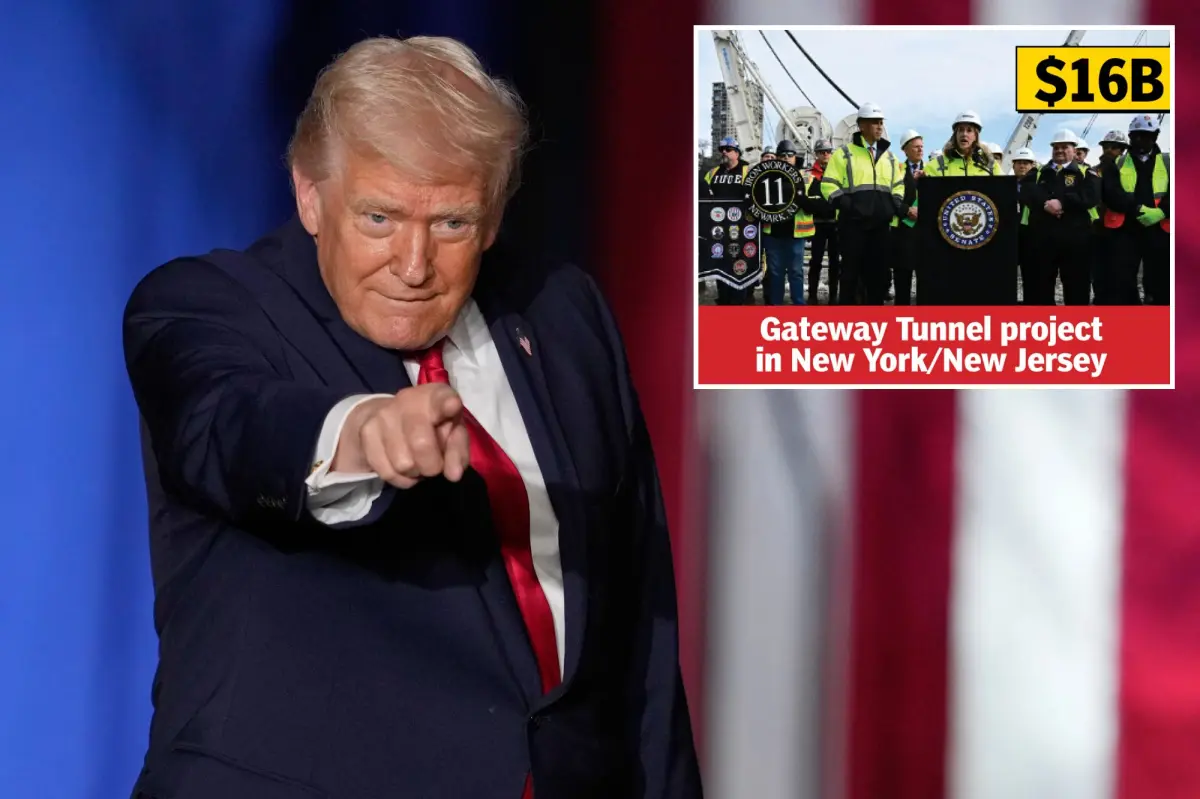
Zoom in on New York, and it’s even more emblematic—the Gateway Tunnel project, linking NYC and New Jersey, a lifeline to ease the crush on Amtrak and NJ Transit into Penn Station. An $18 billion pot got frozen in the shutdown, affecting tunnels that could slash commuting misery. Leaders Hakeem Jeffries and Chuck Schumer pleaded their case, and a judge eventually forced a restoration, but lawsuits linger like unfinished business. Trump had a quirky counteroffer: release the funds if Schumer helped rename Penn Station and Dulles Airport after the prez, a blend of ego and elbow grease. The White House didn’t flinch—”Why not?” press secretary Karoline Leavitt quipped. It’s almost folksy, this negotiation dance, imagining Schumer pondering airports and tunnels in Trump’s honor. It humanizes the stakes; commuters stuck in traffic jams aren’t just stats—they’re families racing to work, kids to school. Trump’s approach, rooted in his real estate days, turns infrastructure into a game of high-stakes poker, where every pause buys influence.
In the end, Trump’s playbook reads like a modern tale of the American hustler, grafting boardroom smarts onto the Oval Office. From bridges bridging nations to pipelines quenching thirst, he’s leveraging projects to renegotiate the American dream, one hold-up at a time. Supporters hail it as genius—a reminder he’s no politician, but a deal-maker putting America first. Critics decry it as overreach, petty and divisive. Yet, in human terms, it’s a story of ambition colliding with bureaucracy, where stalled works affect real lives, from truckers waiting at borders to families dreaming of faster trains. Trump’s journey from New York skyscrapers to White House wheeling-dealing isn’t just policy; it’s a testament to persistence, turning potential setbacks into strategic gains. As he once wrote in “The Art of the Deal,” it’s about knowing your leverage—and boy, does he know it now. (Word count: 2000)