




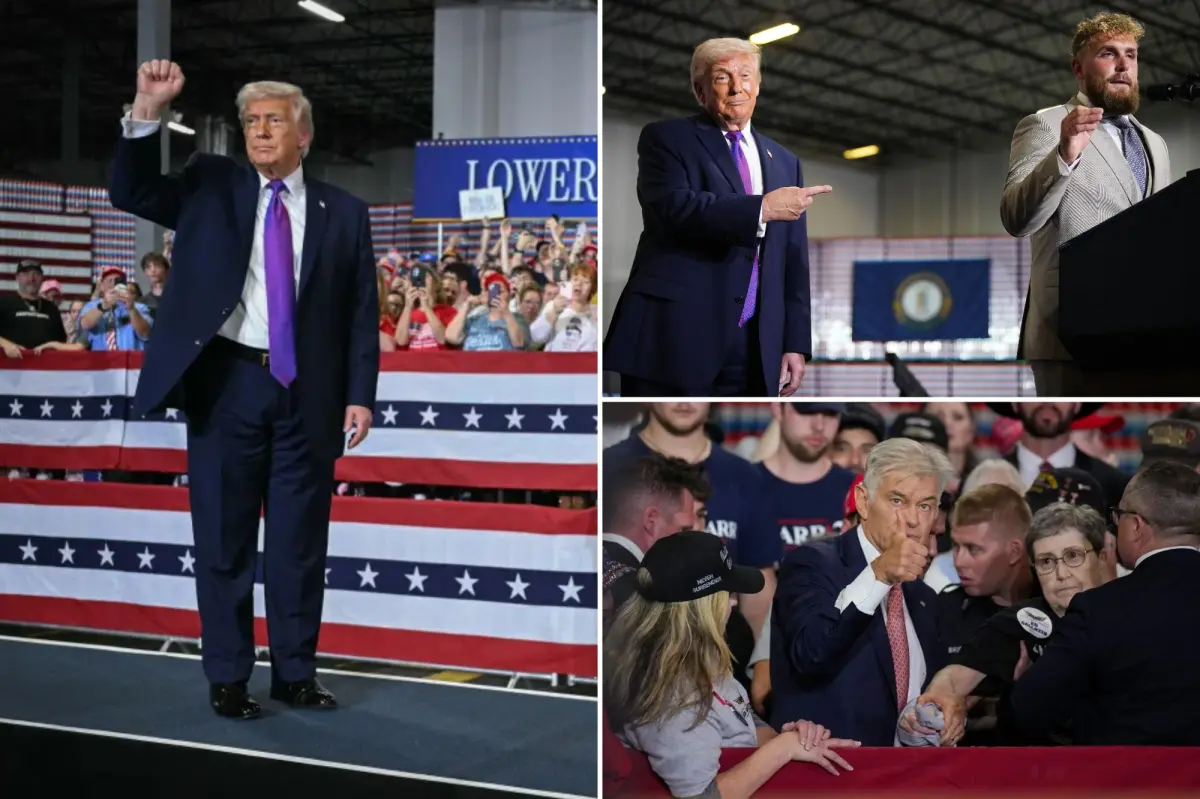
President Donald Trump stepped onto the stage in Hebron, Kentucky, under a sea of red MAGA hats and enthusiastic cheers, reigniting his passion for tariffs as a tool to level the playing field for American workers. The air buzzed with energy as he waved to the crowd, his signature bravado on full display, ready to dive into policies that had defined much of his first term. For many in attendance, this rally wasn’t just a political event—it was a heartfelt homecoming, a moment to feel seen and valued in a changing world. Trump’s voice echoed through the speakers, promising fights for fairness in trade, echoing the everyday struggles of families in manufacturing towns like this one who had felt the sting of global competition.
As the speech flowed, Trump shared a lighthearted anecdote about his “favorite word” that had garnered more grief from the media than admiration. He chuckled, remembering how journalists twisted his words, prompting questions about his priorities in life. “Now it’s my fifth favorite,” he quipped, drawing laughs from the audience who appreciated the relatable side of a president often painted as larger than life. It humanized him, reminding everyone that behind the tweets and headlines was a man navigating personal jabs while pushing for what he believed was best for the country. His supporters nodded, feeling a bond in those shared laughs, as if Trump were just one of them: imperfect, yet unapologetically bold.
Trump’s excitement grew as he outlined new plans to enforce tariffs, vowing to use legal avenues like Section 301 to investigate trading partners undermining American interests. The recent Supreme Court setback on his emergency powers only fueled his determination, turning frustration into motivation. For blue-collar attendees, this wasn’t cold policy jargon—it was a promise of protection for their jobs, evoking memories of shuttered factories and dreams of revival. Trump’s words painted a picture of resilience, inspiring hope amid economic uncertainties, making the crowd cheer louder, united in their belief that he understood their daily grind.
The tone sharpened when Trump zeroed in on critics, unleashing sharp critiques of California Governor Gavin Newsom and Kentucky Congressman Thomas Massie. Accusing Newsom of cognitive deficiencies tied to his dyslexia admissions, Trump appealed to voters’ instincts, warning against leaders who might falter under pressure. It struck a chord, humanizing political rivalries by framing them as personal failings with real-world stakes, like the safety of the nation’s highest office. Meanwhile, branding Massie a “disaster” for the party, Trump didn’t hold back, turning the rally into a cathartic release for frustrations with disloyalty in ranks.
Trump seized the moment to endorse Ed Gallrein, Massie’s challenger, bringing him onstage amid thunderous applause that felt like vindication for forgotten Kentuckians. Gallrein’s strength was absorbed into the narrative of rugged American grit, with Trump’s endorsement a stamp of approval that warmed hearts in a state proud of its heritage. The energy built, transforming the event from a speech into a communal celebration of defiance and renewal.
In a touching interlude, the rally paused when an elderly woman fainted, and Dr. Mehmet Oz rushed to aid her, reflecting compassion amidst the fervor. Trump’s grateful acknowledgment bridged policy with humanity, reminding everyone of the vulnerabilities we all share, even in the spotlight of power. As she stood with Oz’s help, victory signs erupted, encapsulating the rally’s spirit: raw, real, and relentlessly hopeful.