





From Tension to Diplomacy: Trump and Petro’s Changing Relationship
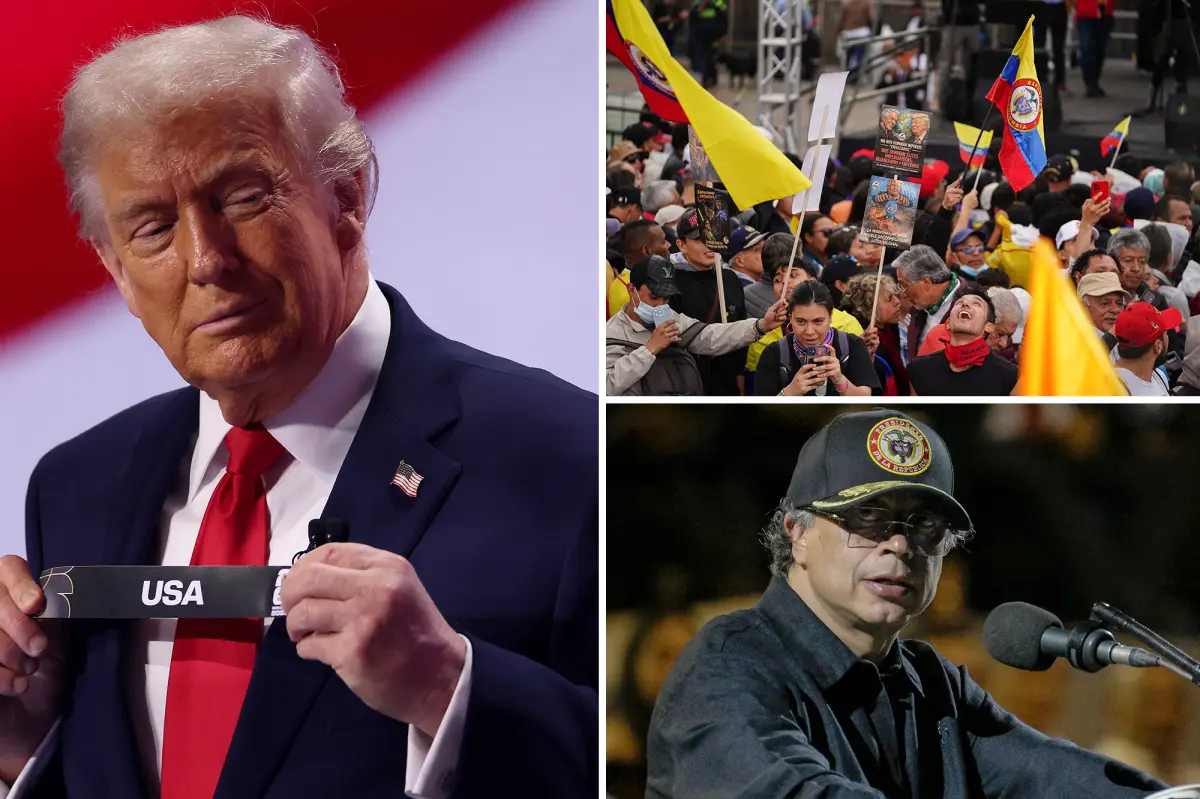
In a surprising turn of events, former adversaries President Donald Trump and Colombian President Gustavo Petro appear to be charting a more diplomatic course after a “positive call” that has seemingly defused rising tensions between the two nations. Just days after exchanging serious threats following the capture of Venezuelan dictator Nicolás Maduro, Trump announced on Truth Social that he had spoken with Petro and looked forward to meeting him in the near future. “It was a Great Honor to speak with the President of Colombia, Gustavo Petro, who called to explain the situation of drugs and other disagreements that we have had,” Trump wrote, adding that he “appreciated his call and tone.” This dramatic shift in rhetoric comes as a relief to many observers who had worried about escalating conflict between the United States and one of its traditional allies in South America. The conversation has apparently been productive enough to warrant an invitation to the White House, with Trump noting that Secretary of State Marco Rubio would first meet with Colombia’s Foreign Minister at the White House as a preliminary step toward the presidential meeting.
The cordial phone call represents a stark contrast to the hostile exchange that had unfolded over the previous weekend. Trump had made inflammatory remarks suggesting that Petro was complicit with Colombia’s drug cartels and implied that the country could be America’s next military target following the operation that captured Venezuelan leader Maduro and his wife. “Colombia is very sick, too, run by a sick man, who likes making cocaine and selling it to the United States, and he’s not going to be doing it very long,” Trump had told reporters in comments that set off alarm bells throughout Latin America. These statements came in the context of heightened regional tensions following the controversial US operation in Venezuela, which many Latin American leaders, including Petro, had strongly condemned as a violation of sovereignty and international law.
Petro’s response to Trump’s threats had been equally confrontational, with the Colombian leader warning on Monday that his country was prepared to “take up arms” if the United States were ever to launch an attack on Colombian soil. As the first leftist president in Colombia’s history, Petro has often taken positions that diverge from the traditionally close US-Colombia relationship, particularly regarding drug policy and regional politics. Petro had been one of the most vocal critics of Trump’s operation in Venezuela, joining other Latin American leaders in denouncing what they viewed as American interventionism in the region. This standoff between the two presidents had threatened to upend decades of cooperation between the United States and Colombia on issues ranging from counter-narcotics operations to regional security.
The sudden diplomatic warming appears to have broader implications for regional politics, particularly regarding the crisis in Venezuela. While mending fences with the United States, Petro’s office confirmed that he will also be meeting with Venezuela’s interim president Delcy Rodríguez in the coming days at Colombia’s Presidential Palace. “In order to contribute to a solution to the political crisis in Venezuela, the Colombian president will meet with the president of the Bolivarian Republic of Venezuela, Delcy Rodríguez… with the purpose of advancing peace and reconciliation in the neighboring country,” Petro’s office stated. This announcement suggests that Colombia is positioning itself as a potential mediator in the Venezuelan crisis, leveraging its relationships with both the United States and the post-Maduro government in Caracas to seek a regional solution to the ongoing turmoil.
The significance of this diplomatic shift extends beyond bilateral relations, reflecting broader questions about U.S. influence in Latin America and the region’s political realignment. Trump’s willingness to engage with Petro, despite their ideological differences, indicates a pragmatic approach that recognizes Colombia’s strategic importance. For Petro, the conversation with Trump presents an opportunity to assert Colombia’s independence while maintaining crucial ties with the United States. The delicate balancing act being attempted by both leaders highlights the complex interplay between sovereignty concerns and practical cooperation that characterizes modern inter-American relations. As these developments unfold, they will likely reshape regional dynamics, particularly regarding the approach to Venezuela’s political transition and the broader question of democratic governance in Latin America.
The path forward remains uncertain, particularly given Trump’s previous threats toward Rodríguez, whom he warned could face “a fate worse than what happened with Maduro” if she failed to comply with American demands regarding civil order and oil production in Venezuela. The contrasting approaches—a conciliatory tone with Petro alongside continued pressure on Venezuela—illustrate the complexities of U.S. policy in the region. As these diplomatic maneuvers continue to evolve, they will test the resilience of inter-American institutions and the capacity of regional leaders to navigate competing pressures. The coming weeks may reveal whether this unexpected diplomatic opening represents a genuine pivot toward constructive engagement or merely a temporary pause in what has been an increasingly confrontational approach to Latin American relations. What seems clear, however, is that both Trump and Petro have recognized the potential costs of continued escalation and have chosen, at least for now, to pursue dialogue over confrontation.