

Trump Threatens Mexico with Tariffs Over Water Treaty Dispute
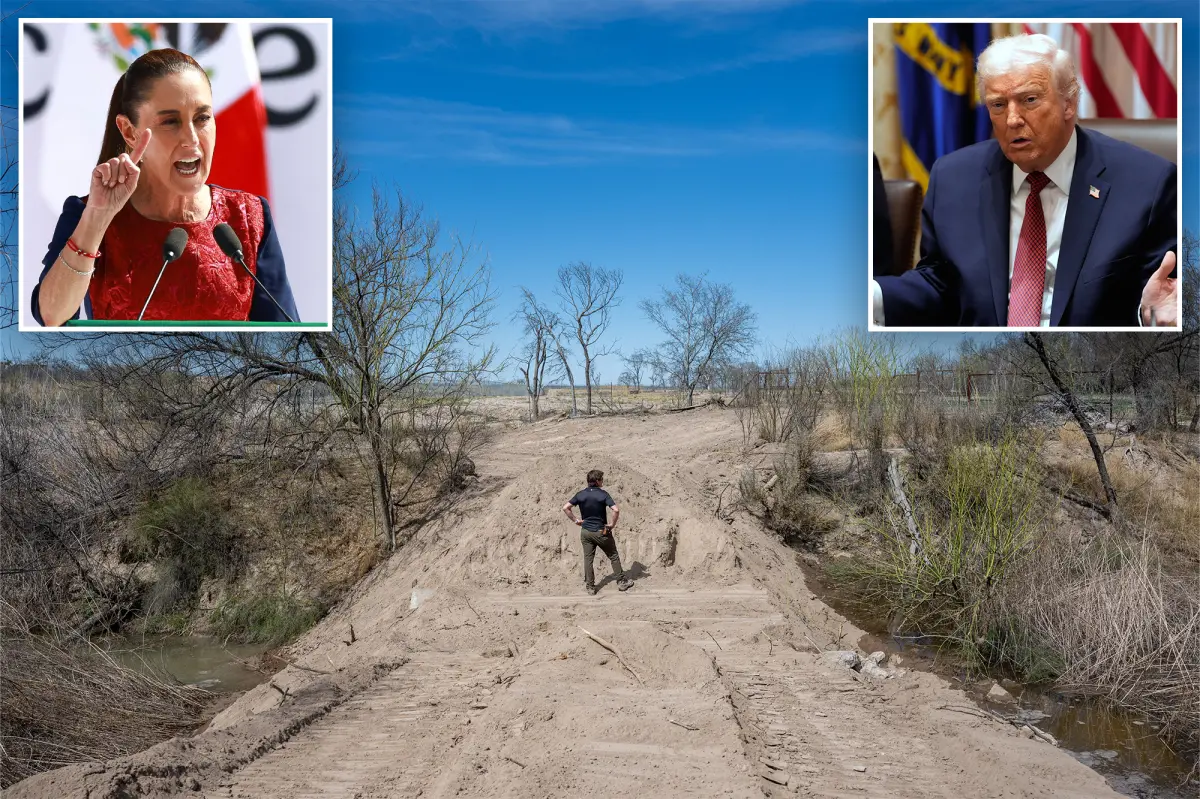
President Donald Trump has issued a stern warning to Mexico regarding its failure to deliver water owed to the United States under a longstanding international agreement, highlighting the significant impact on Texas agriculture. In a strongly worded message posted on his Truth Social platform, Trump emphasized that Mexico’s non-compliance with the 1944 Water Treaty is causing serious harm to Texas farmers who depend on this vital resource for irrigation. The dispute centers around Mexico’s obligation to release water from the Rio Grande to the United States, a commitment that has fallen significantly behind schedule according to American officials.
The water treaty, which has governed water sharing between the two nations for nearly eight decades, requires Mexico to deliver 1.75 million acre-feet of water over each five-year cycle from the Rio Grande. In exchange, the United States provides Mexico with 1.5 million acre-feet from the Colorado River. However, according to President Trump, Mexico currently owes more than 800,000 acre-feet of water due to non-compliance over the past five years. This substantial deficit has created increasingly difficult conditions for agricultural operations in Texas, particularly in the Rio Grande Valley where farmers rely heavily on this water for their crops and livestock. The situation has become so dire that Trump has threatened to impose a 5% tariff on Mexican imports if the country does not immediately release at least 200,000 acre-feet of water before the December 31st deadline.
The water shortage has created a crisis for Texas agriculture, with farm groups warning of potentially disastrous consequences for the state’s citrus and sugar industries. Drought conditions have exacerbated the problem, making the current shortage the most severe in nearly three decades. The lack of water has already damaged crops, eliminated jobs, and threatened the economic stability of the entire region. For farmers who plan their growing seasons and investments based on expected water deliveries, Mexico’s failure to fulfill its treaty obligations has created uncertainty and financial strain at a time when agricultural operations are already facing significant challenges from weather extremes, rising input costs, and market fluctuations.
Earlier this year, in April, the Trump administration appeared to have made progress on this issue by reaching an agreement with Mexican officials to ensure Texas farmers would receive their needed water allocations. Under that arrangement, Mexico committed to sending water from international reservoirs and increasing U.S. flow from six of Mexico’s Rio Grande tributaries through the end of the current five-year water cycle. At the time, U.S. Secretary of Agriculture Brooke Rollins characterized the agreement as a significant step forward and expressed the administration’s appreciation for Mexico’s cooperation. However, Trump’s recent statements suggest that Mexico has not followed through on these commitments to the extent expected, prompting the president to take a more aggressive stance by threatening economic penalties.
The water dispute highlights the complex interdependence between the United States and Mexico, particularly in border regions where shared resources require careful management and diplomatic cooperation. Water rights have long been a sensitive issue between the two countries, with periodic tensions arising when drought or other factors make it difficult for either party to meet its treaty obligations. The 1944 Water Treaty has generally provided a stable framework for managing these shared water resources, but compliance has occasionally been problematic, especially during times of scarcity. The current dispute represents one of the more significant challenges to the treaty’s implementation in recent years, reflecting the increasing pressure on water resources due to climate variability, growing populations, and expanding agricultural and industrial demands.
President Trump’s threat of tariffs adds a new dimension to this long-running water dispute, potentially elevating it from a regional resource management issue to an international trade conflict. His warning that “the longer Mexico takes to release the water, the more our Farmers are hurt” underscores the urgent nature of the situation from the U.S. perspective. While using tariffs as leverage in non-trade disputes has been a characteristic approach of the Trump administration, it remains to be seen whether this strategy will successfully resolve the water delivery shortfall or potentially complicate broader U.S.-Mexico relations. For Texas farmers, however, the immediate concern is simply getting the water they need to sustain their operations and livelihoods, regardless of how the diplomatic negotiations unfold. As the December 31st deadline approaches, agricultural communities along the Rio Grande will be watching closely to see if Mexico responds to the president’s demands or if new economic penalties will be imposed.