




Marco Rubio: The Man of Many Hats in Trump’s Administration
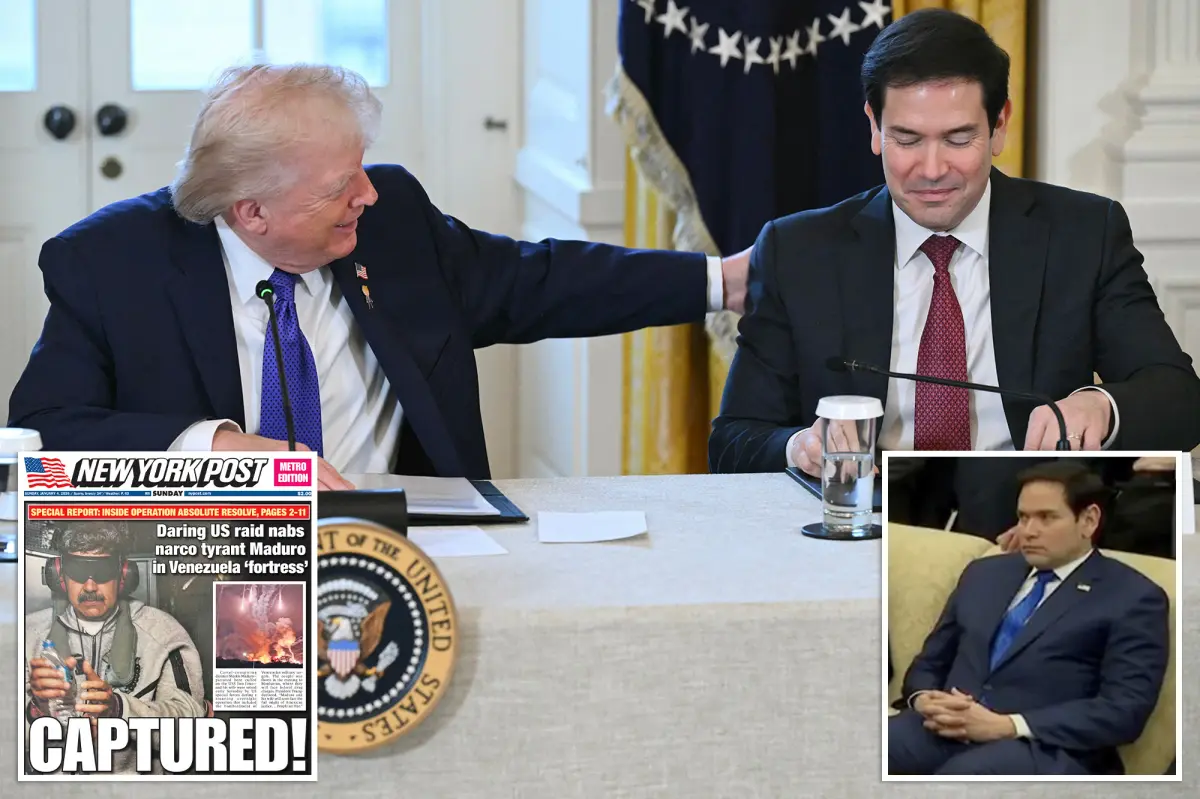
In the bustling corridors of power in Washington, Secretary of State Marco Rubio has become somewhat of a phenomenon, collecting high-profile positions in the Trump administration like baseball cards. With his current roles as Secretary of State, acting National Security Adviser, and acting National Archivist, Rubio has become the subject of both admiration and lighthearted jokes across political circles. This unusual concentration of responsibility in one person has even prompted President Trump to playfully suggest that Rubio might one day become president of Cuba, the homeland his parents fled in the 1950s during the Batista regime. “Sounds good to me,” Trump posted on his Truth Social platform, responding to a comment suggesting Rubio could lead Cuba after its current government falls. The casual remark has sparked discussions about both Rubio’s seemingly limitless portfolio and the administration’s evolving stance toward Cuba.
Rubio’s extraordinary workload began taking shape when Trump appointed him to multiple critical roles simultaneously. Until last August, he even served as the administrator of the US Agency for International Development (USAID), making it a total of four major positions at once. This unprecedented accumulation of responsibilities has not gone without criticism. Former National Security Adviser Jake Sullivan publicly stated last year that it was “ludicrous” to think Rubio could effectively handle being both Secretary of State and National Security Adviser simultaneously. Despite these concerns, Rubio has maintained his various roles with apparent determination, becoming a central figure in Trump’s foreign policy apparatus. The situation has become so notable that it has generated numerous memes and jokes about what position Rubio might add to his resume next, prompting the Secretary himself to humorously rule out becoming the head coach and general manager of the Miami Dolphins, writing on social media: “My focus must remain on global events and also the precious archives of the United States of America.”
The Cuban-American statesman’s multi-faceted role has taken on new significance as the Trump administration reconsiders its approach to Cuba. Following the successful “Operation Absolute Resolve” that resulted in the capture of Venezuelan leader Nicolas Maduro, Rubio issued what many interpreted as a warning to the Cuban government. “If I lived in Havana and I was in the government, I would be concerned. At least a little bit,” Rubio told reporters after the operation. His statement highlights the administration’s awareness of the close relationship between Cuba and Venezuela, particularly noting that some of Maduro’s guards during the raid were Cuban nationals. This connection between the two countries has not gone unnoticed by President Trump, who recently put Cuba on notice regarding its historical relationship with Venezuela.
The President’s recent statements have made the administration’s position increasingly clear, declaring in all-caps on Truth Social: “THERE WILL BE NO MORE OIL OR MONEY GOING TO CUBA” from Venezuela and urging Havana to negotiate “BEFORE IT IS TOO LATE.” This aggressive stance represents a significant shift in regional dynamics, with Trump explaining that “Cuba lived, for many years, on large amounts of OIL and MONEY from Venezuela. In return, Cuba provided ‘Security Services’ for the last two Venezuelan dictators.” The blunt message suggests that the longstanding economic arrangement between the two countries is coming to an end under American supervision, with Trump asserting that Venezuela now has “the United States of America, the most powerful military in the World (by far!), to protect them, and protect them we will.” This declaration effectively puts Cuba in a precarious position, potentially cut off from crucial resources while facing increased American scrutiny.
The suggestion that Rubio could potentially lead Cuba might seem like a casual joke, but it underscores the significant role he plays in shaping America’s approach to Latin America. As the son of Cuban immigrants who fled before the Castro revolution, Rubio brings personal connection and cultural understanding to discussions about Cuba’s future. His unique position within the administration gives him considerable influence over policies affecting not just Cuba but the entire region. The apparent success of Operation Absolute Resolve in Venezuela has emboldened the administration to take a more assertive approach toward Cuba, with Rubio serving as both architect and messenger for these policies. His multipronged role allows him to coordinate diplomatic, security, and aid strategies across different government departments, creating a unified approach that previous administrations often struggled to achieve due to bureaucratic divisions.
As global events continue to unfold, particularly in Latin America, Rubio’s unprecedented collection of roles puts him at the center of American foreign policy decision-making. The administration’s increasingly firm stance toward Cuba suggests that significant changes may be coming in U.S.-Cuba relations, with potential implications for the entire region. Whether or not the playful suggestion about Rubio’s future as Cuba’s leader ever materializes, his current influence over America’s approach to the island nation is unmistakable. His unique position—serving simultaneously as diplomat, security advisor, and keeper of national records—gives him extraordinary power to shape America’s engagement with the world. For now, as Rubio himself noted while declining the imaginary Dolphins positions, his focus remains on “global events and the precious archives of the United States of America”—a statement that, despite its humorous context, accurately describes the remarkable scope of his responsibilities in the Trump administration.