



President Trump Criticizes Manhattan’s Congestion Pricing: A Complex Urban Policy Debate
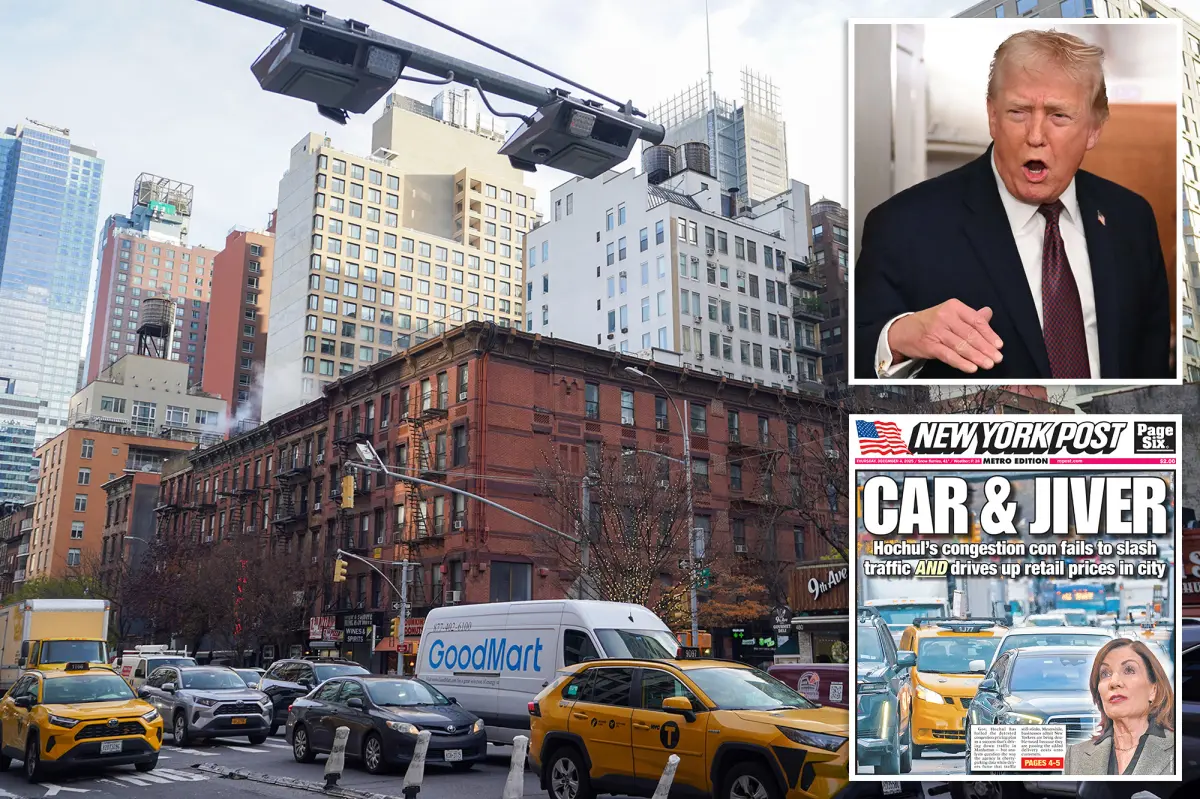
President Trump has recently taken to social media to express his strong opposition to Manhattan’s congestion pricing program, describing it as a “DISASTER” that needs to be ended “IMMEDIATELY.” His criticism targets Governor Kathy Hochul’s initiative, which imposes fees of up to $27 on drivers entering Manhattan below 60th Street. Trump’s passionate statement reflects his concern that such policies are “destroying” New York, a city he professes to love. “It’s never worked before, and it will never work now,” he stated on Truth Social, highlighting his fundamental skepticism about congestion pricing as an urban traffic management strategy. This latest outburst comes at a particularly sensitive time, as a federal court prepares to hear arguments about whether the Trump administration has the authority to terminate the program altogether.
The conflict over congestion pricing has escalated into a significant legal battle between federal and state authorities. Transportation Secretary Sean Duffy has been spearheading the federal opposition, repeatedly setting deadlines for New York City to abandon the program and even threatening to withhold federal funding and approvals for New York projects if it continues. In response, the state of New York and the Metropolitan Transportation Authority (MTA) have taken legal action to prevent the administration from shutting down the program. The case is moving through the court system under Judge Lewis Liman, who has scheduled oral arguments to begin on January 28th. In the interim, Judge Liman has ruled that the program can remain operational while the lawsuit proceeds, creating an uneasy status quo as the legal and political drama unfolds.
Manhattan’s congestion pricing initiative, which began in early January, represents a pioneering approach to urban traffic management in the United States as the first-ever congestion toll implemented in the nation. Under the current structure, drivers are charged a base fee of $9 to enter the congestion zone south of 60th Street in Manhattan. Governor Hochul and MTA officials have been defending the program, pointing to data they claim shows a reduction in vehicle numbers in Manhattan since the toll’s implementation. This approach follows similar systems that have been established in cities like London and Stockholm, where congestion pricing has been credited with reducing traffic volumes, decreasing pollution, and generating revenue for public transportation improvements. Proponents argue that such systems encourage the use of public transit and help create more sustainable urban environments with less traffic congestion and improved air quality.
However, the program has faced considerable criticism beyond just the president’s objections. One of the most significant concerns is what some have dubbed “congestion-flation,” referring to the phenomenon where businesses operating in the congestion zone pass their increased transportation costs on to consumers. This is particularly problematic for delivery services and retail businesses that rely on frequent shipments. Delivery trucks, which are vital to the city’s economy, now face tolls as high as $21.60 for each trip into the congestion zone. These substantial fees can significantly impact operating costs for small businesses and potentially lead to higher prices for everyday goods and services for Manhattan residents and visitors. Critics argue that this economic burden disproportionately affects working-class New Yorkers and small business owners who cannot easily absorb or avoid these additional expenses.
The debate around congestion pricing reflects broader tensions in urban policy and transportation planning. Many drivers and commuters have complained that despite paying the new tolls, traffic conditions remain problematic—it simply costs more to navigate the same congested streets. This raises questions about whether the program is achieving its stated goals or merely creating an additional financial burden without delivering the promised benefits of reduced congestion. For many commuters from outer boroughs or surrounding suburbs who rely on personal vehicles due to inadequate public transportation options, the toll represents an unavoidable tax on their daily commute. Critics also question whether sufficient alternatives exist, particularly for those traveling from areas with limited public transit access or during off-peak hours when service is reduced.
The conflict over Manhattan’s congestion pricing illuminates fundamental questions about urban governance, environmental policy, economic equity, and the balance of power between federal, state, and local authorities. As the legal battle continues, New Yorkers find themselves caught in the middle of a contentious policy experiment with significant implications for their daily lives and livelihoods. The outcome of this dispute could set important precedents not only for New York but for other American cities considering similar congestion management strategies. While Governor Hochul’s administration emphasizes the environmental and traffic management benefits of the program, the Trump administration’s opposition highlights concerns about economic impacts and jurisdictional authority. As Judge Liman prepares to hear arguments later this month, both sides are digging in for what promises to be a consequential showdown over the future of urban mobility in America’s largest city, with residents and businesses continuing to adapt to this controversial policy while awaiting a final resolution.