




Trump Weighs In on NYC Mayoral Race: A Candid Assessment of Zohran Mamdani
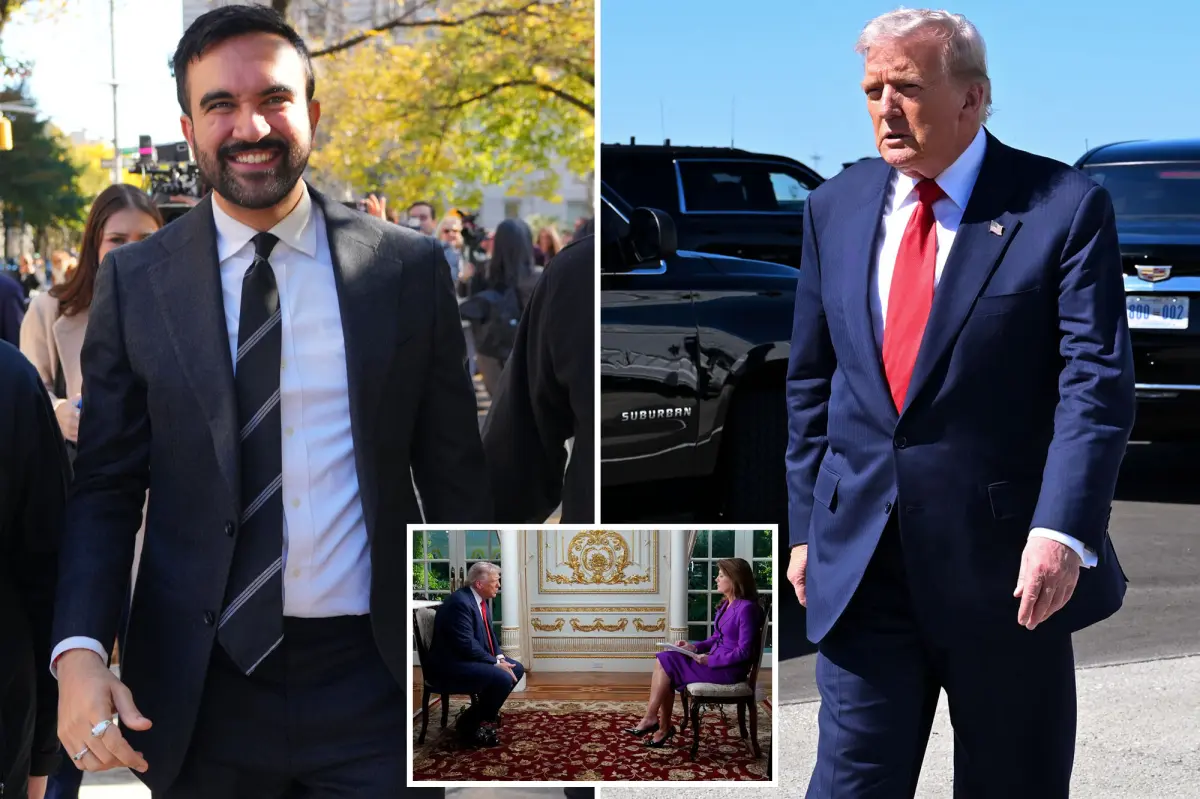
In a recent “60 Minutes” interview with CBS correspondent Norah O’Donnell, President Donald Trump offered his unfiltered opinions on New York City’s mayoral front-runner, Zohran Mamdani. When asked about potential similarities between himself and the 34-year-old socialist candidate, Trump responded with his characteristic directness, immediately dismissing any comparison with humor. “Well, I think I’m a much better-looking person than him, right?” Trump quipped, setting the tone for a conversation that revealed his serious concerns about Mamdani’s potential leadership of America’s largest city.
The exchange highlighted the stark ideological differences between Trump and Mamdani, whom the President categorized not merely as a socialist but as a “communist.” This characterization reflects Trump’s view that Mamdani’s political positions extend beyond mainstream progressive politics into territory he considers dangerous for New York City. “He’s far worse than a socialist,” Trump emphasized, suggesting that Mamdani’s policies would represent a radical departure from even the city’s recent progressive governance. The President has previously referred to Mamdani as “my little communist mayor,” a nickname that encapsulates both his dismissive attitude toward the candidate and his genuine concern about the direction Mamdani might take the city if elected.
Trump’s criticism became particularly pointed when he compared Mamdani to former New York City Mayor Bill de Blasio, whose administration Trump has frequently criticized. “I think he’s probably gonna make de Blasio look great. I think he will make de Blasio look like one of our great mayors,” Trump remarked, using de Blasio as a benchmark for what he considers failed leadership. This comparison is especially striking given Trump’s well-documented dissatisfaction with de Blasio’s mayoralty, suggesting that in Trump’s estimation, Mamdani would bring even more problematic governance to New York. “I got to see de Blasio, how bad a mayor he was, and this man will do a worse job than de Blasio by far,” he continued, emphasizing his belief that Mamdani’s leadership would mark a significant downturn for the city.
Beyond expressing personal opinions, Trump raised practical concerns about how a Mamdani mayoralty might affect federal support for New York City during a potential second Trump administration. “It’s gonna be hard for me as the president to give a lot of money to New York because if you have a communist running New York, all you’re doing is wasting the money you’re sending there,” Trump stated, suggesting potential federal funding implications based on local electoral outcomes. This comment reveals Trump’s perspective on the relationship between federal and local governance, implying that ideological alignment between different levels of government might influence resource allocation decisions – a viewpoint that raises questions about federalism and the equitable distribution of national resources regardless of local political leadership.
The exchange between Trump and O’Donnell illuminates the increasingly polarized nature of American politics, where differences in ideology can lead to fundamental disagreements about governing philosophy. Trump’s characterization of Mamdani as a communist rather than simply a political opponent with different views demonstrates how political labels are often used to create sharp distinctions and frame debates in contemporary discourse. For New York voters, Trump’s comments offer an outside perspective on their mayoral race from a figure who has deep connections to the city as a longtime resident and business owner before his presidency, though his views will likely be received differently depending on one’s own political orientation.
As New York City approaches its mayoral election, Trump’s remarks add another dimension to an already complex race that will determine the future leadership of America’s most populous city. Whether voters will be swayed by Trump’s assessment of Mamdani or see it as an endorsement of opposing candidates remains to be seen, but the President’s comments underscore the national significance of local elections in major urban centers. The contrast between Trump’s vision for urban governance and the progressive politics represented by candidates like Mamdani reflects broader tensions in American political life, where competing ideas about the role of government, economic policy, and social priorities continue to shape electoral contests at all levels.