


Trump Explores ‘Many Options’ for Handling Iran Crisis as Protests Intensify
White House Weighs Diplomatic and Military Approaches Amid Regional Tensions
The Trump administration finds itself at a critical crossroads in its Iran policy as the Islamic Republic faces widespread internal turmoil, with the President reportedly considering multiple strategies ranging from renewed diplomatic engagement to potential military action. Senior officials confirmed yesterday that while diplomacy remains the administration’s stated preference, all options remain on the table as the White House carefully calibrates its response to developments in one of the Middle East’s most influential nations.
“Diplomacy is always the first option for the president,” stated a senior White House official during yesterday’s press briefing. “With that said, the president has shown he’s unafraid to use military options if and when he deems necessary, and nobody knows that better than Iran.” This carefully worded statement reflects the delicate balancing act the administration is attempting to maintain – projecting strength to deter Iranian aggression while leaving room for potential dialogue and de-escalation.
Strategic Ambiguity: A Calculated Approach to Foreign Policy
Foreign policy experts note that the administration’s deliberate ambiguity regarding its specific plans for Iran represents a strategic calculation rather than indecision. “The President is applying what some would call ‘strategic ambiguity’ – keeping adversaries guessing while maintaining maximum flexibility,” explains Dr. Sarah Levinson, Senior Fellow at the Council on Foreign Relations. “This approach allows the White House to adjust tactics based on evolving circumstances while avoiding being locked into a single course of action that might prove ineffective as events unfold.”
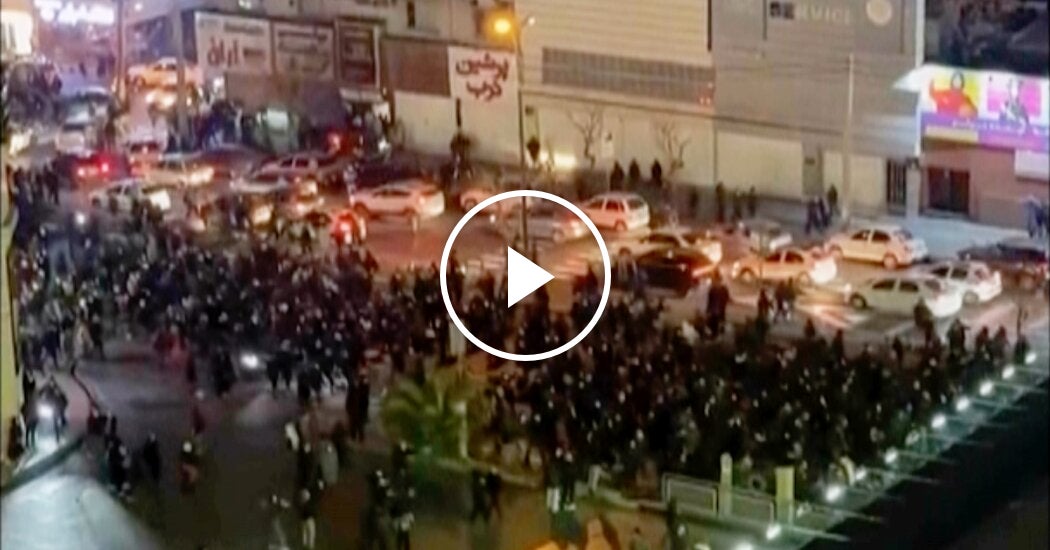
The current situation presents unique challenges and opportunities for U.S. policy. Iran’s domestic instability, evidenced by images of crowded nighttime streets filled with protesters amid stalled traffic and illuminated by building lights, suggests potential vulnerabilities in the regime’s grip on power. However, previous U.S. attempts to influence internal Iranian politics have often produced unintended consequences, making calibrated responses essential.
Historical Context and Current Calculations
The complex relationship between the United States and Iran has deep historical roots that continue to influence current diplomatic calculations. Since the 1979 Islamic Revolution that overthrew the U.S.-backed Shah and the subsequent hostage crisis, relations between the two nations have been characterized by mutual distrust and periodic confrontations. The landmark 2015 nuclear agreement (JCPOA) represented a brief thaw, but tensions reignited following the U.S. withdrawal from the deal in 2018 and the reimposition of economic sanctions.
“What we’re seeing now is the culmination of years of pressure-based policies,” notes Ambassador Richard Haass, former State Department policy planning director. “The administration’s ‘maximum pressure’ campaign has certainly damaged Iran’s economy, but it hasn’t fundamentally altered the regime’s regional behavior or nuclear ambitions. The question now is whether the current protests represent an opportunity to advance U.S. interests, and if so, how to calibrate our response without undermining legitimate Iranian dissent by too closely associating it with American intervention.”
Domestic Political Considerations and International Reactions
The administration’s Iran policy doesn’t exist in a vacuum – it intersects with numerous domestic political considerations and international relationships. Congressional leaders from both parties have expressed varying views on how to approach the situation, with some advocating for robust support of Iranian protesters and others urging caution against actions that could be interpreted as regime change efforts.
Internationally, the U.S. position on Iran has created friction with European allies who have attempted to preserve elements of the nuclear agreement despite American withdrawal. Russia and China, meanwhile, have strengthened their relationships with Tehran partly in response to U.S. policies. Regional powers like Saudi Arabia and Israel have generally supported a hard line against Iran, viewing the country as a destabilizing force and competitor for regional influence. These complex geopolitical crosscurrents require careful navigation by U.S. policymakers seeking to advance American interests while managing diverse alliance relationships.
Analysis: Potential Scenarios and Their Implications
Security analysts outline several potential scenarios that could emerge from the current situation. A diplomatic breakthrough remains possible, particularly if internal pressures lead Iranian leadership to reconsider its position on nuclear activities or regional proxy forces. Conversely, continued tensions could escalate into limited military confrontations, particularly in contested areas like the Persian Gulf or through proxy forces in countries like Iraq and Syria.
“What’s particularly challenging about this moment is the number of volatile variables in play simultaneously,” explains Dr. Mehran Kamrava, Director of the Center for International and Regional Studies at Georgetown University’s Qatar campus. “We’re dealing with Iranian domestic politics, U.S. regional posture, nuclear proliferation concerns, oil market stability, and broader Middle Eastern security dynamics – all interconnected and all with potential flashpoints that could trigger escalation.”
The Path Forward: Balancing Pressure and Engagement
As the situation continues to evolve, the administration appears to be pursuing a dual-track approach – maintaining pressure through economic sanctions and military deterrence while simultaneously signaling openness to dialogue under the right conditions. This strategy aims to create leverage that could potentially lead to substantive negotiations on issues of concern to both nations.
“What’s crucial at this juncture is establishing clear parameters for any potential diplomatic engagement,” argues former Deputy Secretary of State William Burns. “Effective diplomacy requires clarity about objectives, red lines, and potential areas for compromise. It also requires patience and consistent signaling to avoid misunderstandings that could lead to unintended escalation.”
For ordinary Iranians caught between domestic repression and international tensions, the stakes could not be higher. Images of crowded streets and determined protesters highlight the human dimension of geopolitical calculations. As one Iranian-American analyst noted on condition of anonymity due to family still living in Iran, “People often forget that beyond the high-level strategic discussions are millions of Iranians who simply want economic opportunity, political freedom, and normal relations with the world. Any policy that ignores this human element is likely to fail in the long run.”
As the administration considers its next steps, the world watches closely. Whether through diplomatic channels, economic measures, or potential military actions, the decisions made in the coming weeks could significantly reshape not only U.S.-Iran relations but also the broader geopolitical landscape of the Middle East for years to come.