


Trump’s Envoy Meets With Putin to Discuss Ukraine War Peace Plan
Diplomatic Mission Signals New Approach to Resolving Prolonged Conflict
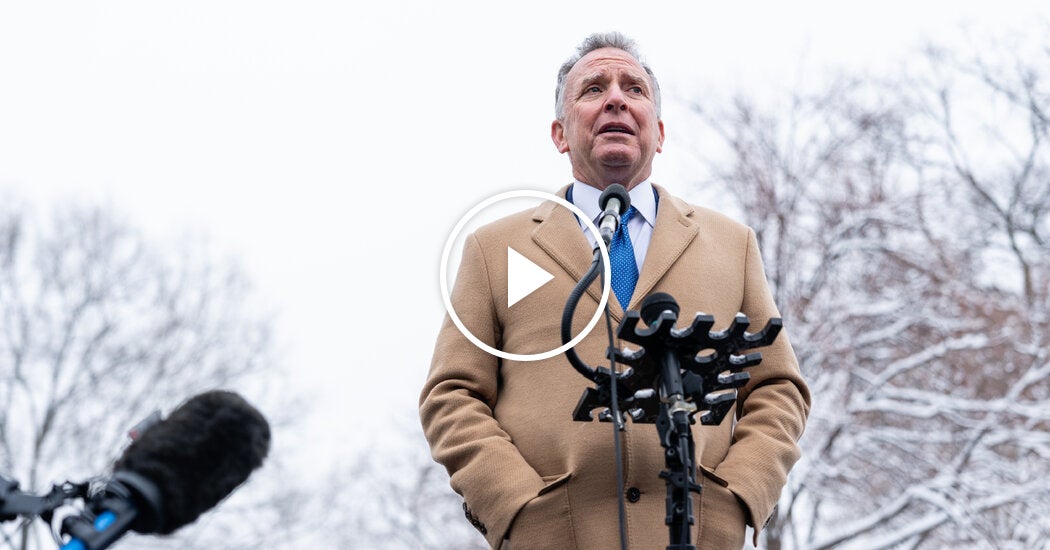
In a significant diplomatic development, Steve Witkoff, a special envoy appointed by the Trump administration, has traveled to Moscow for high-level discussions with Russian President Vladimir Putin regarding a potential peace plan to end the war in Ukraine. This direct engagement represents one of the most substantial diplomatic initiatives to resolve the conflict since its escalation in February 2022, marking a notable shift in the United States’ approach to the ongoing crisis that has destabilized Eastern Europe and strained international relations for years.
The meeting comes at a critical juncture as Ukrainian President Volodymyr Zelensky simultaneously conducts his own diplomatic tour across European capitals, seeking to reinforce support from key allies amid concerns about waning international attention and assistance. Sources familiar with the diplomatic mission indicate that Witkoff’s visit was carefully orchestrated following preliminary discussions through intermediaries, with the envoy carrying specific proposals that the Trump administration believes could form the foundation for negotiations to end hostilities. “Special Envoy Witkoff is on his way to Russia with a comprehensive framework that addresses security concerns on both sides,” said a senior administration official who requested anonymity due to the sensitive nature of the discussions.
Background and Context of the Peace Initiative
Witkoff, a successful real estate developer with longstanding ties to former President Trump, was appointed as special envoy shortly after the administration took office. Though lacking traditional diplomatic credentials, his selection reflects the administration’s preference for negotiators with business backgrounds who approach international relations through a transactional lens. Critics have questioned this approach, suggesting that complex geopolitical conflicts require experienced diplomats, while supporters contend that fresh perspectives might break the diplomatic stalemate that has characterized the Ukraine conflict for years.
The peace plan reportedly being discussed contains several key elements that reflect significant compromises from previous positions held by both Russia and Ukraine. According to diplomatic sources, it addresses territorial issues, security guarantees, the status of disputed regions, and a pathway for the gradual lifting of sanctions against Russia. The administration has emphasized that while the United States is facilitating these discussions, any final agreement must ultimately be acceptable to Ukraine. “We’re not imposing solutions, but creating conditions for meaningful dialogue,” explained a State Department official involved in the planning. “The sovereignty of Ukraine remains a fundamental principle, even as we acknowledge the complex realities on the ground after years of conflict.”
Zelensky’s European Tour and Ukrainian Response
As Witkoff meets with Putin in Moscow, President Zelensky has been conducting an intensive diplomatic campaign across European capitals, meeting with leaders in Berlin, Paris, London, and Brussels. This parallel diplomatic effort underscores the delicate balance Ukraine is trying to maintain—engaging with peace initiatives while ensuring its core interests are not compromised. During a press conference in Berlin, Zelensky acknowledged awareness of the Moscow talks while emphasizing that “no sustainable peace can be achieved without Ukraine’s direct participation and consent.” The Ukrainian president has repeatedly stated that territorial integrity and sovereignty remain non-negotiable principles for any resolution.
European reactions to the American initiative have been cautiously optimistic but marked by concern about potential concessions. French President Emmanuel Macron characterized the talks as “a necessary dialogue,” while German Chancellor Olaf Scholz emphasized that “any sustainable solution must respect international law and Ukraine’s sovereignty.” NATO Secretary-General Jens Stoltenberg offered a measured response, stating that while the alliance welcomes diplomatic initiatives, “Russia must demonstrate genuine commitment to peace through actions, not merely words.” These statements reflect the complex calculations European leaders are making as they balance support for Ukraine with growing domestic pressures to resolve a conflict that has had significant economic and security implications for the continent.
Russian Perspective and International Reactions
The Kremlin has approached the talks with calculated public restraint, with Putin’s spokesman Dmitry Peskov stating only that “Russia has always been open to diplomatic solutions based on recognition of the new realities.” This carefully worded statement alludes to Russia’s insistence on recognition of territorial gains made during the conflict—a position that has been a consistent stumbling block in previous negotiation attempts. Russian state media has portrayed the talks as evidence of Russia’s diplomatic strength, suggesting that the United States has recognized the need to engage directly with Moscow rather than through intermediaries or multilateral forums.
International reactions to the Moscow meeting have varied widely across the global community. China’s foreign ministry expressed support for “any dialogue that contributes to peace,” while continuing to position Beijing as a neutral arbiter in the conflict despite its strategic partnership with Russia. Middle Eastern countries with strong ties to both Russia and the United States, such as Turkey and Saudi Arabia, have offered to host potential follow-up negotiations. Meanwhile, human rights organizations have expressed concern that peace might come at the expense of accountability for alleged war crimes and violations of international humanitarian law. “Peace is essential, but justice cannot be sacrificed on the altar of expediency,” stated the director of Human Rights Watch’s Europe and Central Asia division, reflecting widespread concern among civil society organizations about the terms of any potential settlement.
Implications for Global Security and US-Russia Relations
The diplomatic initiative represents a significant gamble for the administration, with potential implications extending far beyond Ukraine’s borders. Success could herald a breakthrough in US-Russia relations that have deteriorated to their worst point since the Cold War, potentially opening doors to cooperation on other global challenges including arms control, climate change, and regional conflicts in the Middle East and Asia. Failure could further entrench positions and potentially lead to an escalation of the conflict if either side perceives bad faith in the negotiations.
Security experts emphasize that the outcome of these talks will reverberate throughout the international system. “How this conflict is resolved will set precedents for how territorial disputes are settled in the 21st century,” noted a senior fellow at the Council on Foreign Relations. “The stakes extend beyond Ukraine to Taiwan, the South China Sea, and other contested regions.” As Witkoff continues his discussions in Moscow, the international community watches with a mixture of hope and trepidation, recognizing that the path to sustainable peace remains fraught with obstacles. The coming days will reveal whether this diplomatic initiative represents a genuine turning point or merely another chapter in a conflict that has defied easy solutions and challenged the post-Cold War international order. What remains clear is that after years of destruction and displacement, the pursuit of peace has taken on new urgency, even as fundamental questions about what constitutes a just and durable settlement remain unresolved.