





The Tense Return: Trump’s Words on Iran
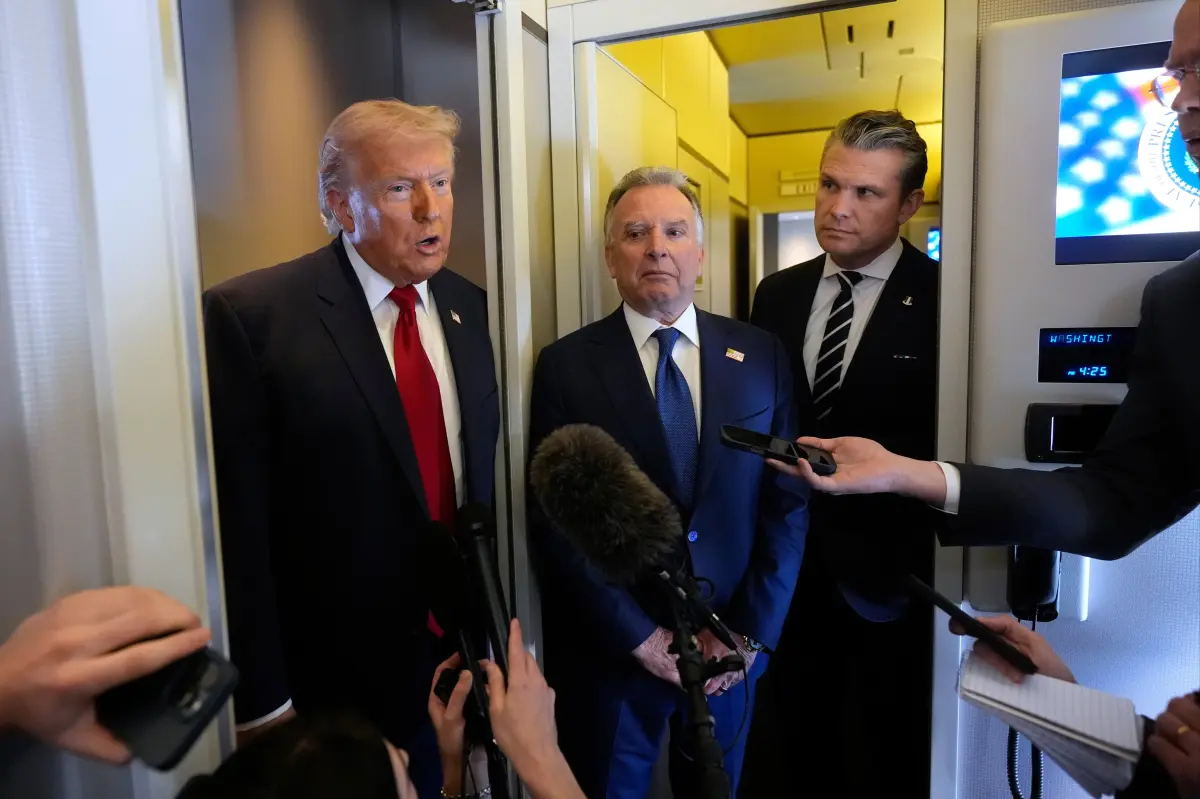
As Air Force One sliced through the night sky back to Florida from Dover Air Force Base on Saturday, President Donald Trump found himself in an unexpected push-and-pull with reporters. The world was still reeling from the thunderous US airstrikes that had shaken Iran to its core, a response to escalating tensions in the Middle East that had everybody on edge. Trump, ever the showman, hedged at first when asked about the possibility of sending American troops into Iran itself. “I’m not interested in getting into that,” he murmured, his voice carrying that familiar mix of deflection and drama. You could almost picture the scene: the president lounging in his seat, the hum of the engines a backdrop to national security talks. But the question lingered like smoke from the recent bombings, prompting more. Reporters weren’t letting it go, and Trump, perhaps sensing the weight of the moment, paused and leaned in. In that split second, you could feel the gravity—lives, geopolitics, and the unpredictable dance of war all hanging in the balance. It wasn’t just talk; this was real, raw decision-making from the man at the helm.
A “Very Good Reason” for Boots on the Ground
Then, breaking the tension with his trademark flair, Trump cracked open the door just a sliver. “Could there be? Possibly for a very good reason,” he admitted, his eyes narrowing as if weighing the invisible costs right there on the plane. The casual way he said it—almost like discussing a tough business deal—belied the enormity. Images flashed through my mind of young soldiers in desert fatigues, far from home, facing what Trump described as a “virtually obliterated opponent.” It wasn’t a blanket endorsement; it was conditional, a chess move. He elaborated with blunt candor: if US forces ever did set foot in Iran, the nation would be so utterly devastated beforehand that resistance would be futile. “They would be so decimated that they wouldn’t be able to fight at the ground level,” Trump declared, painting a picture of total dominance. As a concerned citizen, I couldn’t help but shudder at the human cost—families torn apart, innocents caught in the crossfire. But Trump’s rhetoric was painted in victory: a calculated show of strength to deter aggression. It made you wonder about the “very good reason” he envisioned—was it nukes, hostages, or something unseen? In the confines of that flying Oval Office, it felt like history was unfolding, one cautious word at a time.
The Devastation Wrought by Airstrikes
Trump didn’t shy away from detailing the carnage his administration had already inflicted. Pausing to let his words sink in, he rattled off a litany of destruction that sounded like a fever dream fueled by patriotism: “We’ve wiped out their navy, 44 ships. We’ve wiped out their air force, every plane. We’ve wiped out most of their missiles.” The way he listed it off, almost casually, like naming groceries, amplified the horror beneath. Manufacturing hubs ground to dust, drone capacities slashed dramatically—it was a comprehensive takedown that left Iran’s military backbone shattered. And leadership? “We’ve hurt ‘em where it hurts, including about every form of leadership you can have we’ve wiped out,” he added, his voice rising with what felt like grim satisfaction. This wasn’t just strategy; it was a human litany of loss. Imagine the Iranian people, their skies no longer safe, their defenses crumbled. Watching from afar, I reflected on the families—mothers weeping for sons lost in explosions, communities rebuilding from ruins. Trump’s words painted a victorious narrative, but they carried the echo of real pain, reminding us that war isn’t abstract; it’s lived by people just like us, grappling with fear and survival.
Securing the Nuclear Threat: A Later Option
Shifting gears, Trump addressed the specter of Iran’s nuclear ambitions, a topic that had the global community holding its breath. He hadn’t ruled it out—seizing or neutralizing nuclear material with force. “We haven’t talked about it,” he said initially, downplaying it as if it were an afterthought. But then he warmed to the idea: “But it was a total obliteration. They haven’t been able to get to it. And at some point maybe we will. That would be a great thing.” His phrasing was almost nonchalant, like suggesting a weekend plan, yet it sent chills. What if it escalated? The thought of troops maneuvering through radioactive landscapes, securing sites amid potential fallout, felt like a sci-fi nightmare turned real. Trump framed it as proactive, something to “do later if needed.” As someone who’s followed these crises closely, I couldn’t shake the ethical quagmire—bombing to prevent bombs? The human angle tugged at heartstrings: scientists in labs, civilians in nuclear shadows, all pawns in a high-stakes standoff. Would this prevent catastrophe or cause one? Trump’s openness added uncertainty, blending bravado with the quiet dread of what-ifs, leaving listeners pondering the moral maze of preventive strikes.
Committing Long-Term: “Whatever It Takes”
On the timeline for any such commitment, Trump was resolute, his tone sharpening like a point guard locking in on the ball. “Whatever it takes,” he stated flatly, a phrase laden with endurance. If boots did hit the ground or nuclear sites were secured, there was no clock; it would persist until the job was done. Picture the scenarios: prolonged deployments, soldiers entrenched in hostile territory, battling not just enemies but exhaustion, isolation, and the haunting fog of war. I’ve sat with veterans who recounted the toll—sleep-deprived nights, letters home unread. Trump’s “whatever it takes” echoed resilience, but also the human toll of indefinite chaos. Would extended missions unite allies or strain them? The president’s firmness masked vulnerability; wars drag on, costing lives, dreams, and national spirit. It wasn’t just about winning; it was about sustaining the fight through political storms, shifting public opinion, and the personal sacrifices that keep the wheels turning. In this moment on Air Force One, it encapsulated the unwavering grit required, a stark reminder that leadership in conflict demands more than words—it demands enduring through the unknown.
An Empire in Decline and a War Won?
Wrapping it up with a sweeping declaration, Trump assessed the broader war, his confidence spilling over like an overfull victory speech. “We’re winning the war by a lot,” he proclaimed, a smile creeping into his voice as he surveyed the wreckage. Iran’s “whole evil empire” was decimated, according to him—navies sunk, air forces erased, leadership circles crumbled. “It’ll continue I’m sure for a little while,” he acknowledged, but the undercurrent was triumphalism. As an observer, it invited reflection on the human ebb and flow: the rise and fall of nations, the invisible threads of diplomacy fraying into violence. Beyond the stats, there were whispers of hope for peace, the chance to turn devastation into dialogue. Yet, Trump’s victory lap hinted at deeper truths—wars aren’t won in rhetoric alone. They entrench divisions, create refugees, fuel extremism. Families reuniting or forever parted; economies rebuilding or collapsing; all under the banner of victory. In humanizing this tale, it’s not just about power plays; it’s about the quiet struggles, the unreported aftermath. Will this momentum lead to lasting calm, or just another cycle? Trump’s plane descended toward Florida, but the questions—and the stakes—lingered in the air, a testament to the fragile veneer of global order we all call home.