







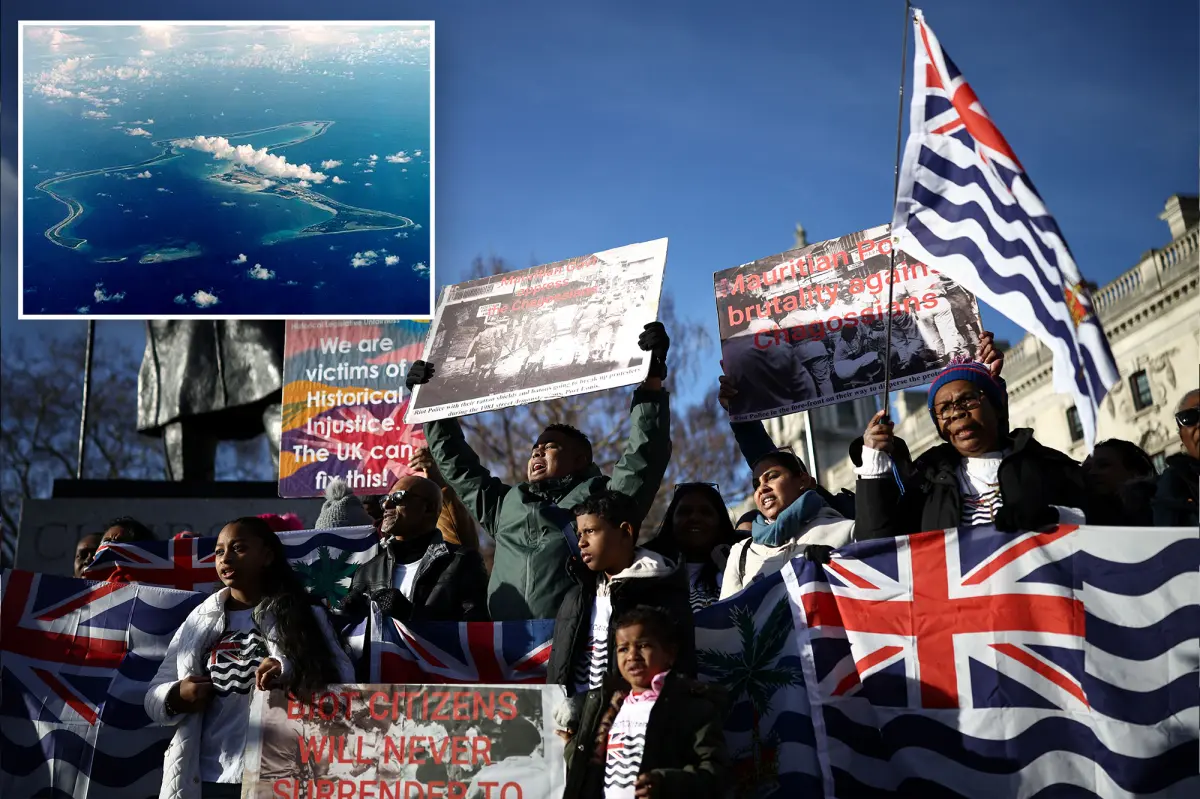
Trump Criticizes UK’s Chagos Islands Decision, Links to His Greenland Ambitions
In a characteristically bold statement on Tuesday, former President Donald Trump criticized Britain’s decision to transfer sovereignty of Diego Garcia and the Chagos Islands to Mauritius as “an act of total weakness.” Through his Truth Social platform, Trump connected this international development to his longstanding interest in acquiring Greenland, claiming this was “another in a very long line of national security reasons why Greenland has to be acquired.” The statement highlights Trump’s continued focus on territorial assets he considers strategically valuable to American interests, even as he prepares to return to the White House in January 2025.
At the heart of Trump’s concern lies Diego Garcia, a remote island in the Indian Ocean that hosts a crucial US-UK military base. The strategic importance of this installation cannot be overstated—it has served as a launching point for operations in the Middle East and provides American forces with a presence in a region where China has been expanding its influence. The deal between Britain and Mauritius, struck last year, would transfer sovereignty to Mauritius while allowing Britain to retain control of the air base through a long-term lease arrangement. This nuance appears lost in Trump’s forceful commentary, where he characterized the decision as giving away the island “FOR NO REASON WHATSOEVER,” capitalizing his words to emphasize his displeasure.
Trump’s statement reveals his geopolitical concerns about rival powers, specifically mentioning that “China and Russia have noticed this act” by Britain. This reflects his consistent worldview that America’s traditional allies sometimes make decisions that inadvertently benefit strategic competitors. The former president’s linking of Diego Garcia’s status to his desire to acquire Greenland demonstrates his transactional approach to international relations and territorial assets. For Trump, both locations represent strategic chess pieces on a global board where American military presence and resource access are paramount concerns that should transcend conventional diplomatic norms about sovereignty and territorial integrity.
Interestingly, Britain’s deal with Mauritius appears to have been delayed specifically to accommodate Trump’s return to office. Reports indicate that London wanted to give the incoming administration time to examine the details of the plan after Trump’s January 2025 inauguration—a sign that international partners anticipate significant policy shifts under his leadership. This pause suggests recognition of Trump’s unorthodox approach to international agreements and territory-related matters. The UK government has not immediately responded to requests for comment on Trump’s latest statement, maintaining diplomatic silence on what could become a point of tension between the traditional allies.
Despite his current forceful rhetoric against the agreement, Trump had previously indicated he was “inclined to go along” with Britain on the arrangement in February 2025. This apparent contradiction illustrates the unpredictable nature of Trump’s foreign policy positions, which can shift based on evolving circumstances or strategic reconsiderations. The former president has consistently maintained that Greenland’s strategic importance has only grown with the “encroaching presence of China and Russia” in the Arctic region, and has “repeatedly insisted he will settle for nothing less than ownership” of the autonomous Danish territory—a position that caused diplomatic tensions with Denmark during his first term.
The situation highlights the complex interplay between sovereignty, strategic military assets, and great power competition that will likely characterize Trump’s second term. His blunt commentary on the Chagos Islands deal reveals a preference for direct control of strategically valuable territory rather than reliance on diplomatic arrangements with allies. As Trump prepares to return to office, international partners are closely watching how his territorial ambitions might reshape American foreign policy and military posture. Whether regarding Diego Garcia in the Indian Ocean or Greenland in the Arctic, Trump’s approach suggests a renewed emphasis on securing physical control of locations he deems vital to American security interests—even if that means challenging traditional norms of international relations.