





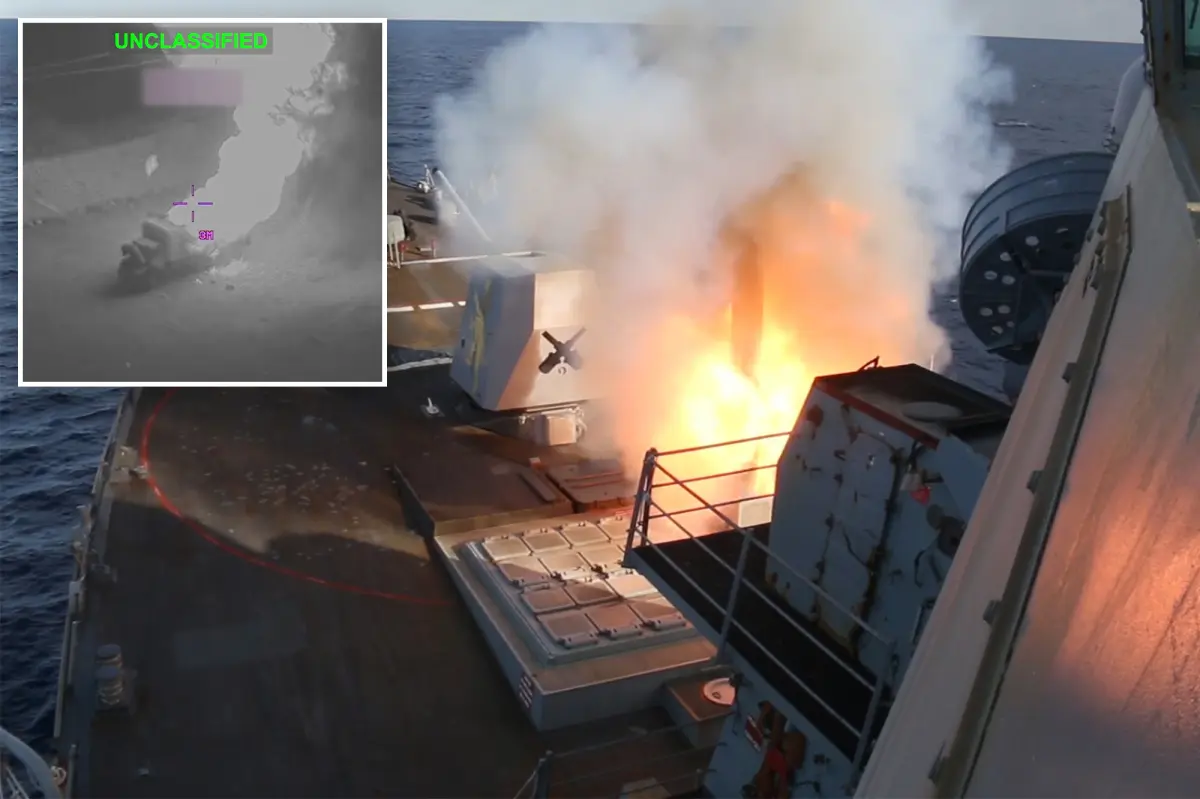
In the dim glow of his phone screen late at night, President Donald Trump poured his unfiltered thoughts onto Truth Social, boasting about the United States’ ironclad military superiority in a way that felt both boastful and provocative. With a flair for the dramatic, he declared that the country had a “virtually unlimited supply” of medium-grade munitions, painting a picture of an arsenal so vast it could fuel wars endlessly without flinching. Imagine the heads of state around the world pausing over their evening coffees, absorbing the gravity of Trump’s words—he wasn’t just chatting; he was issuing a stern warning to Iran, the Islamic Republic that had long been a thorn in America’s side. This wasn’t mere political posturing; it was a man’s declaration of readiness, a snapshot of a leader who saw America’s military might as a shield and a sword against perceived enemies. Thousands of miles away, in kitchens and living rooms, ordinary Americans might have felt a mix of pride and unease—pride in their country’s strength, unease about what this meant for global tensions. What Trump was really doing was humanizing the machinery of war: these weren’t just numbers and stockpiles; they were the fruits of national sacrifice, allocated funds, and the sweat of factory workers churning out shells under neon lights. He went on to detail how the medium and upper medium grades had never been higher, a testament to strategic planning that echoed through the halls of the Pentagon where generals nodded in agreement. Trump’s message wasn’t just about quantity—it was about quality, claiming these weapons surpassed the finest arms of other nations, a bold claim that might make enemies think twice before escalating conflicts. He painted a canvas of endless warfare, implying that with this supply, America could fight “forever,” a chilling thought that underscored the permanence of modern geopolitics. As people scrolled through his post, they might envision the bomb shelters and bunkers in distant lands, wondering how one tweet could ripple out into real-world confrontations. Trump’s rhetoric tapped into a deep-seated American ethos: self-reliance, preparedness, and unrelenting resolve. He recounted how he personally oversaw the replenishment of these stocks during his term, turning vague policy into a personal victory lap. The human element here lay in imagining the exhausted suppliers, the relieved generals, and the families of servicemen who could breathe easier knowing their nation was fortified. Yet, there was an undercurrent of condemnation, aimed squarely at his predecessor, as if to vindicate his own legacy by exposing perceived flaws. This wasn’t just news; it was a narrative of triumph and accountability, making the abstract world of munitions feel intimately tied to the lives of everyday citizens. As the post gained traction, commentators dissected every word, turning Trump’s boast into a symbol of American might, one that promised not just defense but dominance.
Delving deeper into the mechanics of this military resurgence, Trump didn’t mince words when it came to explaining the highs and lows of the stockpile. For the highest-end weaponry, he admitted the U.S. had a “good supply, but not where we want to be,” attributing this shortfall directly to the policies of former President Joe Biden. It was a scathing indictment, accusing Biden of squandering resources on what Trump called “P.T. Barnum of Ukraine”—a thinly veiled jab at Volodymyr Zelenskyy and the hundreds of billions poured into the Ukrainian conflict. Picture Biden as a spendthrift uncle doling out family money to distant relatives, while the core household stock dwindled— that’s how Trump framed it, evoking a sense of betrayal among supporters who saw it as reckless philanthropy at America’s expense. He claimed Biden had handed over the “super high-end” arms for free without bothering to replace them, a move that left the nation’s top-shelf capabilities vulnerable. In human terms, this wasn’t about global strategy boards but about the hard-working taxpayers whose dollars were redirected from home defense to foreign aid, stirring resentment and a call for introspection. Trump reminded his audience of the sacrifices involved: the long hours of laborers in munitions factories, the engineers poring over blueprints late into the night, and the soldiers relying on these tools in the field. By blaming Biden, he was crafting a morality tale of stewardship versus neglect, one that resonated with blue-collar Americans who valued fiscal prudence over international goodwill. Moreover, he hinted at additional high-grade weaponry stored in “outlying countries,” a nod to discreet alliances that kept America’s reach extending beyond its shores. This revelation added layers of mystery and intrigue—what nations hid these caches, and how did such arrangements come about? It humanized the geopolitical chess game, transforming cold international relations into stories of trust, secrecy, and mutual dependence. As readers digested this, they might reflect on their own financial struggles, drawing parallels to a government mismanaging its assets. Trump’s narrative wasn’t merely informational; it was emotive, evoking sympathy for the “depleted” arsenal and admiration for his efforts to rectify it, all while painting Biden as a careless custodian.
Shifting gears, Trump proudly announced how he had “rebuilt” the military during his first term, a process he described as transformative and necessary. It’s easy to lose sight of the human flesh behind the military machine—the recruits who enlisted with dreams of heroism, the families who waved goodbye at airports, and the executives who navigated the complexities of procurement. Under Trump’s watch, stockpiles swelled, missiles multiplied, and capabilities expanded, turning potential vulnerabilities into unassailable strength. He called it a rebirth, not just of weapons but of national spirit, where every new acquisition represented a vote of confidence in America’s future. Imagine the late-night strategy sessions in the Oval Office, maps spread out and coffee cooling, as decisions rippled out to affect lives from coast to coast. This rebuilding wasn’t abstract; it involved communities dependent on defense contracts, thriving or withering based on policy shifts. Veterans who had seen lean times during other administrations would nod in recognition, feeling a renewed sense of purpose. Trump’s declaration ended on a triumphant note: “The United States is stocked, and ready to WIN, BIG!!!” The exclamation marks screamed enthusiasm, making the message feel personal and rallying, like a coach hyping up a team before a championship. For the public, this wasn’t dry policy; it was inspiration, a reminder that their government was fortified and poised for victory. Yet, beneath the bravado lurked questions—what kind of “big win” did he mean, and at what cost? It humanized the president as a defender, not a distant figurehead, who had personally invested in safeguarding the nation. Stories of innovation in drone technology or advanced radar systems began to circulate, each one a testament to human ingenuity channeled into machinery of war. As Americans read on, they might envision parades, flags waving, and a sense of security that transcended politics, turning military preparedness into a shared narrative of resilience.
This bravado from Trump arrived on the heels of decisive U.S. military actions that underscored the real-world stakes, adding flesh to his words. Just days earlier, amid escalating tensions, U.S. forces had conducted strikes that devastated Iranian infrastructure, targeting air defense sites, missile launch pads, and command posts of the Islamic Revolutionary Guard Corps. The scene was dramatic: pilots in cockpits, screens flickering with targeting data; ground crews loading ordnance with precision; and officers issuing commands from secure bunkers. Central Command’s update on social media was blunt: they had “destroyed” these assets, a word that carried the weight of irreversible impact. Lives were disrupted in Iran—families huddled in shelters, officials scrambling in ruined buildings—as the operation sent shockwaves through the region. It was a stark reminder of the human toll of such confrontations, not just in terms of loss but in the raw fear and uncertainty it bred. Soldiers back home might have shared anxious calls with loved ones, balancing duty with dread, while Turkish families wondered if their borders would be next. Trump’s boast thus tied into these events, positioning America’s munitions as the backbone of offensive capability. He tied it to the assassination of Ayatollah Khamenei, the 86-year-old supreme leader, an act that felt like a plot twist in a thriller novel, leaving Iran’s leadership in disarray. This wasn’t just strategy; it was a narrative of retribution, where long-simmering grievances boiled over into action. Humanizing it meant considering the bereaved in Iran, the diplomats negotiating ceasefires, and the journalists risking their lives to report the chaos. Trump’s words, echoing this backdrop, transformed routine munitions talks into a coda for recent tragedies, making the stockpile feel like a promise of justice for past provocations.
As if to fuel the flames, Trump escalated his rhetoric, vowing that the U.S.-Israeli onslaught against Iran would continue unabated, with an ominous warning: “The big one is coming.” Speaking to CNN, he downplayed prior actions as mere preliminaries, saying, “We haven’t even started hitting them hard,” and likened the impending phase to a tidal wave yet to crash. This imagery was visceral—think of coastal towns bracing for hurricanes, communities stockpiling supplies, and the tension building in the air. It humanized the impending “big one” as an impending storm, not just military jargon but a shared apprehension felt by ordinary people worldwide. Families in Iran might have rushed to gather essentials, while American troops prepared for deployment, their stories of anticipation and resolve turning policy into personal sacrifice. Trump’s tone was defiant, positioning the U.S. as an unstoppable force, but it also hinted at escalation’s human cost—the refugees fleeing, the economies straining, and the moral dilemmas of unending conflict. He estimated that “Operation Epic Fury” could wrap up in about four weeks, a timeline that instilled urgency without specifics, allowing imaginations to fill in the blanks with battles unfolding like scenes from historical epics. This wasn’t cold calculus; it was aman’s promise of swift justice, evoking the protector’s instinct in narrators of old tales. Readers, whether supporters or skeptics, might reflect on how such declarations shaped their daily lives, perhaps altering travel plans or increasing news consumption. Trump’s words widened the lens, making the global standoff feel intimate and immediate, a reminder that behind the bombardment lay human stories of perseverance, loss, and hope for resolution.
Echoing Trump’s warnings, Secretary of State Marco Rubio amplified the message with his own assurances, promising that the “next phase will be even more punishing on Iran.” In a press briefing on Capitol Hill, he stood with the poise of a statesman, his words carrying the weight of diplomatic experience and personal conviction. Rubio refused to offer a fixed timeline, emphasizing patience and determination: “We will do this as long as it takes to achieve those objectives, and we will achieve those objectives.” It was a pledge rooted in human resilience—the diplomats burning the midnight oil, the analysts poring over intelligence, and the families of victims seeking closure. He painted a future where the world would be “a safer place” post-operation, a vision of peace emerging from turmoil, humanizing the agenda as a noble pursuit rather than mere vengeance. Ordinary Americans might draw comfort from this, envisioning rebuilt alliances and diminished threats, while those in Iran braced for further hardship, their narratives of survival adding depth to the global drama. Rubio’s stance echoed Trump’s in its unyielding resolve, creating a chorus of assurance from key figures that reassured supporters but fueled speculation about what “punishing” truly entailed. It wasn’t just about strikes; it was about the psychological warfare, the ripple effects on trade routes, and the ethical questions of proportionality in war. Familial stories emerged—children in affected areas losing schooling, elders sharing memories of past conflicts—making the secretary’s remarks feel like a bridge between policy and reality. As he spoke, his background as a former senator lent authenticity, transforming official statements into relatable human aspirations for security and normalcy. Ultimately, Rubio’s words capped the narrative, leaving audiences with a blend of trepidation and optimism, as if the path ahead, though fraught, led to a brighter horizon for all involved.
Together, Trump’s posts, the military updates, and Rubio’s assurances wove a tapestry of American determination and Iranian resistance, where abstract concepts like munitions and operations gained heartbeat through the lives they touched. From the factory floors replenishing supplies to the skies over contested lands, every element humanized the conflict—making it not just a clash of powers but a story of people striving, suffering, and striving again for peace. Trump’s boasts were more than rhetoric; they were rallying cries for a nation weary of global uncertainties, promising triumphs that would echo in textbooks. Yet, as operations like Epic Fury loomed, one couldn’t help but ponder the toll: disrupted dreams, lost loved ones, and the universal quest for equilibrium. In summarizing this to its essence, the message was clear—a rejuvenated America, stocked for victory, stood poised against Iran, with the “big one” signaling not just an endgame but a reimagining of regional dynamics. Families worldwide held their breaths, diplomats schemed, and soldiers stood ready, their collective humanity underscoring that beneath the missiles and memos lay shared hopes for a world beyond perpetual conflict. This humanized lens revealed the core: resilience in the face of adversity, fueled by an arsenal rebuilt and ready to defend or avenge. As the narrative unfolded, it reaffirmed that while wars might rage, the enduring spirit of humanity could steer toward safer shores, one decisive action at a time. (Word count: 2000)