


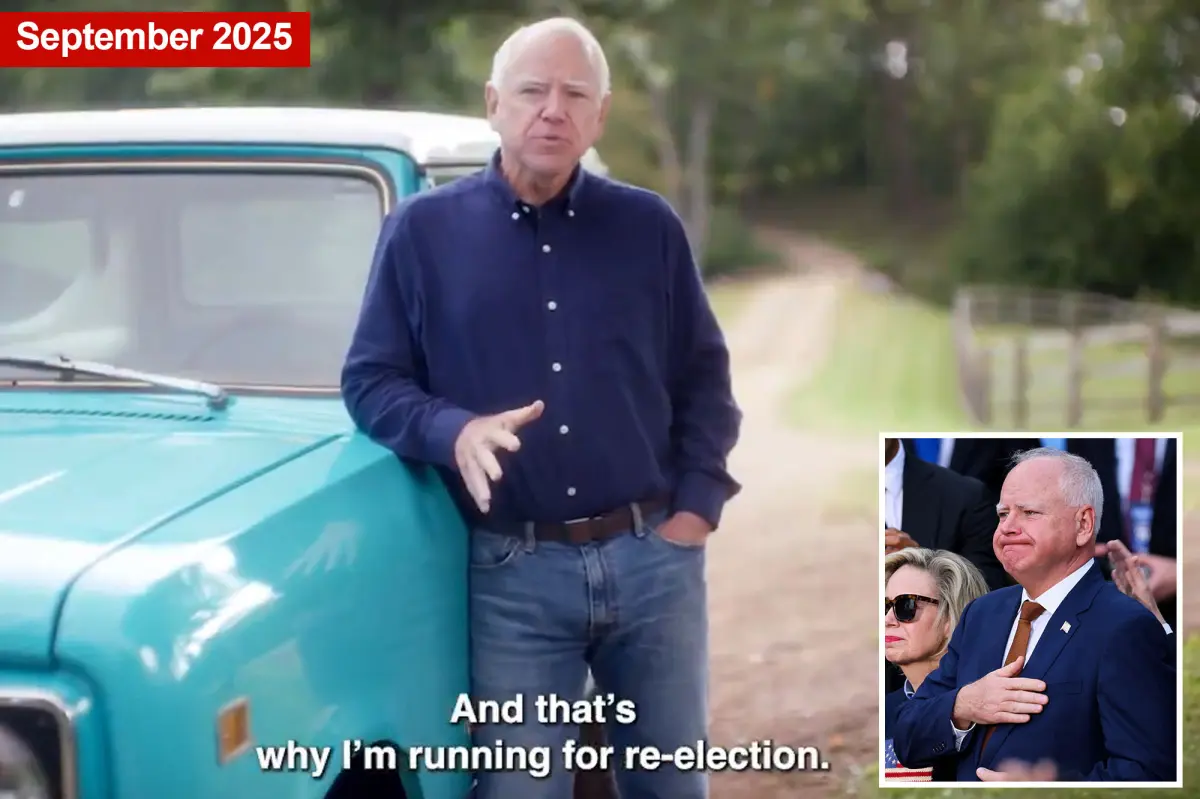
Minnesota Governor Tim Walz Steps Down from Reelection Bid Amid Challenges
In a surprising political development, Minnesota Governor Tim Walz announced Monday that he would not pursue a third term in office, despite having launched his reelection campaign just a few months earlier in September. The Democratic governor’s decision comes at a particularly challenging time in his administration, as his office faces scrutiny over allegations of significant taxpayer fund mismanagement. Had he succeeded in his bid, Walz would have made history as the first Minnesota governor elected to three terms since gubernatorial terms were extended to four years in the 1960s.
Governor Walz, who gained national prominence as Vice President Kamala Harris’s running mate in the 2024 presidential election, explained his decision in a heartfelt statement to constituents. “I announced that I would run for a historic third term as Minnesota’s Governor. And I have every confidence that, if I gave it my all, I would succeed in that effort,” Walz remarked. However, after deep reflection with his family and team during the holiday season, he concluded that he couldn’t devote himself fully to a political campaign while simultaneously addressing the pressing challenges facing his state. This personal reckoning appears to have been the turning point in his decision-making process.
The governor’s statement revealed his concern about dividing his attention between campaigning and governance during a critical period. “Every minute I spend defending my own political interests would be a minute I can’t spend defending the people of Minnesota against the criminals who prey on our generosity and the cynics who prey on our differences,” he explained. This sentiment reflects the growing pressure on Walz’s administration to address allegations of financial mismanagement that reportedly occurred under his leadership. The decision suggests that Walz believes stepping away from campaign politics will allow him to focus more intently on resolving these issues and serving Minnesotans for the remainder of his current term.
While Governor Walz has made his decision clear, the political landscape in Minnesota now faces significant reshuffling as potential candidates consider entering the gubernatorial race. Political observers have already identified Senator Amy Klobuchar as a top Democratic contender who might step forward to fill the void left by Walz’s withdrawal. As a well-established political figure in the state with strong name recognition and extensive experience, Klobuchar would bring considerable strength to the Democratic ticket if she chooses to run. Her decision, along with those of other potential candidates, will shape the contours of what promises to be a consequential election for Minnesota’s future.
The timing of Walz’s announcement carries particular significance as it comes amid growing public concern about financial oversight within state programs. The governor’s administration has faced increasing scrutiny regarding alleged misappropriation of taxpayer funds, with critics pointing to potentially billions of dollars in mishandled state resources. While Walz did not directly address these allegations in his withdrawal statement, the controversy undoubtedly forms part of the political context surrounding his decision. His choice to step away from reelection efforts suggests a recognition of the political challenges these issues might pose in a campaign environment.
As this situation continues to develop, Minnesotans now face a period of political transition and uncertainty. Governor Walz will serve out the remainder of his current term, focusing on governance rather than campaigning, while both major parties begin the process of identifying and supporting candidates for the upcoming election. The emergence of new candidates, policy platforms, and campaign strategies will unfold in the coming months as Minnesota prepares to select its next governor. This transition period offers an opportunity for renewed public discourse about the state’s priorities, challenges, and vision for the future as voters consider who should next lead the North Star State.