




The Shadows of a Golf Icon’s Personal Battles
Tiger Woods, once the undisputed king of golf with his 15 major championships and trail of impeccable victories on the green, found himself in the glare of another public scandal on a fateful Friday. This time, it wasn’t a missed putt or a rival’s comeback that rocked the world—no, it was a rollover car crash on Jupiter Island, Florida, that catapulted his past struggles with prescription drugs back into the headlines. For many fans who idolized him as a symbol of triumph and resilience, it was a painful reminder that behind the charismatic smile and pinpoint iron shots lay a man grappling with deep-seated demons. Woods, now in his mid-40s, had vowed to put those dark days behind him after years of surgery and rehab, but this incident suggested otherwise. As authorities announced he’d been charged with DUI, allegedly under the influence of some medication or drug, whispers of relapse circulated among golf enthusiasts and fans alike. It felt personal, like watching a family member falter after promising change, evoking a mix of sympathy and disappointment. Woods’ journey from a boy prodigy on the PGA Tour to this latest low point highlights the fragility of fame and the toll it can take on the human spirit. In interviews, he’d often spoken of his struggles openly, saying things like, “I’ve made mistakes, but I’m human,” yet moments like these made those words ring hollow to some. The public, endlessly fascinated by celebrity downfalls, couldn’t help but wonder: how does one of the greatest athletes alive end up here again? It wasn’t just about the crash; it was about the vulnerability of a man who’d scaled the heights only to slip back into the abyss. Law enforcement’s account painted a picture of a driver who seemed lethargic, with no alcohol in his system, pointing to something else—perhaps those old foes, the pills—that had dulled his senses. For Woods supporters, it was a call to empathy: remember, he’s fought wars with his body, undergoing four back surgeries starting in 2014, leaving him in constant pain that no amount of fame could numb entirely. This wasn’t just an accident; it was a spotlight on the invisible battles athletes face, where victory off the course is as hard fought as any tournament. As the news spread, social media lit up with debates—some defending him, others critical—but beneath it all, there was a shared humanity: no one is invincible, not even Tiger.
The Details of the Crash Unfold
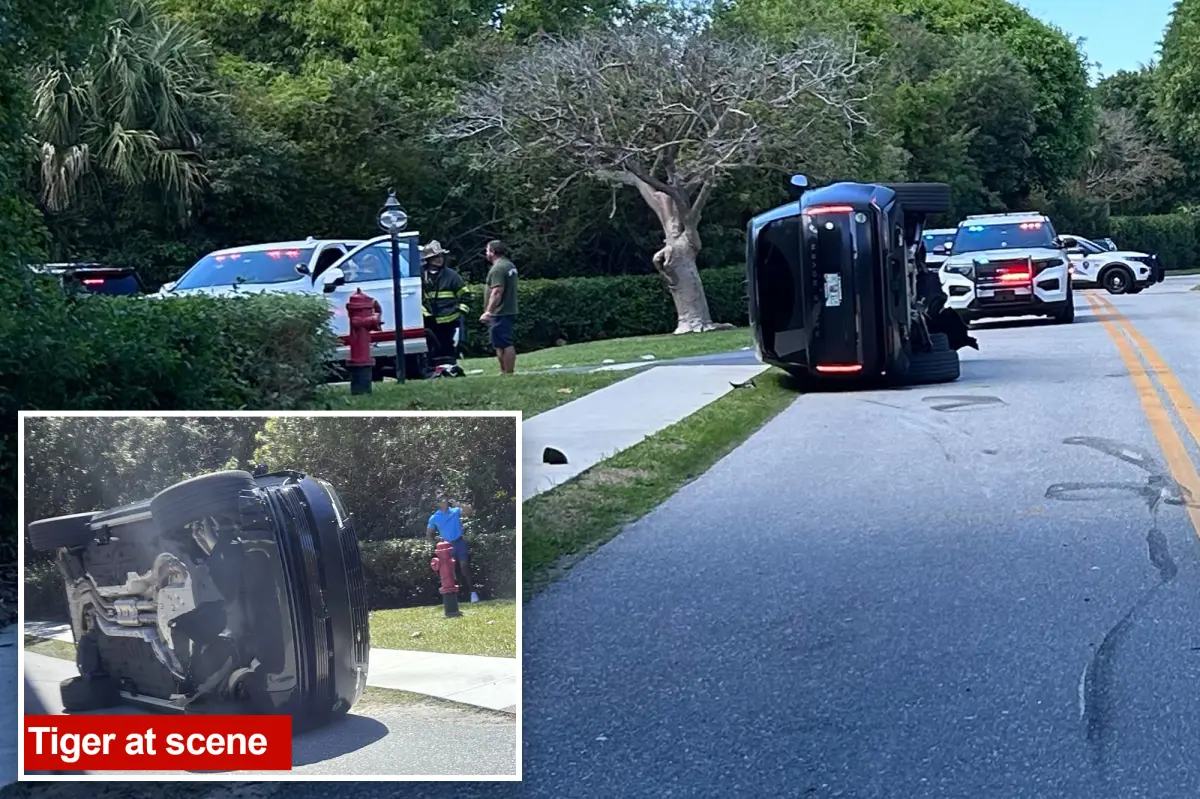
The scene of the incident was a quiet stretch of road on Jupiter Island, around 2 p.m., when Woods’ luxury Land Rover took a terrifying tumble. Martin County Sheriff John Budenseik described it vividly to reporters, saying the golfer had attempted to maneuver around a flatbed truck pulling into a driveway at what seemed like breakneck speed. In a split-second decision to dodge an oncoming car, Woods clipped the back of the truck, sending his vehicle rolling spectacularly. Eyewitnesses reported the sound of screeching tires and crunching metal, the Land Rover somersaulting before coming to a halt. Miraculously, Woods emerged unscathed—no broken bones, no life-threatening injuries—a testament to both the construction of the SUV and perhaps a stroke of luck. But the officers on the scene noticed something off: the famous athlete appeared unusually lethargic, his movements sluggish as if he were in a fog. A breath test confirmed no alcohol, but suspicions of impairment pointed elsewhere. It wasn’t hard to imagine the adrenaline crash after the impact, but for those who knew his history, it screamed familiarity. Woods, held at the county jail, might have felt the weight of déjà vu, a sinking realization that patterns from his past were repeating. Driving a vehicle in such a state is dangerous, not just for him but for innocent others. One can almost picture him behind the wheel, mind clouded, trying to outrun the pain that has plagued him since those grueling surgeries. The sheriff’s office emphasized the risks of high-speed maneuvers on winding rural roads, where visibility is paramount. In human terms, this wasn’t just a traffic mishap; it was a cry for help from a man who has long admitted his reliance on quick fixes to cope with chronic ailments. Fans who tuned in to witness his dramatic comeback in golf—defying expectations after a devastating 2019 car crash—now faced another wrenching chapter. It highlighted how, for all his wealth and fame, simple joys like a safe drive home eluded him, underscoring the universal lesson that addiction doesn’t discriminate.
Echoes of Past Addictions and Pain
To understand Friday’s crash, one must rewind to the anguished tale of Woods’ prescription drug battle, a saga that began with physical agony and spiraled into public disgrace. Back in spring 2014, the golfer underwent his first of four back surgeries, each one a desperate bid to salvage his career amid excruciating pain from multiple injuries. The surgeries included fusions and procedures, leaving him reliant on medications that promised relief but delivered a double-edged sword. Vicodin for opioid relief, Dilaudid for severe pain, Xanax to calm nerves, Ambien to induce sleep—these became his crutches, blurring the line between necessity and dependency. Woods had confided in friends and the media about the toll: “Pain management is tricky; you take something, and it helps, but then you need more.” His lifestyle, with grueling tournaments and global travel, intensified the isolation, turning pills into companions that numbed not just the body but the soul. This wasn’t unique to him; many athletes face similar dilemmas, where pushing limits leads to prescription pitfalls. By 2017, it culminated in a notorious incident: authorities found him asleep at the wheel on a Jupiter road, engine idling on Memorial Day morning, about 15 miles from home. That mugshot—bleary-eyed and disoriented—became iconic, a stark contrast to his polished public image. He blamed a cocktail of pain meds from recent fusion surgery, admitting it was a low point that forced self-reflection. The human side shone through in his writings, where he spoke of guilt and shame, saying, “I let people down, including myself.” Rehab followed, treatments to kick the habit, but the scars lingered. Friends recall him as a man deeply remorseful, yet haunted by the fear of relapse. This history imbued the latest crash with heartbreaking context: was this another slip, triggered by unresolved pain or stress? It humanized him further, showing that even legends falter, reminding us of the fragility of mental health in high-pressure worlds like professional sports.
The 2017 Incident That Shook the World
Flashback to that May morning in 2017, and the scene was almost picturesque: a quiet Florida roadway, the golfer nodding off behind the wheel. Woods later explained he’d been managing pain from a back fusion surgery just two months prior, a procedure meant to stabilize his spine but one that left him in turmoil. Officers pulled him over, discovering him unresponsive with the car running, tablets scattered nearby. Analysis revealed he’d been under the influence of those familiar culprits—Vicodin, Dilaudid, Xanax, plus Ambien and THC from edibles—all mixed in a way that impaired his judgment profoundly. The public reaction was a mix of shock and ridicule; memes of the mugshot proliferated, turning a personal crisis into fodder for late-night comedy. Yet, beneath the jokes, there was empathy for a man who’d sacrificed so much. Woods’ explanation was simple yet profound: the meds were prescribed post-surgery, but the combination overwhelmed him, leading to that perilous snooze. He described a fog of confusion, where driving felt like the logical next step, unaware of the danger. This incident wasn’t about recklessness; it was about a system failing him—overprescription in the throes of acute pain. In the court of public opinion, some saw vulnerability, others exploitation, but it shone a light on broader issues like opioid epidemics in sports. Woods pleaded guilty to reckless driving shortly after, opting for a diversion program for first-time DUI offenders, aiming to avoid a full-blown trial. It was a humbling chapter, forcing him to confront his dependence head-on. Reflecting now, it feels like a tipping point, where he vowed reform, but eight years later, echoes in the Florida crash suggest the fight rages on. For fans, it’s a reminder of human imperfection: even after admitting mistakes, patterns repeat without constant vigilance.
Rehabilitation Efforts and Legal Repercussions
Following the 2017 arrest, Woods embarked on a path of redemption, seeking help to break free from his opioid grip. He entered a diversion program, which allowed him to avoid harsher penalties by completing education on substance abuse and agreeing to random drug tests. The plea deal was a lifeline, recognizing his previous good record but underscoring the seriousness of DUI offenses. More crucially, he checked into a treatment facility, committing to rehab that addressed both the physical addiction and underlying psychological wounds. In interviews, he opened up about the process, calling it “the toughest thing I’ve ever done,” likening it to facing his darkest fears. Therapists worked with him on pain management alternatives, like physical therapy and mindfulness, to wean off pills. But the road was bumpy; relapse temptations lingered, especially after more surgeries compounded his back issues. Supporters cheered his honesty at events like The Masters, where he spoke candidly about using his platform to urge others to seek help. Legally, the consequences were a wake-up call: fines, driver’s license suspension, and community service that humbled him. The human impact was evident in changed habits—he cut back on travel, focused on family, even coached his son in golf—a shift from his glory days. Yet, as with many recoveries, it wasn’t linear; triggers like chronic pain or stress could spark setbacks. The latest DUI charge, echoing 2017, raises questions: was the rehab enough, or did systemic issues in prescription practices let him down again? For Woods, it’s a ongoing narrative of resilience, proving that even after hitting rock bottom, rebuilding is possible. It instills hope for others, showing that facing charges doesn’t define a person forever.
Current Reflections and the Road Ahead
As of now, Tiger Woods remains in Martin County jail, awaiting further developments on Friday’s DUI charge, his Land Rover towed away as evidence of another turbulent moment. The sheriff’s update emphasized the community’s concern, with safety warnings about impaired driving resonating widely. For Woods, it must feel like an endless loop—surgery, pain, meds, crash—yet his spirit endures, evidenced by his 2023 Tour Championship win, a comeback story that defied odds. The absence of injury this time is a small mercy, but the emotional toll is immeasurable; imagine waking up to headlines questioning your sobriety yet again. Friends report him as introspective, perhaps reflecting on what more he needs: better pain strategies or ongoing therapy. Fans worldwide send messages of support, reminding him of his humanity. Moving forward, legal steps might include bail and probation, but the real challenge lies in prevention. Woods’ legacy, once defined by majors, now includes lessons in vulnerability—how prescription habits, if unchecked, can derail lives. It’s a call to action for sports and society: prioritize holistic health over quick fixes. In the end, Tiger’s story humanizes the fight against addiction, inspiring empathy and caution. No one knows what the next chapter holds, but for a man who’s conquered fairways and foes alike, this too could be a turning point toward lasting peace. The hope is that, through it all, he finds the strength to drive safely home, not just on the road, but in life. (Word count: 2,012)