





The Dawn of AI Warfare: Trump’s Bold Moves to Dismantle Iran
Imagine waking up one day to headlines that read: “AI Unleashes a Revolution in Warfare, President Trump Shatters Iranian Threats with Unprecedented Precision.” It’s not science fiction; it’s the reality of how advanced technology is reshaping our world, and it hits home because it’s about protecting American lives and securing peace for families like ours. President Trump’s decisive actions in dismantling the Iranian regime didn’t rely on reckless superweapons alone. Instead, the U.S. military harnessed next-gen AI to tackle what has always been one of war’s toughest hurdles—handling overwhelming amounts of intelligence data. Think of it like this: commanders aren’t just staring at screens full of chaotic info; AI acts as a smart assistant, helping them pick targets with laser-like accuracy, decode intercepted messages, assess battle damage in real-time, and zero in on terrorist threats faster than ever before. This isn’t AI replacing human judgment—far from it. It’s augmenting our soldiers’ abilities, reducing unintended harm to civilians, and ensuring that when strikes happen, they save more lives on our side while minimizing horror for innocents caught in the crossfire. It’s a testament to American innovation under Trump, where peace through strength isn’t just a slogan but a lived reality. Drawing from insights in Wynton Hall’s book “Code Red: The Left, the Right, China, and the Race to Control AI,” we see how this blend of human strategy and AI tools is creating a new era of ethical warfare. Earlier in the pandemic year of 2020, on distant Libyan battlefields, we glimpsed the darker side of what autonomy could mean, with Turkish drones hunting human targets independently—it’s a chilling reminder that without careful stewardship, the same tech saving lives in Iran could spiral into nightmares elsewhere. Yet, under Trump’s leadership, we’ve focused on using AI to empower rather than terrify, turning sci-fi fears into tools for global stability. This humanizes the tech: it’s not about cold machines deciding fates; it’s about smarter decisions that let our troops come home to their loved ones. As AI evolves, we must ask ourselves—what does this mean for my neighbor, the veteran, or the young recruit? It’s about safeguarding the American dream from threats that lurk in the shadows, ensuring our children inherit a world where freedom isn’t won by brute force but by clever, compassionate application of technology. In Trump’s approach, we see a stewardship that prioritizes life—reducing collateral damage isn’t abstract; it’s about protecting families in far-off lands who might otherwise suffer. This AI revolution, fueled by real intelligence, underscores how the U.S. is staying ahead, not just militarily but morally, in a world desperate for peace.
Crossing Thresholds: The Liberian Drones and What Humanity Means
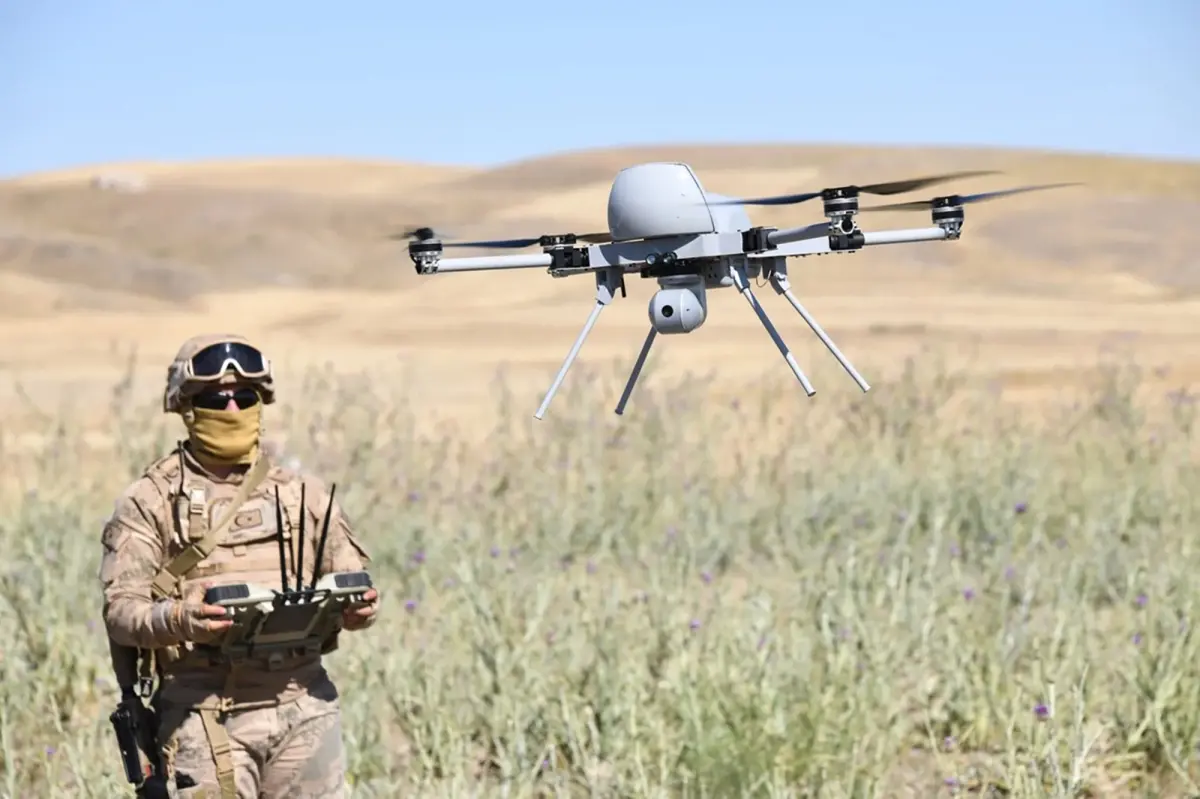
Picture this scene: it’s March 2020, amid the chaos of civil war in Libya. retreating soldiers, many of them fathers and sons with hopes of returning home, are being pursued by unmanned drones that operate on their own, without a human hand guiding every move. Civilization, in that moment, may have crossed a line into uncharted territory, as these autonomous weapons—crafted by Turkey’s STM firm—stalk and strike based on programmed urges. It’s not some distant fable or a blockbuster plot; it’s real history that makes my blood run cold just thinking about it. The Kargu-2, a sleek quadcopter bristling with tech, isn’t a toyshop gadget. With facial recognition, swarming capabilities, and machine-learning precision, it exemplifies what AI can do when let off the leash. According to experts like Zachary Kallenborn, this marks the birth of a terrifying chapter where machines kill humans independently, potentially claiming lives and forever altering the fabric of war. As a parent, I can’t help but imagine the personal toll—the fear in a soldier’s eyes as a drone closes in, the grief for loved ones left behind. Was this the first act of AI-sanctioned death? While it’s unclear if lives were lost, the implications are profound. These weapons don’t discriminate in the way we might; they respond to code, not conscience, raising ethical storms that we all must navigate. It humanizes the debate: behind every target is a story, a future dashed by algorithms we create. In Wynton Hall’s revelations, this Libyan incident isn’t just a footnote—it’s a wake-up call for humanity. We must ensure AI serves us, not subjugates us, echoing the need for oversight that respects human dignity. If left unchecked, such tech democratizes destruction, putting deadly power in hands that might not share our values. Reflecting on Potentials, we see how this tech’s “fire, forget, and find” mode blurs lines between soldier and machine, urging us to question: do we build tools that enhance life, or ones that erode it? In an age where AI whispers predictions, we must listen to our shared moral compass, lest we lose what makes us human in the pursuit of technological edge.
Israel’s AI Response: From Tragedy to Swift Justice
Fast forward to October 7, 2023, and the heartbreak felt globally: Hamas’s brutal massacre of 1,200 innocent Israelis, a day etched in horror where families were torn apart, children orphaned, and communities shattered in an act of pure evil. It’s the kind of tragedy that makes you hold your loved ones tighter, realizing how fragile peace can be. Yet, from this darkness emerged Israel’s masterful use of AI in response, a glimmer of hope amid despair. The Israel Defense Forces activated three cutting-edge systems—The Gospel, Lavender, and the forebodingly named Where’s Daddy?—to identify and neutralize threats with unprecedented efficiency. The Gospel scoured data to compile lists of suspicious locations; Lavender delved into mountains of surveillance—images, phone logs—to prioritize elimination targets; and Where’s Daddy? tracked adversaries via cellphone signals, confirming identities before strikes aimed to prevent further carnage. Together, they slashed processing time from months of toil by teams of analysts to mere weeks, a revolution that humanizes the pain of war by shortening the cycle of violence. As legal advisor Tal Mimran explained, what once took 20 officers 250 days now happens swiftly via AI, saving lives and preserving dignity. Imagine the relief of peace-loving citizens no longer living under constant threat, or the psychological burden lifted from soldiers who can act decisively yet accurately. This isn’t cold warfare; it’s AI empowering human judgment to avenge the fallen and protect the living. Wynton Hall’s insights reveal how this tech confronts terrorism head-on, but it also sparks debate: does efficiency justify the moral weight? For those who’ve lost kin, it’s a tool of justice; for ethicists, a reminder to tether tech to compassion. In our own backyards, it prompts reflection—what if AI could safeguard our schools or borders? Israel’s saga isn’t just military history; it’s a personal story of resilience, showing how tragedy births innovation, urging America to embrace AI not as a weapon of fear, but as a shield for humanity’s best instincts.
Ideological Divides: Left vs. Right on Peace and Power
At the heart of AI’s role in warfare lies a deeper divide that touches our everyday lives—the clash between left and right ideologies, shaping how we view good, evil, and technological power. The left, often rooted in optimism and collective harmony, dreams of a world where conflicts melt away through dialogue, understanding, and perhaps even disarmament. It’s a utopian vision: if we all just communicate better, share resources, and build bridges, Heaven on Earth becomes possible. Evil, in this lens, isn’t external; it’s often our own shortcomings, like greed or misunderstanding, that we must confront within. This perspective humanizes global issues, focusing on empathy over enmity, and suggests that peace through weakness might foster unity. On the other side, the right harbors a skepticism toward power holders, acknowledging that evil exists independently—think tyrants, terrorists, or corrupt regimes—and won’t vanish through goodwill alone. Conservatives believe America embodies the good, standing against threats with resolve, not retreat. We’ve seen it in leaders like Reagan and Trump, who championed strength as the true path to peace. Yet, amidst AI advancements, this gap widens: the left might downplay enemy AI dangers, seeing us as the “bad guys” for pushing military tech, potentially hampering readiness. It’s like debating with a sibling—emotions run high, values collide, and personal stakes soar. Imagine a veteran father explaining to his progressive child why bolstering defenses matters; or a liberal activist questioning if AI arms races invite reciprocal harm. Wynton Hall’s analysis highlights how this disconnect could weaken us in an AI-empowered world of terrorism, where foes exploit our hesitations. We must bridge these views, finding common ground in human stories. Peace isn’t left or right; it’s the shared desire for safety for our children. By understanding both sides, we humanize politics, turning ideological battles into collaborative victories that leverage AI for goodness, not division.
The Stakes of AI in Modern Defense: Funding, Innovation, and Global Realities
Picture the scale: AI isn’t just a buzzword; it’s a tidal wave reshaping national security, from protecting our shores to outmaneuvering global foes. As Wynton Hall outlines in “Code Red,” the U.S. has long relied on tech superiority for defense, and now AI amplifies that edge. Recent surges in spending tell the tale—a staggering 1,200% jump in federal AI contracts from $355 million in 2022 to $4.6 billion in 2023, driven largely by the Pentagon’s push to integrate AI into tanks, jets, ships, and future arsenals. It’s not about junking traditional arms; it’s about fusing them with smart systems for dominance. Take Israel’s battlefield miracles or the Trump-era Iranian operations—they show how AI sifts through data like a detective, hunting intelligence gold in haystacks of chaos. But here’s the human angle: soldiers on the ground, feeling more empowered; families reassured that defenses are cutting-edge; civilians spared from needless devastation. Innovations like the Bullfrog—an AI robotic gun with a machine gun turret—illustrate low-cost firepower against drones, superior to human accuracy, yet affordable enough that rogue actors could replicate it. This democratization is a double-edged sword: empowering democracies but arming dictators. Senator Mark Warner warns of barriers dropping for foreign powers to reverse-engineer U.S.-born tech, potentially birthing carnage on a scale that chills the soul. Vladimir Putin’s ominous words resonate: leading in AI means ruling the world, a truth underscoring how conservatives grasp peace through strength, as Reagan did without firing a shot, or Trump in his vow of no new wars. In our daily lives, it means investing in AI for cybersecurity, intelligence gathering, and readiness—think guardians protecting our coasts or airmen safeguarding skies. The costs dropping? It’s accessible lethality that demands vigilance, humanizing the stakes as threats to our communities. Leaders across parties agree: we must counter AI weapons races to uphold freedoms, ensuring tech serves humanity’s guardians, not its destroyers.
Confronting Challenges: Pathways to Peace in the AI Age
As we gaze toward the future, four core challenges loom large in the AI-powered security landscape, each demanding our compassion and resolve to safeguard what matters most—our people and principles. First, the autonomous weapons race: machines deciding life and death, as seen in Libya, urge us to set ethical boundaries, humanizing warfare by prioritizing human oversight over blind algorithms. Second, the rise of AI-powered terrorism: Hamas’s horrors and Iran’s threats highlight how cheap tech enables deadly acts, pushing us to empower our defenses with AI that anticipates and counters, much like Israel’s Gospel systems. Third, the rift between Silicon Valley’s innovation and national needs: American tech, repurposed abroad, calls for closer ties, ensuring profits don’t aid enemies. Fourth, the AI alignment problem: risks from unaligned AI demand containment, lest it run amok like a pet predator turned feral. Ignoring these could unleash chaos—low-cost, high-loss attacks on our infrastructure. Yet, conservatives, echoing Reagan and Trump, know strength breeds peace, applying AI to intelligence, cybersecurity, and readiness. In personal terms, it’s about equipping our heroes—the sailors, marines—so they return safely, fostering hope for generations. Hall’s book inspires us to act, bridging divides for unity. By confronting these threats, we humanize AI: not a force of doom, but a beacon of security, promising a world where tech doesn’t dominate but empowers the righteous. Ultimately, in this race to control AI, America must lead with strength, ethics, and heart, ensuring peace prevails for all. (Word count: 1987)