






The Uncertainty of Now: How Global Events Are Reshaping Our World
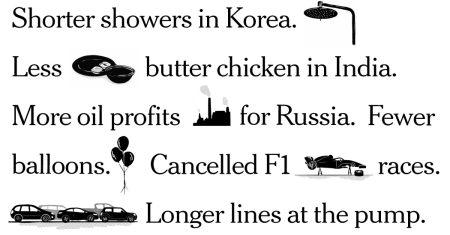
In a rapidly shifting global landscape, the threads of geopolitics, economics, technology, and social change have become increasingly intertwined. What happens halfway across the world now impacts our daily lives with unprecedented speed and intensity. The ripple effects of international conflicts, climate disasters, technological breakthroughs, and political upheavals reach us through our screens in real-time, leaving many feeling overwhelmed by the sheer pace and scale of change. Yet within this uncertainty lies both challenge and opportunity as individuals, communities, and nations navigate an increasingly complex future.
The New Geopolitical Reality: Balance of Power in Flux
The post-Cold War era of relative stability has given way to a multipolar world where traditional power dynamics are being rewritten. China’s rise as an economic and military superpower, Russia’s aggressive posturing on the international stage, and shifting alliances across the Middle East have created a geopolitical chessboard more complex than at any point in recent memory. The United States, while still wielding enormous influence, finds itself increasingly challenged not just by rival nations but by the erosion of the international order it helped establish.
“What we’re witnessing is not simply a reshuffling of power but a fundamental questioning of the rules-based system that has governed international relations for decades,” explains Dr. Eliza Montgomery, senior fellow at the Institute for Strategic Studies. “From trade agreements to security alliances, institutions that once seemed permanent are now being questioned, renegotiated, or abandoned altogether.”
This uncertainty extends beyond traditional security concerns. The weaponization of economic interdependence—through sanctions, tariff wars, and supply chain disruptions—has revealed the vulnerabilities of globalization. Countries and companies alike are reassessing their dependencies, leading to a partial “decoupling” in some sectors that would have seemed unthinkable just a decade ago.
Meanwhile, non-state actors ranging from terrorist organizations to multinational corporations continue to challenge the primacy of nation-states, operating across borders with increasing sophistication. The result is a world where power is both more diffuse and more contested, creating new forms of instability even as it opens possibilities for more diverse voices on the global stage.
Economic Transformation: Navigating Post-Pandemic Uncertainties
The global economy continues its uneven recovery from the pandemic, revealing both structural vulnerabilities and remarkable resilience. Inflation concerns, supply chain disruptions, and labor market transformations have created a complex economic landscape that defies simple solutions or predictions.
Central banks worldwide walk a precarious tightrope between controlling inflation and avoiding recession—a balancing act made more challenging by unprecedented levels of public and private debt. The Federal Reserve’s monetary policy decisions now send shockwaves through global markets, affecting everything from housing prices in Sydney to manufacturing costs in São Paulo.
“We’re seeing the limits of traditional economic models in predicting outcomes in today’s interconnected economy,” notes Emma Richardson, chief economist at Global Financial Partners. “The pandemic accelerated existing trends while creating entirely new economic realities that we’re still struggling to understand fully.”
The rise of remote work has reshaped not just how we work but where we live, with profound implications for urban planning, real estate markets, and regional economies. Meanwhile, growing wealth inequality both within and between nations threatens social cohesion and political stability. The concentration of wealth among the ultra-rich has reached levels not seen since the Gilded Age, prompting renewed calls for systemic reform.
Yet amid these challenges, new economic models are emerging. The circular economy, stakeholder capitalism, and community-centered development approaches offer alternative visions for more sustainable and equitable growth. Digital currencies and decentralized finance systems challenge traditional banking models, while climate-focused investment strategies are redirecting trillions in capital toward green infrastructure and technologies.
Technology’s Double Edge: Innovation and Disruption
The pace of technological change continues to accelerate, bringing both unprecedented opportunity and complex challenges. Artificial intelligence, once the stuff of science fiction, now powers everything from customer service chatbots to medical diagnostics systems. The integration of AI into countless industries promises enormous productivity gains but also raises profound questions about the future of work, privacy, and human agency.
“We stand at a pivotal moment in technological history,” argues Dr. Jason Takahashi, director of the Center for Responsible Technology. “The decisions we make now about how to develop, regulate, and deploy these powerful tools will shape society for generations to come.”
The explosion of generative AI capabilities has democratized content creation while simultaneously raising concerns about misinformation and the authenticity of digital media. Similar tensions exist across the technological landscape—from genetic engineering technologies that could eliminate hereditary diseases but also enable human enhancement, to quantum computing systems that might revolutionize scientific research but render current encryption methods obsolete.
Social media platforms continue to transform how information spreads and communities form, creating both powerful connection points and dangerous echo chambers. The dominance of a handful of tech giants has prompted increasing regulatory scrutiny worldwide, with governments struggling to balance innovation with concerns about privacy, competition, and social harm.
Meanwhile, the digital divide remains a pressing concern. While over 5 billion people now have internet access, the quality and affordability of that access varies dramatically, creating new forms of inequality. Those without reliable connectivity or digital literacy skills risk being left behind in an increasingly digital economy.
Climate Crisis: The Race Against Time
The intensifying climate emergency has moved from abstract future threat to present reality, with extreme weather events, biodiversity loss, and resource scarcity affecting communities worldwide. Record-breaking heat waves, catastrophic flooding, and unprecedented wildfires have become regular features of our news cycles, underscoring the urgency of climate action.
The latest scientific assessments paint a sobering picture: the window to prevent the most catastrophic climate impacts is narrowing rapidly. Yet the response remains uneven. While renewable energy deployment has accelerated dramatically—with solar and wind power now often cheaper than fossil fuel alternatives—overall emissions continue to rise globally.
“We’re in a race against time,” says Maria González, executive director of Climate Action Now. “The technologies and policies we need to address the climate crisis largely exist. What’s missing is the political will and economic transformation to implement them at the necessary scale and speed.”
The concept of climate justice has gained prominence, highlighting how the impacts of climate change disproportionately affect vulnerable communities that have contributed least to the problem. Indigenous groups, small island nations, and low-income communities worldwide are increasingly demanding not just technical solutions but fundamental changes to economic systems that prioritize short-term profit over long-term sustainability.
The business world is gradually responding to these pressures, with major investors increasingly factoring climate risk into their decision-making. Net-zero commitments have proliferated across sectors, though questions remain about their implementation and effectiveness. Meanwhile, climate adaptation—preparing communities and infrastructure for unavoidable changes—has become an urgent priority alongside mitigation efforts.
Social Change: Identity, Belonging, and Democracy
Profound social transformations continue to reshape communities worldwide, challenging traditional concepts of identity, belonging, and governance. Demographic shifts, migration patterns, and changing attitudes toward race, gender, and sexuality have sparked both progressive movements and reactionary backlashes.
“We’re experiencing a global renegotiation of who belongs where and how different identities are recognized and respected,” explains Dr. Aminata Diallo, professor of sociology at Thames University. “These tensions aren’t new, but social media and global connectivity have amplified both demands for inclusion and expressions of resistance.”
Democratic institutions face multiple challenges, from rising populism and authoritarianism to widespread disillusionment with traditional politics. Trust in media, government, and other institutions has declined in many countries, creating vulnerabilities that adversaries both internal and external can exploit. Information warfare and disinformation campaigns further complicate citizens’ ability to develop shared understandings of reality.
Yet alongside these challenges, new forms of civic engagement and community building are emerging. Grassroots movements have achieved significant policy changes in areas from racial justice to environmental protection. Digital platforms have enabled previously marginalized groups to find community and build solidarity across geographic boundaries. Young people in particular are developing innovative approaches to activism that blend online and offline strategies.
The pandemic revealed both the fragility and resilience of our social fabric. While it exacerbated existing inequalities and isolation, it also sparked remarkable examples of mutual aid and community support. As societies continue navigating its aftermath, questions about the proper balance between individual freedom and collective responsibility remain central to political discourse worldwide.
Navigating Forward: Building Resilience in Uncertain Times
As we face these interconnected challenges, resilience has emerged as perhaps the most crucial capacity for individuals, organizations, and societies. The ability to adapt to change, recover from setbacks, and thrive amid uncertainty is no longer just desirable—it’s essential.
For individuals, this means developing both practical skills and psychological resources to navigate a rapidly changing world. Continuous learning, creative problem-solving, and the ability to build diverse relationships across difference have become valuable assets in both professional and personal contexts. Equally important are practices that support mental health and wellbeing amid heightened stress and information overload.
At the community and organizational level, resilience requires both robust systems and adaptive flexibility. Supply chains are being reimagined with redundancy rather than just efficiency in mind. Critical infrastructure is being redesigned to withstand extreme weather and other disruptions. Meanwhile, organizational structures are becoming more nimble, with distributed decision-making models that can respond quickly to changing conditions.
For governments, resilience means developing the capacity to address complex, interconnected challenges that span traditional policy domains. It requires moving beyond short-term political cycles to invest in long-term solutions while remaining accountable to citizens’ immediate needs. Perhaps most fundamentally, it means rebuilding trust in public institutions through transparency, effectiveness, and genuine responsiveness to public concerns.
Throughout history, periods of great uncertainty have produced both tremendous suffering and remarkable innovation. Today’s converging crises present similar potential for both harm and renewal. The path forward depends not just on technological solutions or policy prescriptions, but on our collective ability to imagine and create more sustainable, equitable, and resilient systems.
As we navigate these turbulent times, one thing remains clear: the future will be shaped not by inevitable forces beyond our control, but by the choices we make together in this critical moment.