





Trump’s Son-in-Law Unveils Bold Peace Initiative at Davos Global Forum
Kushner Introduces Presidential “Board of Peace” to International Leaders
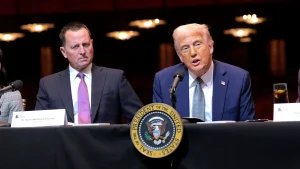
In a significant diplomatic development that has caught the attention of global policy experts, Jared Kushner, senior advisor and son-in-law to President Donald Trump, has presented an ambitious new peace proposal during a ceremonial event at the World Economic Forum in Davos, Switzerland. The initiative, formally introduced as the “Board of Peace,” represents the administration’s latest effort to position itself as a facilitator of international conflict resolution ahead of critical diplomatic engagements in the Middle East and beyond. The announcement comes at a pivotal moment in global politics, with several long-standing conflicts reaching critical junctures and traditional diplomatic frameworks being reexamined by major world powers.
The Davos forum, long recognized as a premier gathering of global political and business elites, provided a strategically significant platform for unveiling this initiative. According to attendees present at the ceremony, Kushner articulated a vision for the Board that would bring together respected diplomats, security experts, and economic advisors to create what he termed “innovative pathways to lasting peace” in conflict regions. “The traditional approaches to peace negotiations have often failed to produce sustainable results,” Kushner reportedly stated during his presentation. “The President’s Board of Peace will reimagine conflict resolution through practical, results-oriented frameworks that address the economic and security concerns underlying many of today’s most persistent disputes.” The proposal appears to align with the administration’s preference for business-inspired approaches to diplomatic challenges—a hallmark of President Trump’s foreign policy philosophy that views international relations through the lens of negotiation and deal-making.
Historical Context and Strategic Significance
The introduction of this peace initiative builds upon Kushner’s expanding diplomatic portfolio within the administration, where he has increasingly taken on challenging foreign policy assignments despite his limited diplomatic experience prior to entering government service. Most notably, Kushner has been deeply involved in Middle East peace efforts, having played a central role in developing the administration’s Israeli-Palestinian peace plan unveiled in January 2020, as well as facilitating normalization agreements between Israel and several Arab nations through the Abraham Accords. Foreign policy analysts note that this latest initiative appears designed to institutionalize and potentially expand upon these earlier diplomatic efforts while establishing a more formal framework for American-led peace initiatives across multiple regions.
The timing of the announcement carries particular significance against the backdrop of evolving global power dynamics. With increasing competition between the United States, China, and Russia for influence in strategic regions, the Board of Peace proposal may represent an attempt to reassert American diplomatic leadership at a moment when many international observers have questioned the consistency and direction of U.S. foreign policy. “The United States has historically played a crucial mediating role in major peace processes around the world,” explains Dr. Eleanor Westbrook, professor of international relations at Georgetown University. “This initiative suggests an effort to revitalize that tradition, albeit through mechanisms that reflect the current administration’s distinctive approach to international engagement.” The ceremony at Davos also served to elevate the profile of the initiative by associating it with the prestigious forum’s emphasis on collaborative approaches to global challenges.
Structure and Composition of the Proposed Board
While specific details regarding the composition and operational framework of the Board remain under development, sources familiar with the planning process indicate that the initiative will likely feature a combination of permanent government representatives and rotating external experts drawn from diplomatic, academic, and business sectors. This multi-disciplinary approach appears designed to bring diverse perspectives to complex peace-building challenges while maintaining the flexibility to address different regional contexts. According to diplomatic sources, the administration has already begun preliminary outreach to potential board members, focusing particularly on individuals with experience in conflict resolution in the Middle East, Eastern Europe, and parts of Africa where American diplomatic engagement has historically played a significant role.
The institutional positioning of the Board within the broader American foreign policy apparatus remains somewhat unclear, though Kushner’s remarks suggested it would function as a presidential advisory body with direct reporting lines to the White House. This structure would potentially give the initiative significant influence while bypassing some of the traditional State Department bureaucracy—a move consistent with other foreign policy initiatives under the current administration. “What we’re seeing is an attempt to create a more nimble diplomatic instrument that can respond quickly to opportunities for conflict resolution,” notes Ambassador James Mortonley, former U.S. envoy to several Middle East peace negotiations. “However, the effectiveness of such a body will ultimately depend on how well it coordinates with existing diplomatic institutions and the degree of international legitimacy it can establish.”
International Reaction and Diplomatic Implications
The international reception to Kushner’s proposal has been cautiously mixed, reflecting broader geopolitical divides and varying assessments of the administration’s diplomatic track record. European leaders in attendance at Davos offered measured support for any initiative aimed at enhancing peace efforts, while expressing interest in understanding how the Board might complement or potentially compete with existing multilateral peace mechanisms through the United Nations and regional organizations. Middle Eastern representatives present at the forum similarly displayed a range of reactions, with those nations already aligned with recent U.S. diplomatic initiatives in the region expressing greater enthusiasm than those that have maintained distance from American-led efforts.
The long-term impact of this initiative will depend significantly on its ability to demonstrate concrete results beyond ceremonial announcements and symbolic gestures. Peace processes are notoriously complex, often requiring years of patient diplomacy and trust-building measures across multiple stakeholder groups. The challenge for Kushner’s proposed Board will be transitioning from concept to implementation in a manner that establishes credibility with international partners while navigating the intensely political nature of peace negotiations. As one European diplomat in attendance noted on condition of anonymity, “The concept itself has merit, but the devil is always in the details with these initiatives. We will be watching closely to see whether this represents a genuine commitment to collaborative peace-building or primarily serves domestic political narratives.”
Future Prospects and Implementation Timeline
As the administration moves forward with establishing this new diplomatic mechanism, close observers of American foreign policy will be monitoring several key indicators of its seriousness and potential efficacy. The caliber of appointments to the Board, the resources allocated to its operations, and the degree to which it engages substantively with existing international peace efforts will all serve as important signals regarding its true purpose and prospects. According to White House sources, the administration plans to formally constitute the Board within the next sixty days, with initial focus areas likely to include ongoing conflicts in the Middle East and efforts to stabilize volatile regions in Africa where American strategic interests intersect with humanitarian concerns.
Whether the “Board of Peace” ultimately emerges as a significant contribution to international conflict resolution or joins the long list of well-intentioned but ultimately inconsequential diplomatic initiatives remains to be seen. What is clear is that its introduction represents another chapter in the ongoing evolution of American foreign policy under President Trump—characterized by personalized diplomacy, institutional innovation, and a willingness to challenge conventional approaches to international engagement. As one seasoned diplomatic observer at Davos remarked, “Peace-building is perhaps the most difficult challenge in international relations. The true test of this initiative won’t be found in the eloquence of its launch or the prominence of its members, but in its ability to create tangible progress in situations where peaceful solutions have long remained elusive.”