




Venezuela’s Armed Factions Create Dangerous Power Vacuum as Maduro Era Ends
Post-Maduro Venezuela Faces Critical Security Challenges Amid Political Transition
In the wake of Nicolas Maduro’s dramatic departure from power, Venezuela stands at a precarious crossroads where competing factions vie for control in a country long dominated by powerful armed groups operating with implicit government approval. For years, a delicate equilibrium existed: paramilitary cells enforced government priorities while sprawling crime syndicates, prison gangs, and Colombian rebels maintained territorial control through collusion with officials at various levels of government. This fragile balance has now been upended, creating a dangerous power vacuum that threatens to destabilize the nation’s path forward.
The transitional landscape reveals Delcy Rodríguez, a Maduro ally who previously managed Venezuela’s economic stabilization efforts following its catastrophic financial collapse, emerging as the Trump administration’s preferred interim leader. This selection reflects Washington’s pragmatic assessment that Rodríguez commands greater influence over Venezuela’s complex web of security forces and intelligence agencies than the political opposition. However, analysts caution that the transition away from authoritarian rule has only just begun, with numerous armed groups potentially capable of derailing governance efforts regardless of who ultimately assumes control of the central government.
“Suddenly reducing access to illicit markets and extortion rackets that these criminal groups now enjoy is a recipe for turmoil,” warns Rebecca Hanson, a University of Florida sociologist specializing in Venezuela’s security landscape. “That invariably results in the perfect cocktail of increased conflict, both between criminal armed groups, and between criminal groups and the state.” While security experts don’t anticipate full-scale civil war, they recognize multiple scenarios that could trigger pockets of intense conflict throughout the country. These range from military faction resistance to American involvement to potential purges of security forces by opposition leadership—which could flood Venezuela with thousands of armed, disgruntled former officials seeking retribution or new sources of income.
Paramilitary Colectivos Represent Immediate Urban Security Threat
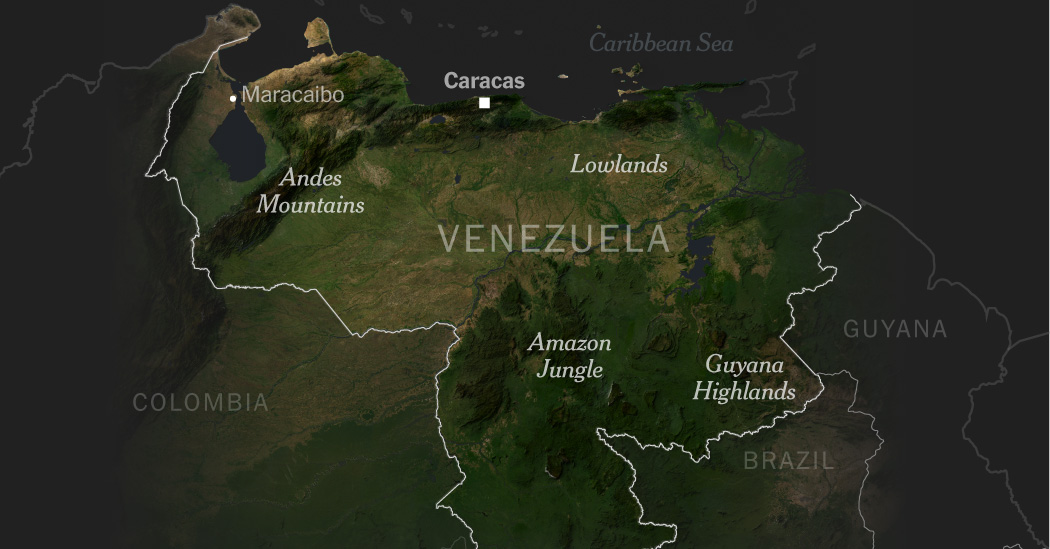
Perhaps the most immediate security challenge comes from the colectivos—armed civilian groups that have long functioned as the government’s paramilitary enforcers in urban centers. These organizations control strategically important neighborhoods throughout major cities, particularly in Caracas where they dominate areas like 23 de Enero, a district of aging modernist apartment complexes located less than a mile from the presidential palace. Some colectivos maintain ideological alignment with Chavismo, the socialist-inspired movement established by Hugo Chávez, while others operate more as mercenary groups sustained by government patronage and neighborhood-level criminal enterprises.
Several colectivos have been visible on Caracas streets since Maduro’s capture, with leaders like Valentín Santana of La Piedrita—one of the oldest such groups—suggesting internal betrayal within government ranks. “They betrayed our president, Nicolás Maduro, but history will make them pay,” Santana declared in a video released after Maduro’s detention, revealing fractures within Venezuela’s power structures. The urban geography of Caracas provides ideal conditions for potential insurgent activity, with its labyrinthine squatter settlements, vast apartment complexes, abandoned high-rises, and hilly terrain offering countless hiding places for armed resisters.
Beyond the capital, rural areas present equally formidable security challenges from groups with extensive combat experience. Colombian guerrilla organizations, including the National Liberation Army (ELN) and splinter factions from the formerly unified Revolutionary Armed Forces of Colombia (FARC), maintain thousands of fighters operating from Venezuelan territory. While these rebel groups no longer realistically aim to seize central government control, they continue expanding their influence over drug smuggling corridors and extortion networks while supplementing income through kidnappings of oil workers and other high-value targets. Their numbers have steadily increased in recent years as they compete for control of lucrative illicit revenue streams along the porous Colombia-Venezuela border region.
Resource-Rich Regions Face Continued Criminal Domination
Venezuela’s mineral-rich regions represent another potential flashpoint, particularly in Bolívar state where criminal syndicates exert tight control over gold mining operations. Organizations like Las Claritas Sindicato have established shadow governance systems in these areas, imposing taxes on miners and traders while enforcing their own brutal justice systems against those who violate their authority. According to InSight Crime, a research organization focused on organized crime, these groups have effectively established parallel states within Venezuela’s territory, operating with minimal interference from central government authorities.
The leadership transition faces not only external challenges from illegal armed groups but potential resistance from within governing circles themselves. Currently, a tenuous alliance exists between civilian factions led by Delcy Rodríguez and her brother Jorge Rodríguez (who heads the National Assembly), alongside military factions commanded by Interior Minister Diosdado Cabello and Defense Minister Vladimir Padrino López. However, this coalition could fracture over contentious issues like American involvement in Venezuela’s affairs, creating additional opportunities for conflict. Security forces and intelligence agencies align more closely with the military faction, potentially threatening stability regardless of whether government leadership ultimately falls to a Chavista like Rodríguez or an opposition figure like Nobel Peace Prize recipient Maria Corina Machado.
Economic Recovery Requires Security Stabilization
The revitalization of Venezuela’s collapsed economy—particularly its vital oil industry—depends on establishing at least baseline security conditions that would enable international investment to return. This economic imperative creates an urgent need for whoever governs to assert authority over territories currently dominated by armed criminal organizations. Yet any attempt to disrupt the criminal ecosystems that have flourished during the Maduro era risks triggering violent backlash from groups that stand to lose their lucrative revenue streams.
This security-development paradox places Venezuela’s new leadership in an extraordinarily difficult position. The country desperately needs economic revival to address its humanitarian crisis and prevent further population exodus, yet the necessary security measures to enable economic recovery could themselves trigger destabilizing violence. International stakeholders, including the United States and regional partners, must recognize this delicate balance when formulating their Venezuela policies. Quick-fix solutions that ignore the complex security landscape risk pushing the country further into chaos rather than supporting a sustainable transition to democratic governance and economic stability.
As Venezuela navigates this precarious transition period, the interplay between armed groups, political factions, and economic pressures will largely determine whether the post-Maduro era brings longed-for stability or deeper turmoil. The complex ecosystem of armed actors that evolved during decades of authoritarian rule cannot be quickly dismantled without significant risk. Instead, a careful, strategic approach to security sector reform will be essential for any government hoping to restore effective governance and revitalize Venezuela’s shattered economy in the challenging months and years ahead.