






Woman Flees Border Patrol with Infant, Attempts Dangerous Swim to Mexico
In a dramatic incident that highlights the desperate measures some take in human smuggling operations, a Texas woman recently endangered herself and an infant in an attempt to evade authorities near the U.S.-Mexico border. This case represents just one example of the complex human stories unfolding daily along America’s southern border, where families, smugglers, and migrants interact with law enforcement in high-stakes encounters.
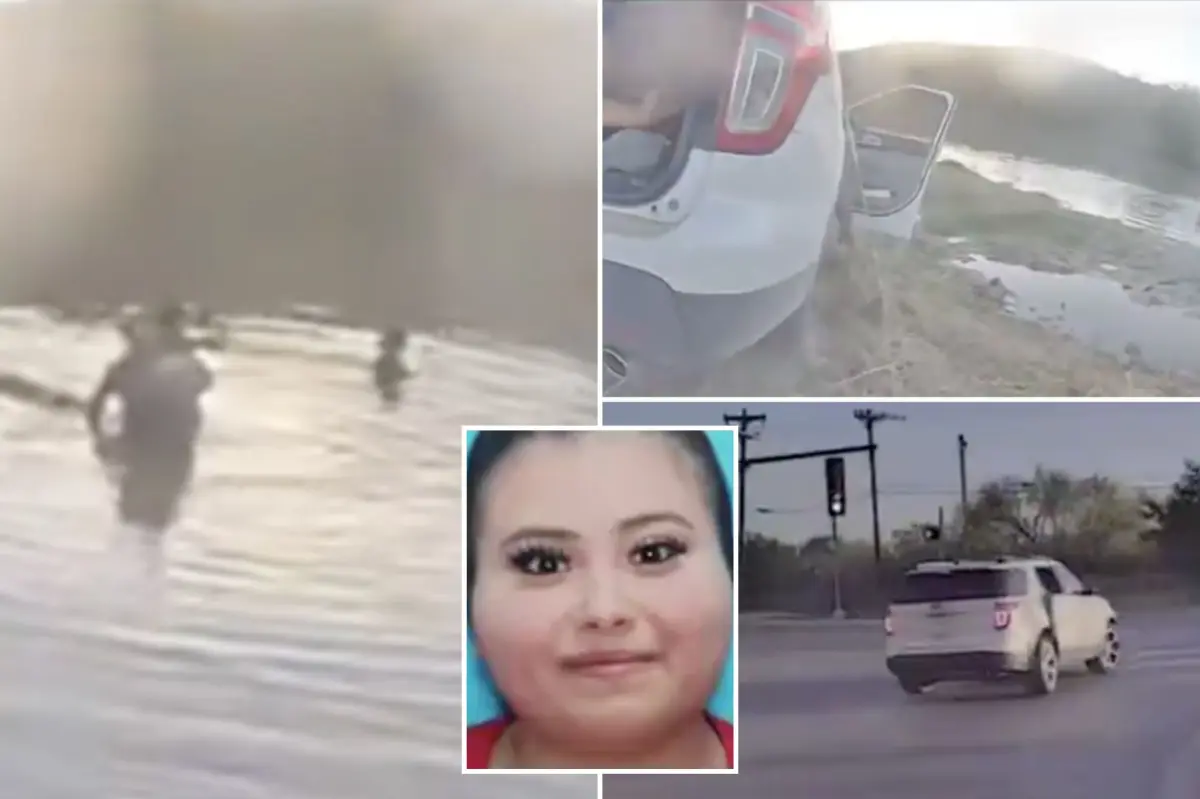
On December 19th in Laredo, Texas, what began as a routine traffic stop escalated into a dangerous border crossing attempt that put multiple lives at risk. Brenda Castro, an American citizen, was traveling with her husband in a Ford Explorer when Texas Department of Public Safety troopers attempted to pull their vehicle over. Instead of complying, Castro’s husband accelerated, leading authorities on a high-speed chase through both residential neighborhoods and rural areas. Dashcam footage released by the Department of Public Safety captured the vehicle speeding dangerously through these areas, putting not only those in the car but also community members at risk. The situation took an even more alarming turn when Castro exited the vehicle carrying an infant and made the shocking decision to attempt swimming across the Rio Grande into Mexico, apparently trying to escape jurisdiction and potential prosecution.
The attempted river crossing represented an extraordinary risk, particularly with an infant involved. The Rio Grande, while appearing manageable in some sections, has claimed numerous lives over the years due to its unpredictable currents and depth. While Castro’s husband successfully reached the Mexican side of the river, authorities at the scene immediately recognized the danger to the child and directed Castro to return to the U.S. shoreline. Law enforcement officers, speaking in Spanish, repeatedly instructed her to bring the baby back to safety. Their urgent concern was evident in bodycam footage, which shows an officer quickly taking the child from the water upon Castro’s return. One officer, clearly disturbed by what he had witnessed, told Castro during her arrest: “I can’t believe you tried to run back with the baby. You both could have drowned.” The genuine shock in the officer’s voice underscores the severity of the situation and the real danger both Castro and the infant faced in those moments.
What makes this case particularly significant is what authorities discovered in the abandoned vehicle: five undocumented immigrants. This detail transformed what might have appeared to be a simple case of fleeing from police into a much more complex human smuggling operation. Human smuggling along the southern border has evolved into a sophisticated and dangerous enterprise, with smugglers often putting migrants in life-threatening situations while charging thousands of dollars for transportation into the United States. These operations typically involve multiple participants, including drivers, guides, stash house operators, and coordinators. The presence of a child in this situation raises additional questions about whether the infant was being used as cover for the smuggling operation, a tactic sometimes employed to make vehicles appear to contain ordinary families rather than smuggling operations. Following the incident, the five undocumented immigrants were transferred to the custody of U.S. Border Patrol, while the child was placed under the care of appropriate authorities.
The consequences for Castro now include serious criminal charges: human smuggling and child endangerment. Human smuggling charges in Texas can carry significant penalties, including substantial prison time, especially when the smuggling operation puts lives at risk. The additional charge of child endangerment reflects the particularly troubling aspect of involving an infant in such a dangerous escape attempt. While Castro’s husband escaped to Mexico, she now faces the American justice system and the possibility of a lengthy separation from her family. This case exemplifies how border enforcement operations often uncover complex situations involving American citizens who participate in smuggling networks, countering the narrative that border issues only involve foreign nationals attempting to enter the United States illegally. Instead, it highlights how the economics of human smuggling create incentives for U.S. citizens to participate in these networks, often with tragic consequences.
This incident along the Rio Grande serves as a microcosm of the larger border crisis, where desperation, profit motives, family ties, and law enforcement priorities collide daily. It raises important questions about the effectiveness of current border policies and the human cost of migration control efforts. While law enforcement successfully prevented what could have been a tragedy in this case, similar scenarios unfold regularly along the 1,954-mile boundary between the United States and Mexico. Each case involves real people making difficult choices under tremendous pressure, whether they are migrants seeking better lives, smugglers pursuing profits, or law enforcement officers trying to uphold laws while preserving human life. As the national conversation about immigration and border security continues, stories like Brenda Castro’s remind us that behind the statistics and policy debates are human beings whose decisions—sometimes reckless, sometimes desperate—have real consequences that ripple through families and communities on both sides of the border.