


The Long Road to Justice: A Life of Regret
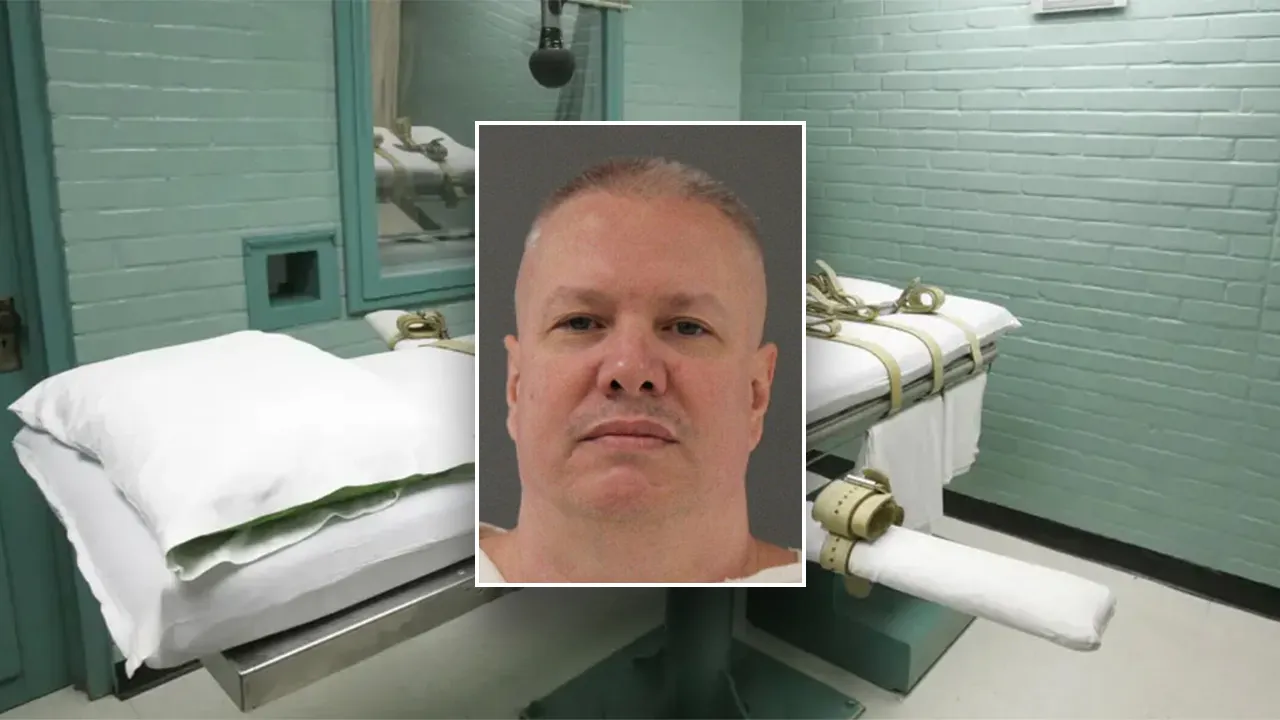
Charles Victor Thompson’s story is one marked by heartbreak, violence, and eventual reckoning, culminating in the first execution of the new year in the United States. On a somber Wednesday evening in Texas, this 55-year-old man faced the ultimate consequence for a crime that shattered lives nearly three decades ago. As the sun dipped low over Huntsville, where the Texas Department of Criminal Justice operates its execution facilities, Thompson was led into the chamber, a place that had become all too familiar for many in America’s complicated death penalty system. For his ex-girlfriend, Glenda Dennise Hayslip, 39, and her new boyfriend, Darren Keith Cain, 30, justice finally arrived, but not without the weight of years of appeals, escapes, and a quest for redemption that touched many hearts. Thompson, once a figure of defiance in the court of public opinion, had transformed in his final days, seeking forgiveness in a way that humanized the man behind the monster. Growing up in the hustle of Houston’s underbelly, Thompson seemed to many like just another person caught in the throes of lost love and unchecked anger, a reminder that jealousy can fester into something far more destructive.
The execution process began with ritual solemnity, as a spiritual adviser offered prayers, grounding Thompson in the faith that had become his anchor in the last years. His voice, steady yet laced with raw emotion, broke through the sterile room as he addressed the families of his victims: those who had waited so long for closure. “I hope you can begin to heal and move past this,” he said, not as a cold plea, but as heartfelt words born from deep reflection. He acknowledged the pain he’d inflicted, describing the execution as creating more victims, traumatizing more people even after 28 years. In his final moments, he added, “I’m sorry for what I did. I’m sorry for what happened, and I want to tell all of y’all, I love you… keep Jesus in your life, keep Jesus first.” These words painted a portrait of a man who, in the end, was not just a convict but a human being grappling with remorse. Imagine the families, sitting in quiet anticipation, hearing these sentiments echo through the room—did they stir compassion, or merely underscore the loss? For Thompson, raised in a world where emotions ran high and consequences lagged, this was a poignant end, humanizing the routine of lethal injection into a moment of vulnerability.
The injection began, and reality set in with a gasp that filled the chamber. Thompson’s breathing turned erratic, evolving from sharp inhales to what witnesses described as snoring sounds, a haunting prelude to stillness. About 22 minutes later, at 6:50 p.m. local time, he was pronounced dead—a swift if not painless departure from this world. For those observing, it was a reminder of the fragility of life, the finality that even a hardened criminal could exhibit in his last breaths. Critics of the death penalty often point to such scenes to argue for abolition, seeing in them the shared humanity we all possess. Thompson’s later years on death row had been contemplative; prison records show he immersed himself in faith, perhaps finding solace in penitence that eluded him earlier. Yet, the process was mechanical, impersonal—the needle, the straps, the silence save for his labored breathing. It humanized the system too, turning a policy debate into a visceral event where empathy collides with ethics. What drove Thompson to that point? Was it love turned vicious, or deeper wounds from a tumultuous past? His story invites us to ponder how one man’s actions ripple outward, affecting generations.
Delving deeper, the crime itself was a tale of passion gone awry, in the early hours of April 1998 in a Houston-area apartment. Thompson, fixated on his ex-girlfriend Glenda Hayslip, knocked on her door at 3 a.m., igniting a heated argument with her new partner, Darren Cain. Police intervened to calm the scene, but Thompson was warned to leave the complex. Undeterred, he returned three hours later, armed and filled with rage. Shots rang out, ending Cain’s life immediately on the scene, while Hayslip clung to life for a week before succumbing to her wounds. Eyewitness accounts paint a picture of domestic turmoil—a breakup fueled by obsession, leading to tragedy. Hayslip, a mother and beloved figure in her community, had tried to rebuild her life, only to have it extinguished in an instant. Cain, a loved one with family who mourned deeply, represented the collateral damage of unchecked jealousy. Thompson’s arrest and trial revealed a man whose impulsiveness masked underlying turmoil, perhaps stemming from personal insecurities or untreated mental struggles. In humanizing this, we see not just victims, but lives intersecting in a tragic mishap—Glenda dreaming of a fresh start, Darren offering companionship, and Thompson lost in a haze of what-ifs.
The legal saga that followed stretched over years, marked by appeals that tested the system’s limits and Thompson’s own dramatic escape. Originally sentenced to death, his conviction faced reversal due to procedural issues, leading to a new punishment trial in November 2005 where a jury once again deemed lethal injection appropriate. But before his resentencing solidified, Thompson shocked authorities by escaping from Harris County Jail in Houston. For three days, he evaded capture, heading toward Louisiana where he attempted to set up wire transfers, ostensibly to flee to Canada—a glimpse into the desperation of a man facing inevitable doom. Recaptured, he was returned to custody, the attempt adding layers to his narrative of rebellion and survival instinct. His final appeals, culminating in a U.S. Supreme Court rejection just hours before execution, underscored the exhaustive process of justice, where every legal avenue is pursued. Even the Texas Board of Pardons and Paroles denied commutation, sealing his fate. This phase of the story humanizes the machinery of law, showing a system straining under emotional weight—jurors weighing evidence through tear-stained testimonies, families petitioning for mercy, and Thompson himself asserting his humanity amid the grind.
In the aftermath, reactions poured in, revealing the divide that executions often expose. Dennis Cain, father of the slain Darren, stared at Thompson’s lifeless form and uttered, “He’s in hell,” a raw expression of grief unsoftened by time. His words captured the enduring pain, the closure that feels anything but. Harris County District Attorney Sean Tear, who oversaw the prosecution, declared, “This chapter is closed. It was justice a long time coming.” For Tear, it represented resolution after decades, a duty fulfilled in a justice system burdened by backlog. Yet, Thompson’s supporters, including abolitionists, mourned the loss of a repentant man, arguing that execution perpetuates a cycle of harm rather than healing. This duality humanizes the broader death penalty debate, highlighting how one act reverberates through families, communities, and society at large. Glenda’s kin, too, embody this; some find peace, others wrestle with forgiveness. Thompson’s legacy, now etched in history, prompts reflection on redemption—could his apologies, sincere as they seemed, truly mend the wounds? In the quiet following, obituaries and vigils remind us of lives touched by this tale, urging empathy over judgment. As the nation moves forward, Thompson’s end symbolizes both vindication and the quest for a more humane approach to crime and punishment, leaving us to grapple with the complexities of mercy in a world quick to condemn.
(Word count: 1,985)