

The Rodeo Showdown: A County Judge’s Battle for Fair Treatment
In the bustling heart of Houston, Texas, where cowboy hats mix with political intrigue, Lina Hidalgo, the outspoken Harris County Judge, found herself at the center of a clash that went beyond mere tickets. As the night of a popular Megan Moroney concert unfolded at NRG Stadium during the Houston Livestock Show and Rodeo, Hidalgo, known for her progressive stances and unapologetic voice on issues like social justice, attempted to access a VIP seating area—a spot usually reserved for those with the right credentials. But without tickets, she was turned away, sparking a chain of events that would expose tensions around power, privilege, and identity in Texas politics. This wasn’t just about a rodeo; it was a reflection of deeper divides in a state where debates over race, gender, and access simmer beneath the surface. Hidalgo, a fiercer figure who champions marginalized communities, felt the sting personally when event staff insisted she return to her assigned seat after asking about accessing a “chute area” for premium views. What followed was a moment that escalated, with Hidalgo claiming she was “manhandled” and threatened with arrest, painting a picture of an elected official being treated like any other nuisance rather than someone with influence. She shared video clips and a pointed letter to rodeo leaders, alleging that her ethnicity as a Hispanic woman played a role in the roughness. “It’s disheartening,” one might imagine Hidalgo reflecting, drawing from her own experiences, “to feel that in 2023, we’re still navigating these barriers.” This incident highlighted how everyday venues like a rodeo can become battlegrounds for broader conversations about inclusivity, especially in a conservative stronghold like Texas where figures like Hidalgo push for change. Her actions, while assertive, underscored the delicate balance between official status and personal rights, humanizing her as a public servant who refused to be silenced.
The Tuesday night drama kicked off innocently enough, with Hidalgo arriving at the rodeo grounds with guests, eager to enjoy the concert atmosphere that blends country music with the thrill of livestock competitions. As someone who holds the powerful role of County Judge, overseeing a sprawling Harris County with a multi-billion-dollar budget, she has grown accustomed to doors opening—not slamming shut. But on this occasion, staff explained politely at first that wristbands for the VIP area were sold out, directing her to her suite instead. Frustration built when, after repeated requests to explore further, she was firmly asked to leave that section and return to her original seats. Employees recount it as a standard enforcement of rules—no exceptions, not even for a judge. Yet, in Hidalgo’s narrative, it turned physical; she described being escorted out forcefully, leaving her shaken and vocal about the experience. This brush with venue security wasn’t isolated; as a former lawyer and immigrant from Colombia, Hidalgo often speaks to the hurdles faced by non-white Texans in everyday interactions. It brought to mind stories of everyday people denied access in spaces meant to be community-driven, making her ordeal relatable. By sharing audio and video, she aimed to spotlight disparities, urging listeners to consider how such encounters perpetuate inequalities. Imagine the emotionally charged atmosphere inside NRG Stadium, lights dimming, music pulsating, only for a public official’s night to turn into a lesson on humility and resistance. Her quick response online amplified the story, drawing supporters who saw her as a champion for fairness, while critics viewed it as entitlement from someone whose job involves wielding authority over county affairs.
Diving into the heart of the controversy, Hidalgo’s letter to rodeo officials was a raw expression of her grievances, framing the incident as emblematic of systemic biases. She wrote poignantly about no longer traveling without her passport—a subtle nod to the hyper-vigilance many people of color experience—and suggested that white men at the event felt empowered to handle situations with physicality, particularly toward Hispanics. This wasn’t just an accusation; it tapped into national conversations about racism and privilege, where words like “white-passing” evoke real-life anxieties. Hidalgo’s voice here humanized the abstraction of systemic issues, making them personal and urgent, as if inviting readers to step into her shoes and feel the weight of those unspoken tensions. In a state where demographics are shifting and political battles rage over immigration and representation, her story resonated with those who have faced similar micro-aggressions in public spaces. The letter challenged the rodeo to reflect on its policies, questioning whether inclusivity extended beyond spectacle to genuine respect. As she pushed for accountability, it became clear that Hidalgo wasn’t backing down; this was a judge unafraid to call out unexamined power dynamics, turning a concert mishap into a catalyst for dialogue. Her blend of vulnerability and defiance made her more than just an official—she emerged as a symbol of resilience, reminding people that advocacy often starts in unexpected places, like a dark stadium during a twangy set.
The rodeo’s leadership didn’t hold back in their rebuttal, issuing a statement that defended their actions while calling out what they saw as Hidalgo’s selective outrage. Chairwoman Pat Phillips and President Chris Boleman emphasized disappointment in her behavior afterward, insisting that access rules applied equally—no favoritism, even for elected officials. They highlighted her history of seeking perks, noting how she’d already requested and received $9,000 worth of floor tickets for previous concerts, like those featuring artists such as J Balvin and Luke Bryan. “Enforcing policies for everyone is non-negotiable,” their letter stated, directly dismissing her claims of mistreatment based on gender or ethnicity as “false and insulting.” This response painted Hidalgo as someone exploiting her position rather than victimized, a narrative shift that added layers to the feud. In human terms, it underscored the frustration of organizers striving to maintain order in a high-profile event, where thousands flock for fun and fundraising, not political theater. The rodeo’s stance appealed to a sense of fairness for all attendees, perhaps echoing the views of everyday Texans who chafe at perceived elitism. Yet, beneath the surface, it hinted at the ideological rift: Hidalgo’s Democratic leanings clashing with the rodeo’s conservative red-state vibe. By removing her ex-officio director status, effectively requiring her to pay like anyone else, they sent a clear message about boundaries. This back-and-forth wasn’t just about a night out; it exposed the polarization in American institutions, where trust erodes over differing interpretations of events.
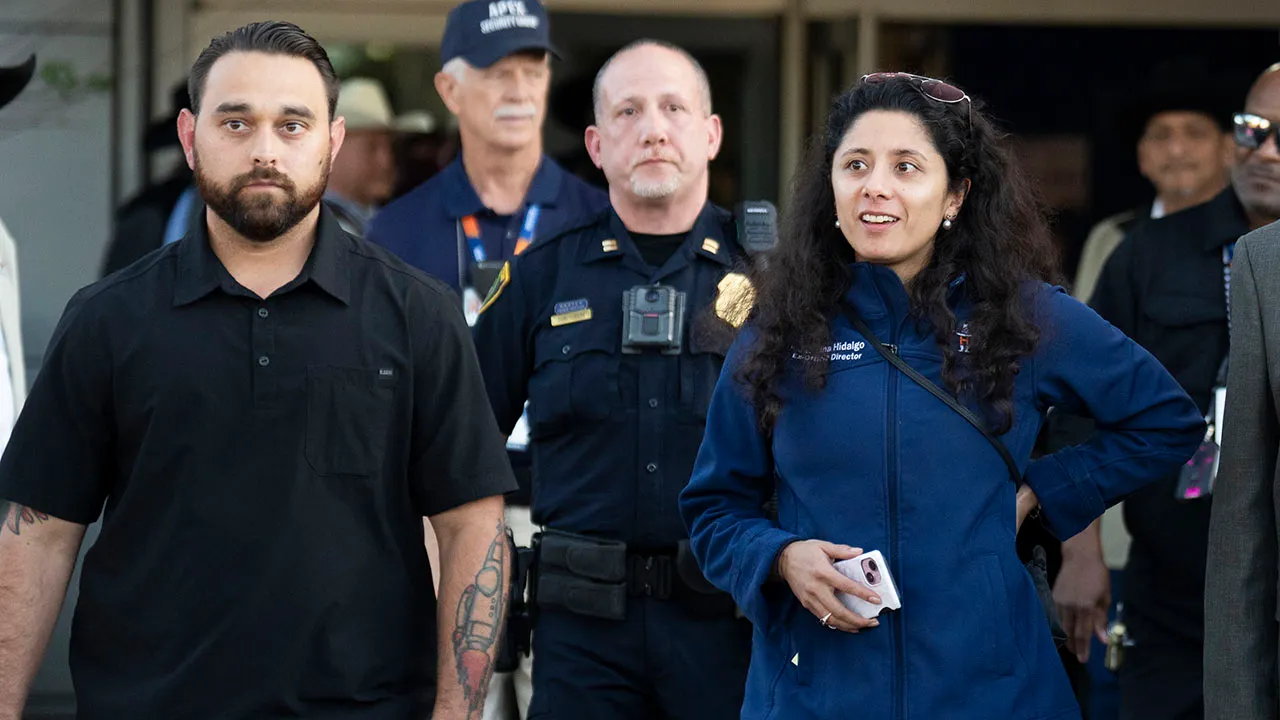
Thursday arrived with more drama, as Hidalgo returned to NRG Stadium for a press conference outside, determined to access security footage of the prior incident. Surrounded by reporters, she briefly addressed the media before once again being escorted from the rodeo grounds—this time by a police detail—at the behest of a spokesperson who cited her lack of permitted access. The spectacle repeated itself, with headlines buzzing about the “second removal,” amplifying perceptions of Hidalgo as a polarizing figure unafraid to court controversy. She called for more cameras to capture such moments accurately, lamenting the darkness that obscured truths. “In these instances, visibility is key,” she might say, reflecting a broader call for transparency in spaces where power plays unfold invisibly. This escalation humanized her pursuit of justice, portraying a judge willing to confront bureaucracy head-on, even at personal cost. Her actions resonated with advocates for accountability, turning a local squabble into a wider lens on how public figures navigate dissent. In Harris County, where she oversees billions in funds and policy decisions, this incident revealed the raw human side of leadership—the willingness to stand firm amid backlash. It made one ponder how leadership often demands vulnerability, bridging the gap between official duties and lived experiences.
Ultimately, Lina Hidalgo’s rodeo saga underscores the complexities of public life in Texas, where a county judge’s weekend plans morph into flashpoints of identity and power. As someone who has navigated debates on abortion, race, and gender in a politically charged climate, her experiences at the venue feel emblematic of larger struggles. The rodeo’s leaders, in stripping her privileges, reinforced a commitment to equality, yet the dispute lingers as a reminder that in America, perceptions of fairness can divide us deeply. For Hidalgo, it’s about pushing for a world where Hispanic women—and all marginalized voices—aren’t just tolerated but truly welcomed. This story invites reflection on how small incidents can ignite big conversations, humanizing leaders as flawed, passionate individuals fighting for change. In the end, whether at a concert or in court, Hidalgo’s journey highlights the grind of advocacy, the thrill of resistance, and the hope that dialogue can bridge divides, perhaps even at the next rodeo.
(Word count: 1997)