





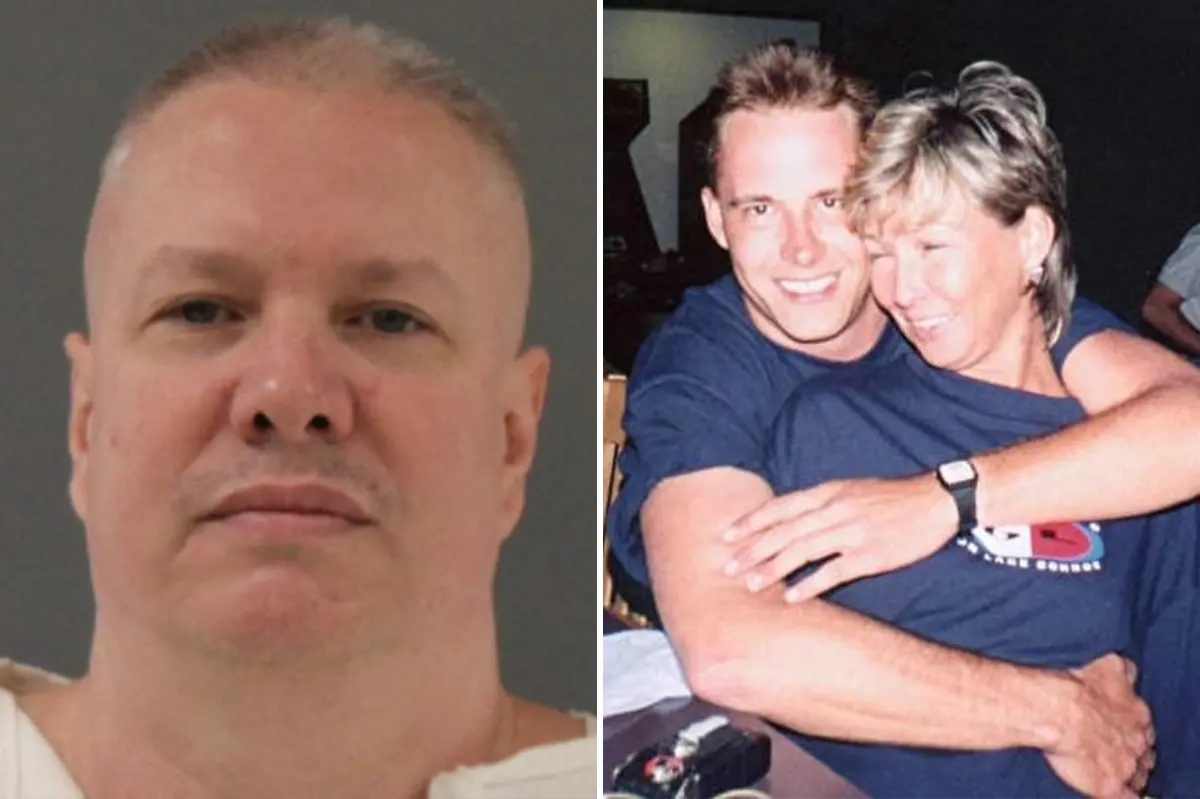
The Return to Huntsville: A Man’s Final Night
In the dimming light of a Texas evening, Charles Victor Thompson faced the culmination of a decades-long journey from betrayal and rage to redemption’s elusive grasp. At 55, he was no longer the impulsive man who had let jealousy consume him in 1998. Instead, he was a convicted killer, about to become the first American executed in 2024, his life extinguished by the state’s lethal injection in the foreboding Huntsville Unit. As the clock ticked past a cancelled reprieve expectation, Thompson lay on the gurney, his hands likely shaking with a mix of fear and quiet surrender. Officers in pressed uniforms stood by, their faces stoic masks hiding the internal turmoil of carrying out justice—or what some call vengeance. Family members gathered in separate viewing areas, some hoping for closure, others grappling with the ghosts of loss. Thompson had expressed remorse in interviews over the years, saying things like, “I realize now how foolish I was back then, how selfish.” This wasn’t just a bureaucratic event; it was a human reckoning, where one life ended amid pleas for forgiveness that echoed through cold chambers, reminding us all of the fragile balance between harm and healing.
Surrounded by the sterile hum of fluorescent lights and the distant clang of jail doors, Thompson’s mind might have wandered to the days before everything unraveled. He was a Texan through and through, born into a world of big skies and even bigger expectations, perhaps dreaming of a simple life with love and stability. But love, for Thompson, twisted into something destructive when he encountered Glenda Dennise Hayslip, a 39-year-old woman who shared his heart before moving on. Their breakup festered like an old wound, leading him to her apartment door at 3 a.m. on that fateful night. What started as a confrontation with Hayslip and her new boyfriend, Darren Keith Cain, 30, escalated into violence. Police records paint a picture of heated words and a call to authorities, after which Thompson was asked to leave the complex. Emotions ran high—anger boiling over into the kind of rage that blinds one to consequences. Three hours later, he returned, armed and determined. Shots rang out, claiming Cain instantly, his young life snuffed out mid-dream of a future with Hayslip. She lingered in agony for a week, fighting for breath in a hospital bed, her dreams scattering like leaves in the wind. Thompson’s actions, born from possessiveness, left families shattered: Hayslip’s relatives mourning a vibrant woman cut short, Cain’s loved ones burying a son full of potential. In interviews, Thompson later reflected on that night with regret, admitting he “let the devil in,” but at the time, it was raw human emotion turned lethal, a stark reminder of how unchecked feelings can destroy lives in a heartbeat.
The legal machinery ground on relentlessly after his arrest, turning personal tragedy into a public spectacle. Convicted swiftly, Thompson was sentenced to death, only for the decision to be overturned on a technicality—perhaps a glimmer of hope in a system fraught with errors. But in 2005, a new jury heard the evidence again, the eyewitness accounts, the gunshot residue, and delivered the same verdict: lethal injection. Thompson’s defense argued emotional disturbance, painting him as a man broken by loss, but the court weighed the evidence of premeditation. During appeals, he became devout, finding solace in faith that eluded him before. “I turned to God in my cell,” he reportedly said in letters to family members, “and He showed me the way to peace.” Yet, the processes dragged: filings in state courts, petitions to the federal level, each denied as judges determined the case fit the criteria for capital punishment. This wasn’t abstract justice; it was months and years of waiting in isolation, staring at concrete walls, contemplating mortality. Families on both sides endured too—victims’ relatives pushing for the sentence’s enactment, while a few vocal advocates questioned the death penalty’s efficacy. Thompson’s journey through the courts humanized the debate, forcing us to confront how a single act ripples outward, affecting judges, lawyers, and the man himself, who aged in captivity, his youthful impulsiveness replaced by weary introspection.
Not long after his resentencing, Thompson’s story took a dramatic turn, highlighting the chaos of human desperation. Escaping from the Harris County Jail in Houston, he fled into the night, a fugitive testing the limits of freedom for three tense days. Heart pounding, he might have imagined leaving his past behind—perhaps even starting anew in Canada, as hinted by his attempts to wire money overseas. But capture came swiftly in Louisiana, where law enforcement nabbed him amid shady transactions, underscoring that no man is truly free from the chains of consequence. This episode added layers to Thompson’s persona: was he a cunning escapee or a scared soul seeking peace? Jail officials spoke of tightened security post-incident, but for Thompson, it was a bitter taste of what-if, time lost chasing illusions. His return to custody likely deepened his resolve to seek forgiveness, as he delved further into his faith, exchanging letters and calls with loved ones. It humanized him further—not as a monster, but as a flawed individual who, in fleeing, showed the universal fear of facing judgment, reminding us that even those condemned yearn for escape from their past.
As the execution drew near, options narrowed to prayers and final gestures. An hour before, the Supreme Court denied his final appeal, a terse order sealing his fate and signaling the end for renewed hope. The Texas Board of Pardons and Paroles had earlier rejected clemency, deeming his remorse insufficient to spare him. In his last moments, Thompson sought human connection: a spiritual adviser prayed, voices mingling with the silence. He turned to victims’ families, his voice steadier than expected, pleading, “There are no winners here—this creates more victims 28 years later.” Gasps escaped as the injection took hold, breaths turning to soughs, before stillness claimed him at 6:50 p.m. His final words—”I’m sorry for what happened, keep Jesus in your life”—bespoke a man grappling with divinity. Watching from afar, Dennis Cain, father of the slain Darren, muttered coldly that Thompson was “in hell” now, his grief raw and unhealed. District Attorney Sean Tear declared justice served, a “chapter closed,” but the room felt heavy with unspoken sorrows. This was no clean end; it was a tapestry of emotions—apology from the condemned, anger from survivors—proving executions don’t erase pain but add to its layers, forcing society to reckon with mercy’s scarcity.
In the aftermath, fresh wounds reopened for those touched by the tragedy. Hayslip’s kin, perhaps comforted by the closure, still faced anniversaries tinged with loss, her absence a void in family gatherings. Cain’s family, including cousins and siblings, mourned a bright young man whose life ended too soon, dreams of weddings and careers dashed. Thompson’s own relatives, though distant in public, surely felt the weight of association with a name synonymous with horror. Advocates debated the morality of state-sanctioned death, arguing it perpetuates cycles of violence rather than healing. Personally, Thompson’s journey—from angry shooter to repentant believer—invites empathy: what if early intervention had stopped the rage? His story echoes in capital punishment debates, highlighting rehabilitation’s potential pitfalls. As first of the year’s execution, it set a tone for 2024, sparking conversations about justice’s humanity. Witnesses like reporters from The Associated Press captured the gasps and grief, but behind the headlines lay real people: a man dying, families enduring. Lethal injection might end one life, but the human cost lingers, a reminder that true closure is rare in tragedy’s shadow. Thompson’s path, marked by remorse and restraint, pleads for a world where vengeance yields to understanding, where one man’s death might inspire preventing others. Yet, as the unit quieted, questions remained: Did forgiveness come too late? Could mercy have mended what justice shattered? These ponderings linger, humanizing the event beyond headlines, into shared sorrow and unresolved hope.