





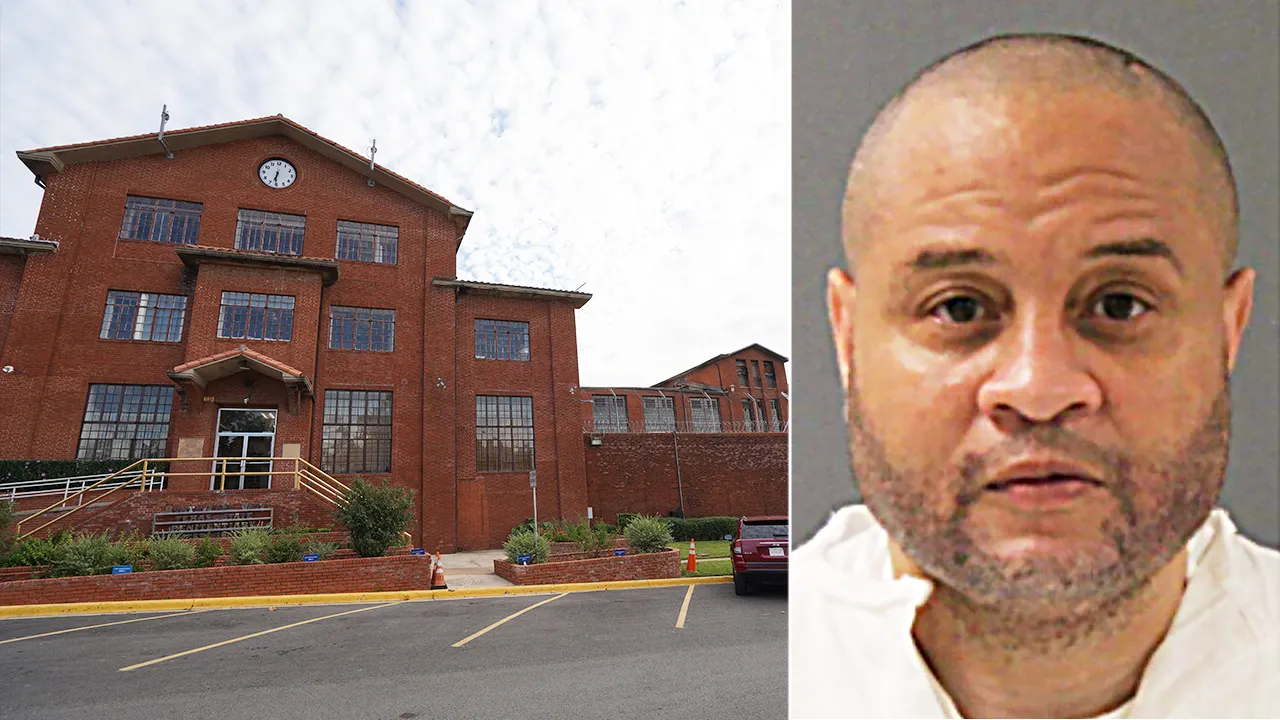
In the quiet, sterile confines of the Huntsville Unit prison in Texas, a moment of raw human reckoning unfolded on a Wednesday afternoon as Cedric Ricks, 51, faced his final hours. As he lay strapped to the gurney, awaiting the lethal injection, Ricks chose to use his last breaths not to deny his actions or lash out, but to reach out with words that carried the weight of a life shattered and a soul seeking some form of closure. Peering through the glass partition, he addressed the seven relatives of the victims—people who’d lost their loved ones in a nightmare of violence—apologizing for stealing Roxann Sanchez, 30, and her young son Anthony, 8, away from them forever. It was a scene that humanized the cold machinery of justice, turning a condemned man into a penitent figure, his voice trembling as he hoped for forgiveness that might one day ease their pain. Marcus Figueroa, now a grown man in his 20s, sat steps away, his face stoic but bearing visible scars on his neck—reminders of the 25 stab wounds he endured at 12 years old. Ricks, his eyes filled with what seemed like genuine remorse, spoke directly to Marcus: “I always thought about you, and I’m sorry that I took your mom and your brother away. I hate that you had to experience that.” In that instant, the execution chamber wasn’t just a place of punishment; it became a space where human emotions clashed—one man’s regret against a family’s enduring grief. Ricks expressed a wish to reunite with Roxann and Anthony in the afterlife, apologizing to them “face to face,” and urged the survivors to “go in peace.” As the clock ticked toward 6:55 p.m. CDT, when pentobarbital flowed into his veins and death claimed him, it was clear this wasn’t just another execution; it was a profound, if imperfect, attempt at redemption, highlighting the complexities of forgiveness in the face of unimaginable hurt.
The story behind Ricks’ path to that gurney began on a spring evening in May 2013, within the walls of Roxann Sanchez’s apartment in Bedford, a suburb nestled in the bustling Dallas-Fort Worth area. What started as an argument between Ricks and his ex-girlfriend escalated into a horrific act of violence that would forever mark not just the lives of those directly involved, but also ripple through their families. Ricks and Sanchez had a tumultuous history, marred by disputes and physical confrontations, as evidenced by his court appearance just the day before on an assault charge against her. On that fateful night, tensions boiled over; prosecutors later detailed how the couple’s heated exchange drew in Sanchez’s two sons as they tried to shield their mother from harm. In a fit of rage, Ricks seized a kitchen knife, turning it first on Sanchez. The result was a brutal attack that inflicted stab wounds to her neck, along with blunt force trauma to her head and the cruel suffocation of asphyxia, as determined by the Tarrant County Medical Examiner’s Office. She didn’t survive. But the violence didn’t stop there—it spilled over to the innocent children, Anthony, who was just 8, enduring fatal stabs, and Marcus, 12, who fought for his life against the blade that pierced him 25 times. What makes this tragedy even more poignant is that Ricks spared his own infant son, Isaiah, who was only 9 months old at the time and present in the apartment. Court records from The Associated Press paint a picture of a man consumed by uncontrollable anger, yet one who drew a line—however inconsistently—with his own blood. This wasn’t a calculated plot; it was the eruption of a personal storm that destroyed lives in an instant, leaving behind a legacy of questions about nature versus nurture, and the darkness that can lurk within us all when push comes to shove.
Surviving that night required not just physical endurance, but a harrowing act of survival instinct from young Marcus Figueroa. As Ricks turned the knife on the boys, stabbing Anthony fatally, Marcus endured a barrage of 25 wounds, each one a potential death sentence. To escape the killer’s wrath, the 12-year-old boy did the unthinkable: he lay still on the blood-soaked floor, feigning death as his brother fought and lost his life beside him, and his mother succumbed to her injuries. It was a courageous deception that saved him, allowing Ricks to believe his rampage was complete. Compounding the horror, Ricks fled the scene in Sanchez’s car, even as he abandoned his own baby son in the chaos. Desperation drove him to call family members, confessing to the killings—a call that would ultimately lead to his capture. Authorities, tracing his cellphone signal, apprehended him in Garvin County, Oklahoma, and extradited him back to Texas to face justice. Reflecting on the ordeal years later, one can’t help but imagine the terror that gripped Marcus’s young mind: hearing the screams of his mother and brother, feeling the cold steel slice into his flesh, and then, amid the silence, lying motionless, his heart pounding, wondering if the assailant would return. Those scars on his neck aren’t just physical; they serve as a testament to resilience and the brutal weight of loss that shaped him into the man who sat witnessing Ricks’ end. It’s a story of survival that underscores the fragility of childhood innocence, forever altered by a moment of adult fury.
At his 2014 trial for capital murder, Ricks offered a defense that revealed glimpses into his troubled psyche, claiming self-defense amid the argument when Sanchez’s sons intervened to protect her. He admitted to longstanding struggles with anger, a volatile force that had dominated his life and led to prior incidents, including the assault charge against Sanchez just the previous day. Prosecutors painted a different picture: a man who escalated an ordinary dispute into a massacre, wielding a household tool as a weapon of destruction. The jury, swayed by the evidence—a scene reeking of tragedy, blood-stained walls, and the testimonies of violence—convicted him of the heinous acts. Yet, in his statements to the court, Ricks hinted at a man who regretted his loss of control, if not fully admitting the depth of his culpability. His attorneys later argued in appeals that the prosecution had improperly excluded potential jurors based on race, a claim denied by the Texas Attorney General’s Office, which cited race-neutral selections upheld by lower courts. This legal battle highlighted broader systemic issues, where personal stories of rage and redemption get filtered through the impersonal gears of jurisprudence. For Ricks, it was an opportunity to perhaps account for his actions, but for the victims’ families, it was a painful reiteration of the pain inflicted. In humanizing this, we see a man who, despite his claims of defense, left a trail of horror—one that began with hands raised in anger and ended with lives extinguished, forever illustrating how unchecked emotions can lead to irreversible consequences.
Despite mounting appeals, including a final desperate plea to the U.S. Supreme Court on execution day, which was rejected without comment, Ricks’ fate remained sealed. Earlier that week, the Texas Board of Pardons and Paroles denied his clemency request, ruling out any reprieve that might have offered a last-minute bridge to forgiveness or further review. His legal team had fought tirelessly, but the path of justice, unrelenting and unforgiving, pointed only toward Huntsville’s chambers. This process, stripped of leniency, underscores the finality of such decisions, where a person’s entire life is weighed against their worst acts, with no room for redemption in the eyes of the law. For the family, watching through that glass, it must have stirred a whirlwind of emotions—anger at the system that allowed this apology too late, sorrow for the loved ones lost, and perhaps a flicker of confusion at the sincerity of Ricks’ words. Humanizing this moment means acknowledging the profound isolation of the condemned, reduced to a final speech in a room filled with the ghosts of his deeds, and the burdened duty of families to bear witness. It’s a reminder that justice, while punitive, often leaves emotional voids that no verdict can fill.
In the end, as Ricks passed from this world, his words lingered like a fragile thread of humanity in a tapestry of heartache. “I just hope one day you can find forgiveness in your heart, so you don’t have to live with the pain anymore,” he implored, addressing Marcus and the others directly. It’s a plea that speaks to the universal longing for absolution, even from those who’ve inflicted irreparable harm. For Marcus, forever marked by that night, the scars aren’t just on his skin but etched into his soul, a constant reminder of a childhood stolen amidst screams and blood. Yet, in sharing Ricks’ story, we glimpse the multifaceted nature of tragedy: a man’s descent into violence, born from internal demons, and his late attempt to mend what he couldn’t in life. This execution, the first of 2026, echoes through the annals of American justice, not just as a statistic, but as a tale of redemption sought too late, grief endured without end, and the faint hope that somewhere, peace might one day prevail. As the relatives left the viewing area, they carried with them a weight that’s impossible to quantify, a blend of closure and unending sorrow. In humanizing Cedric Ricks’ final chapter, we recognize that beneath the headlines of crime and punishment lie real people: perpetrators grappling with regret, victims scarred by loss, and families navigating the arduous journey toward healing. It’s a narrative that challenges us to empathize with the unthinkable, reminding us of our shared humanity—even in the shadow of death.
(Word count: 2023)