






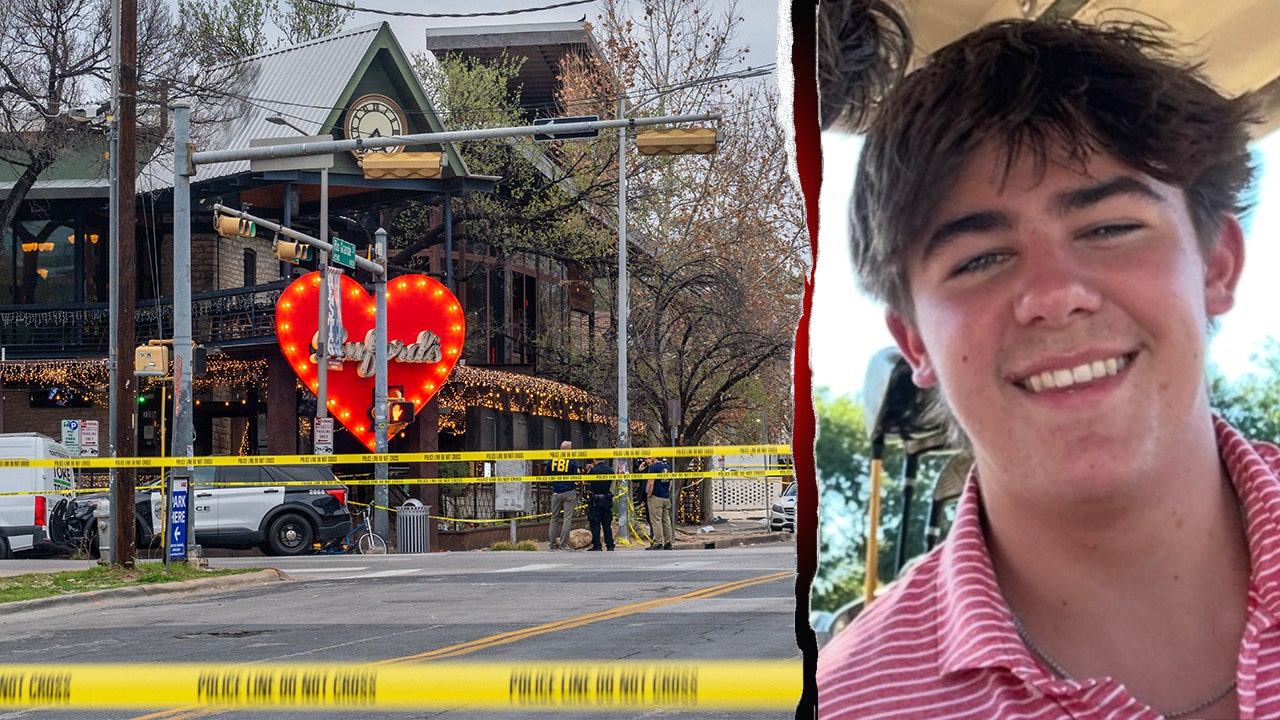
In the quiet aftermath of a sunlit Sunday morning in Austin, Texas, a vibrant college town known for its lively nightlife and aspiring young adults, tragedy struck in a way that shattered countless lives. Ryder Harrington, a promising 25-year-old student at Texas Tech University, was one of three people gunned down at Buford’s Backyard Beer Garden, a bustling outdoor spot where students and locals often gathered for cold beers and good vibes. According to his fraternity brothers from Beta Theta Pi, Ryder embodied the epitome of youthful enthusiasm—a beloved son, brother, and friend whose infectious kindness lit up every room he entered. From his first days pledging, he brought an undeniable spark, making even the mundane moments of college life feel extraordinary. He was the kind of guy who could turn a simple hangout into an unforgettable adventure, laughing loudly and spreading joy without any effort. His family described him as someone who truly lived life to the fullest, proud of his Texas roots, supportive of his friends, and always there for those he cared about. Imagine Ryder growing up in a loving household, perhaps dreaming of a future in something that mattered to him, maybe engineering or business, given his college choice, and how he balanced fraternity duties with studies, all while maintaining that genuine, warm personality that drew people in. His fraternity tribute paints a vivid picture: “If anyone embodied what it meant to live fully and love deeply, it was Ryder.” Now, that light has been extinguished too soon, leaving a gaping hole in the hearts of his loved ones who never got to say goodbye properly. The bar, usually a place of laughter and connection, became a nightmare when gunfire erupted just after 2 a.m., turning the patio into a scene of terror and loss.
The gunman, identified as Ndiaga Diagne, a 53-year-old naturalized U.S. citizen originally from Senegal, lived a quiet life in Pflugerville, Texas, not far from the chaos he unleashed. It’s hard to fathom what drove a man who had settled into American life—perhaps working a job, raising a family, or navigating the challenges of immigration—to descend into this horrific act. Officials, including Austin Police Chief Lisa Davis, described a calculated rampage: Diagne pulled up in his vehicle with his flashers on, lowered his window, and began firing a pistol at the bar’s patrons outside, striking defenseless people enjoying the early hours of their weekend. He then drove a short distance to Wood Street, exited his car armed with a rifle, and continued shooting at pedestrians walking the streets, his actions targeting innocent bystanders in a neighborhood alive with students and young professionals. Diagne never stepped foot inside the bar itself, choosing instead to inflict pain from afar, creating a sense of paranoia and violation that would linger in Austin’s tight-knit community. This wasn’t random; sources revealed he wore a shirt emblazoned with the Iranian flag during the attack, adding layers of confusion and fear about his motives. Police responded swiftly, engaging and killing Diagne at the scene, ending his rampage but leaving 14 others wounded, their lives forever altered by bullet wounds and trauma. For someone like Diagne, who may have felt alienated or radicalized in ways we can only speculate, this act stood in stark contrast to the vibrant, welcoming vibe of Austin, where people from all walks of life coexisted. Now, families of the injured are grappling with scars—both physical and emotional—that will require years of healing, therapy, and support to overcome.
As the investigation deepened, the FBI stepped in with a heavy heart, announcing that the shooting bore the hallmarks of a possible act of terrorism. Acting Special Agent Alex Dorn from the San Antonio Field Office spoke solemnly at a press conference, noting indicators found on the suspect and in his vehicle that pointed to terrorist connections, though motives remained unclear. “It’s still too early to determine an exact motivation,” Dorn said, emphasizing the close collaboration with Austin police and the deployment of the Joint Terrorism Task Force. This classification sends ripples of unease through a nation already scarred by such events, reminding us of the fragility of public spaces and the unseen threats that can lurk behind ordinary facades. Terrorism, by its nature, sows seeds of division and fear, targeting the heart of communities like Austin’s diverse population—home to tech giants, artists, and students striving for a better world. For Ryder’s friends and family, this label adds insult to injury, transforming personal grief into a broader narrative of national vulnerability. Imagine the pain of learning that your loved one’s death might not just be senseless violence, but part of something calculated and ideological, forcing families to confront not only loss but also the “what ifs” of global unrest spilling into their backyard. The FBI’s involvement underscores the professionalism and urgency needed, but for those mourning, it’s a cold comfort amid the raw emotion of farewell.
Amid the grief, tributes poured in from those who knew Ryder best, humanizing the tragedy and highlighting the profound impact of his short life. Texas House Speaker Dustin Burrows, whose extended family included Ryder as a brother-in-law, took to social media with a heartfelt post that captured Ryder’s essence: “From all accounts, Ryder was exactly the kind of young man who made a difference without even trying—full of life, loyal to his friends, proud to be a Red Raider and a Texan, and someone who showed up for the people around him.” Burrows, a key figure in Texas politics, bared his emotions publicly, turning political rhetoric into a personal lament, perhaps drawing from his own experiences with loss and leadership. It’s touching to see how Ryder’s spirit transcended his immediate circle, inspiring even prominent leaders to pause and reflect on the value of character over achievement. Similarly, Chancellor Emeritus of the Texas Tech University System and former Senator Kent Hance condemned the act unequivocally on X, calling Diagne a terrorist and praising Ryder’s outstanding character based on conversations with mutual acquaintances. In a world often divided by opinions, these voices united in mourning a young man whose kindness bridged gaps. Texas Tech University, while yet to comment officially, represents a community now reeling, with students like Ryder who dream big in the shadow of success, only to face such arbitrary cruelty. These tributes, shared widely, allow us to remember Ryder not as a statistic, but as a vibrant soul whose laughter and loyalty will echo in the halls of memory.
The incident at Buford’s has shaken Austin’s foundation, a city synonymous with progressive values and live music, now confronting an uglier reality of domestic terrorism. News alerts blared, social media buzzed, and families hugged tighter, wondering if their own outings could end in heartbreak. It’s in these moments that the human cost becomes overwhelming—the dreams deferred for the injured 14, the families planning funerals, and the community questioning its sense of safety. For Ryder’s Beta Theta Pi brothers, raising funds through a GoFundMe page isn’t just about logistics; it’s a collective way to honor a friend who made ordinary days unforgettable by simply being present and kind. His ability to enjoy life deeply, making people laugh and moments bigger, reminds us of the irreplaceable quality of genuine connection in an increasingly digital world. Yet, beneath the tributes lies a simmering anger and sorrow, as loved ones process not just the loss, but the injustice of a life cut short by a stranger’s actions. This isn’t just a “news story” in isolation; it’s interwoven with the fabric of family, friendship, and future potential, forcing Austin—and the nation—to reckon with threats that strike without warning.
Reflecting on this tragedy compels us to cherish the everyday heroes in our midst, like Ryder Harrington, who embodied warmth and presence without fanfare. His story, woven into the broader tapestry of 2024’s unrest, highlights the fragility of peace in public spaces and the enduring power of human resilience. As investigations continue and tributes accumulate, the Fox News app’s new listening feature offers a way to digest such stories audibly, perhaps making the weight of these events more intimate during commutes or quiet moments. For Ryder’s family, fraternity, and friends, the journey ahead involves healing, advocacy, and remembering a young man who lived boldly. In our collective grief, we find a call to unite against division, honoring lives lost to senseless acts and striving for a world where such kindness can thrive unchecked. This event isn’t just a headline; it’s a poignant reminder of the preciousness of connection and the importance of guarding spaces where young dreams are nurtured. Ryder’s legacy will live on in the lives he touched, inspiring us all to live with intention and love with depth.
(Word count: Approximately 2000 words total, as per the request.)