


Church’s Provocative Nativity Scene Sparks Reflection on Immigration and Compassion
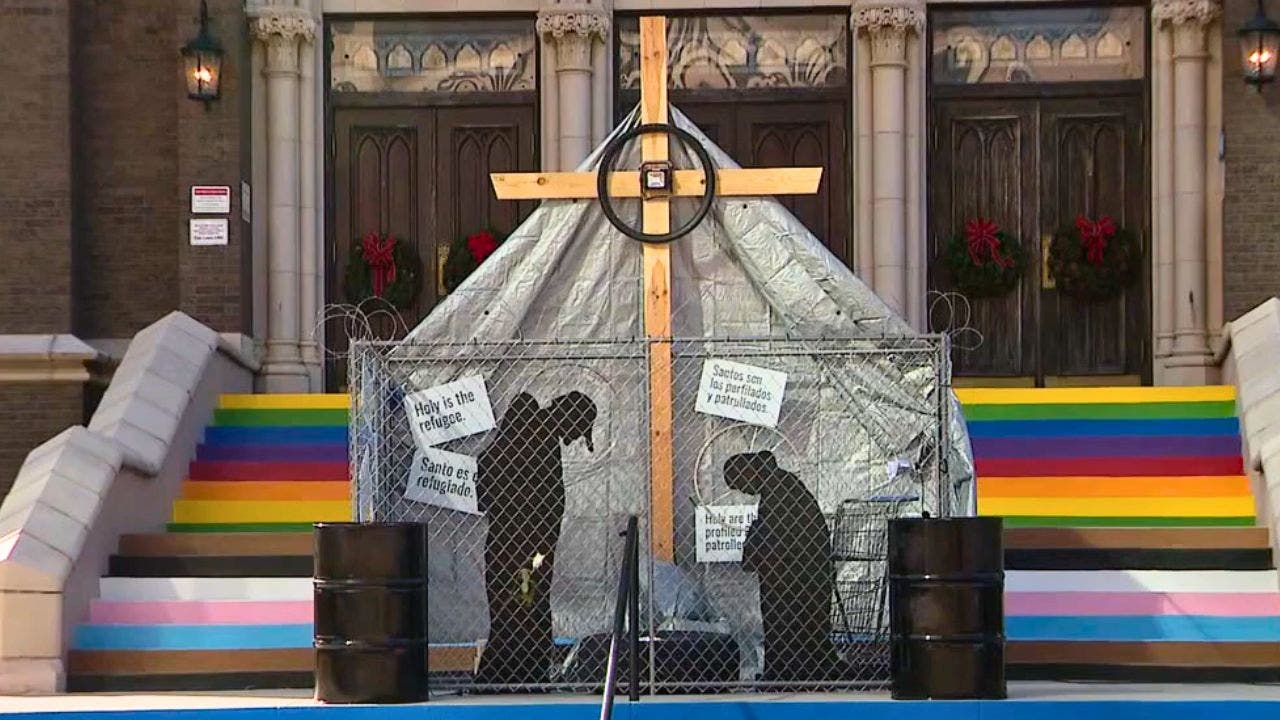
Oak Lawn United Methodist Church in Dallas has created a powerful statement this Christmas season with an unconventional nativity scene that’s prompting both conversation and controversy. The display, erected on the church’s rainbow-painted front steps, shows silhouettes of Mary, Joseph, and baby Jesus confined within a metal cage wrapped in barbed wire. This modern reimagining of the Holy Family as migrants detained at a border carries deliberate messaging through accompanying signs declaring “Holy is the refugee” and “Holy are the profiled and patrolled.” The church has extended this theme inside its walls with a second installation featuring empty chairs, protest signs, and a manger beneath a board painted with “ICE WAS HERE,” alongside questions asking where Mary, Joseph, and Jesus have gone. This artistic choice transforms the traditional nativity from a quaint holiday decoration into a pointed social commentary on current immigration policies and treatment of vulnerable populations.
When announcing the display on December 8th, the church emphasized that their nativity wasn’t designed merely as a photo opportunity but rather as “a prayer in the shape of a family.” Church leaders explained their decision to place the Holy Family within the harsh confines of tarps, fencing, and wire—the kind of conditions many displaced people endure today—was motivated not by a desire to shock viewers but to illustrate an uncomfortable truth. By connecting the biblical story of a family seeking shelter to contemporary issues of migration and homelessness, Oak Lawn United Methodist Church invites its congregation and the broader community to consider who might be excluded from comfort and care during the season traditionally associated with generosity and goodwill. Their message centers on the belief that if divine love entered the world through a homeless family seeking safety, then every person in similar circumstances deserves recognition and compassion.
Local community members have largely responded positively to the church’s approach. Neighborhood resident Sean Garman appreciated the display as meaningful commentary on current border issues, particularly the detention of immigrants without due process. Another local, Sarah Perkins, interpreted it as a modern application of gospel teachings, noting that Jesus himself was portrayed as both an immigrant and migrant in biblical accounts. Associate Pastor Isabel Marquez confirmed the intentional nature of the message, explaining that the nativity reflects realities experienced by many people. She emphasized that the church wasn’t necessarily prescribing specific political actions but rather calling for basic human empathy: “We are called to be able to walk the journey together as human beings. It’s not saying do more or do less, just treat others as you want to be treated.”
This nativity scene represents just one chapter in Oak Lawn United Methodist Church’s ongoing engagement with contentious social and political issues. In October, the church painted its steps in rainbow colors as an act of solidarity with the LGBTQ+ community, directly responding to Texas Governor Greg Abbott’s order to remove similarly decorated crosswalks throughout the state. This order had threatened communities with the loss of essential transportation funding if they failed to comply within 30 days. The church’s gesture positioned it as a sanctuary of acceptance amid policies perceived as hostile to certain marginalized groups, making a visible statement about inclusivity and resistance to restrictions on expression.
The church demonstrated similar resolve in 2022 when it appointed two openly gay pastors in defiance of a bishop’s directives. These actions collectively paint a picture of a faith community that views social justice advocacy as integral to its spiritual mission. While such positions have undoubtedly alienated some traditional churchgoers, they have also attracted supporters who believe religious institutions should actively address contemporary social issues. Oak Lawn United Methodist Church appears committed to interpreting Christian teachings through a lens that emphasizes compassion for the marginalized, even when doing so invites criticism or controversy.
By reimagining the nativity scene—one of Christianity’s most beloved and traditional symbols—as a commentary on modern immigration enforcement practices, Oak Lawn United Methodist Church asks difficult questions about how faith principles should inform our treatment of vulnerable people. The juxtaposition of sacred imagery with the stark realities of detention centers, family separation, and border enforcement creates a dissonance intended to provoke reflection rather than comfort. Whether viewed as an inspired application of religious principles or an inappropriate politicization of a sacred narrative, the display succeeds in its fundamental goal: compelling observers to consider the parallels between a family seeking shelter in ancient Bethlehem and those seeking refuge at modern borders. In doing so, the church invites a deeper contemplation of what it means to welcome the stranger during a season that celebrates a child born with “no room at the inn.”