



A Mother’s Unimaginable Sacrifice: When a Family Pet Becomes a Threat
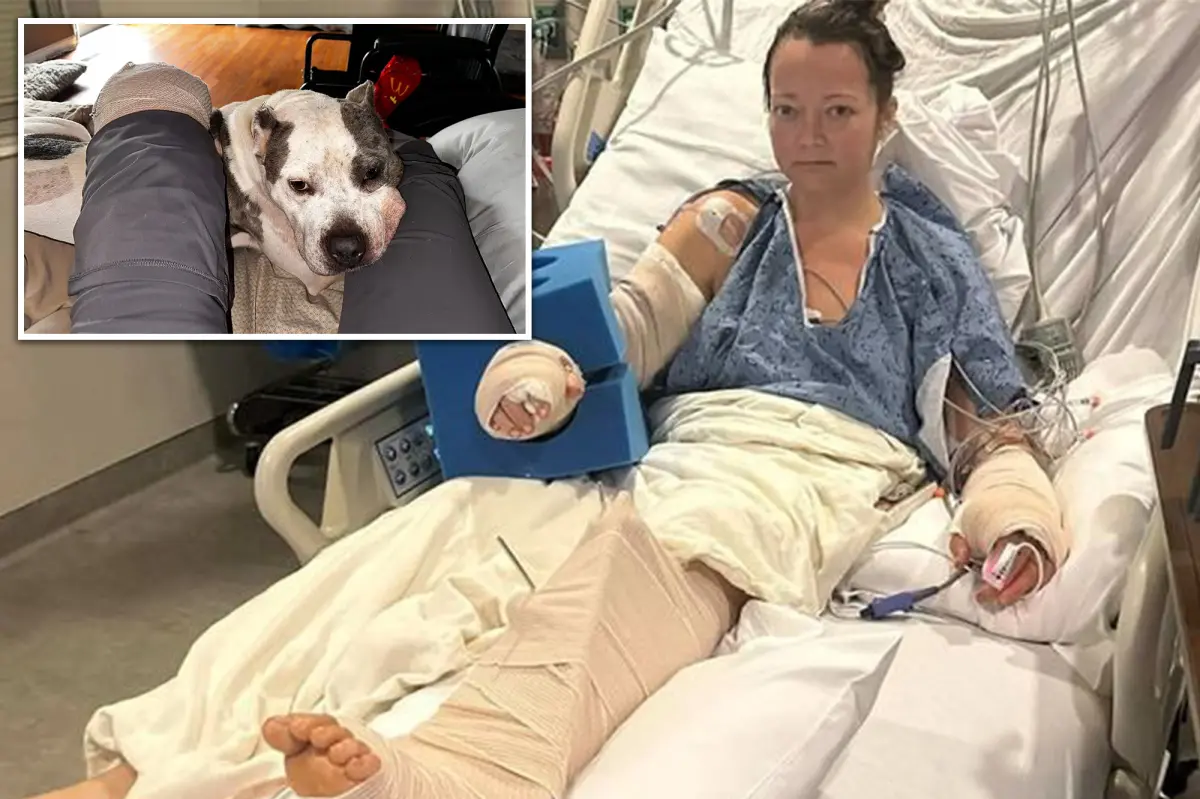
In a heart-wrenching story of survival and sacrifice, Amanda Mears, a 42-year-old healthcare worker and single mother from Murfreesboro, Tennessee, faced an unthinkable decision after her beloved pet turned on her in a moment of aggression. On December 10, what began as a routine dog walk evolved into a life-altering tragedy when her mixed American Pit Bull-American Staffordshire Terrier, Dennis, attacked her while she attempted to break up a dogfight in her home. The incident occurred when Dennis, whom Mears was preparing to take for a walk, lunged at her other dog, Ralphie, an American Bully who had escaped from a bedroom. When Mears stepped between the two dogs—something she had done before without incident—Dennis latched onto her left leg with a grip that wouldn’t release. “I was a bit scared, but I’ve broken up dog fights before,” Mears explained, noting that adrenaline initially masked her pain. In a desperate act of self-preservation, she managed to subdue Dennis by choking him with her right leg and arms while simultaneously shouting to her 10-year-old son to remain safely in his room. The chaos of those moments was so intense that Mears didn’t even realize Dennis had also bitten her left hand and crushed the bone in her right arm.
The aftermath of the attack was devastating. When Mears finally freed herself from Dennis’s grip, she found her left leg so severely mangled that it was “basically hanging off.” Emergency services rushed her to a Nashville hospital where medical professionals presented her with two stark options: amputate her leg or commit to approximately twelve surgeries spanning two years, with the likelihood of enduring constant pain throughout the process and recovery. After careful consideration, Mears chose amputation below the knee, prioritizing her long-term quality of life and responsibilities as a single mother over attempting to save her limb. “I decided to have my leg amputated because to save my leg, I’d have had to have 12 more surgeries over the next two years and I would be in constant pain,” she explained, demonstrating remarkable clarity and strength in the face of such a life-changing decision. The surgery was performed just three days after the attack, and doctors also treated the injuries to both of her arms. Mears spent a week recovering in the hospital and will eventually be fitted for a prosthetic leg to help her regain mobility.
Perhaps the most heartbreaking aspect of this tragic situation was Mears’s difficult decision regarding Dennis, the dog she described as her “best friend.” Despite raising him from just two weeks old and having no previous incidents of aggression—”Dennis has always been the sweetest dog; he’d never been aggressive before,” she emphasized—Mears made the painful choice to have him euthanized to protect her son and prevent any possibility of future attacks. “It was a decision that hurt, but it was not a difficult decision,” Mears shared, revealing the emotional complexity of choosing between the pet she loved and the safety of her family. This dimension of her story highlights the unpredictable nature of animal behavior and the profound emotional toll when a cherished family pet becomes dangerous, forcing loving owners to make impossible choices between attachment and safety.
The incident sheds light on the complex reality of dog ownership, particularly of breeds with strong jaws and powerful builds. While many pit bulls and related breeds are gentle, loyal companions throughout their lives, incidents like this one demonstrate why responsible ownership, proper training, and appropriate precautions are essential. Mears herself is no stranger to canine care—she has four dogs in total and regularly provides temporary homes for abandoned dogs. Her experience and comfort with handling dogs likely prevented even more serious injuries or fatalities during the attack, as she knew how to respond when Dennis wouldn’t release his grip. However, even her experience couldn’t fully protect her from the severity of the attack once it began, underscoring the importance of always remaining vigilant, regardless of a dog’s previous behavior or temperament.
The financial implications of such a life-altering injury are substantial, particularly for a single mother. A GoFundMe campaign was established to help Mears with her medical expenses, which include not only the immediate surgeries but also rehabilitation, prosthetic fittings, and potential home modifications to accommodate her new physical reality. Beyond the obvious physical challenges of adapting to life with an amputation, Mears faces a long road of recovery that will impact every aspect of her daily routine—from her ability to work in healthcare to caring for her son and remaining pets. The psychological adjustment to such a sudden and dramatic change in physical ability presents its own significant hurdles, as does grieving the loss of a pet under such traumatic circumstances, even when that decision was necessary and justified.
Despite these overwhelming challenges, Mears’s story is ultimately one of resilience and clear-headed decision-making in the face of trauma. Rather than dwelling on what she has lost, she appears focused on adapting to her new circumstances and moving forward for the sake of her son and her future. The human capacity to face devastating setbacks and make difficult choices to protect loved ones shines through in her response to this tragedy. As Mears begins the long process of physical rehabilitation and adapting to life with a prosthetic limb, her story serves as a powerful reminder of both the responsibilities of pet ownership and the remarkable strength people can demonstrate when facing life’s unexpected and life-altering challenges. While no one expects to lose a limb to a beloved pet, Mears’s ability to make decisive choices under extreme circumstances likely saved her life and ensured she would be there for her son, albeit forever changed by the experience.