


Tennessee Death Row Inmate Apologizes Before Execution, Nearly Three Decades After Murder
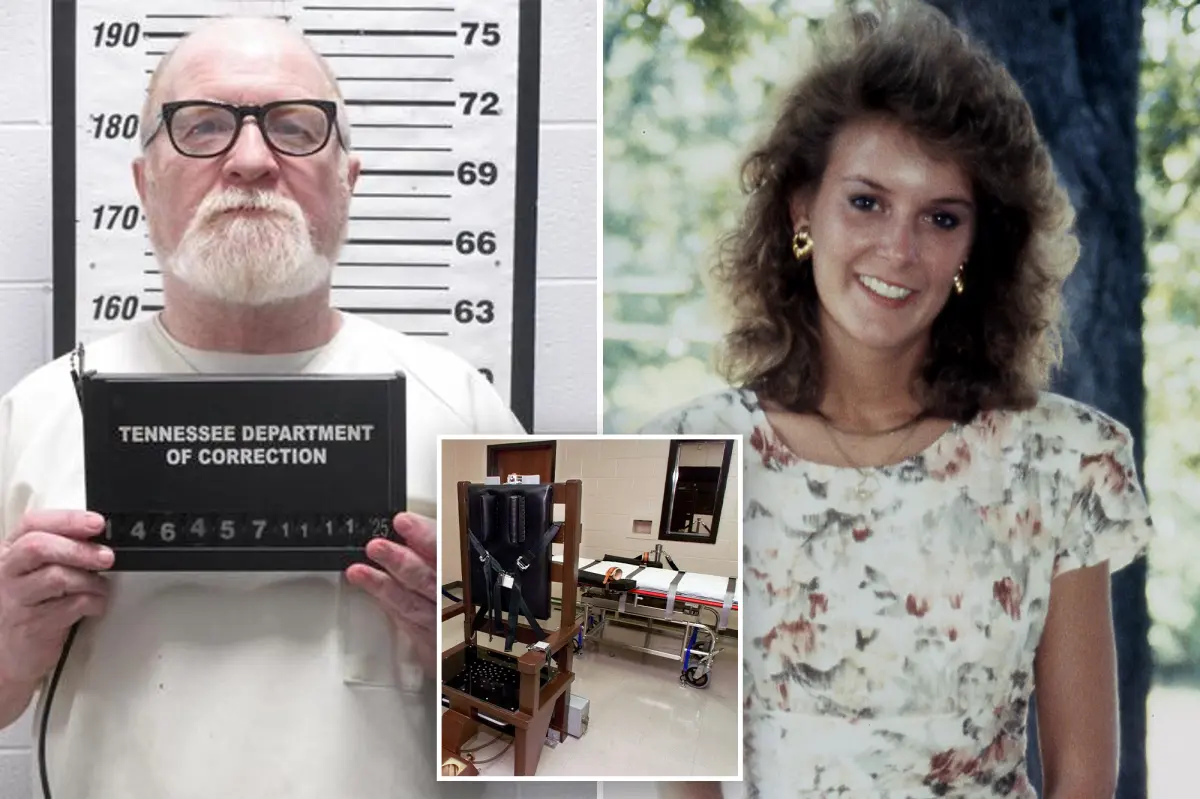
In a solemn moment that brought partial closure to a decades-long tragedy, Harold Wayne Nichols used his final breath to express remorse before his execution on Thursday at Nashville’s Riverbend Maximum Security Institution. “To the people I’ve harmed, I’m sorry. To my family, know that I love you,” Nichols said as the lethal injection of pentobarbital was administered. His final words reflected a man who claimed to be at peace with his fate: “I know where I’m going. I’m ready to go home.” At 64 years old, Nichols was pronounced dead at 10:39 a.m., closing a dark chapter in Tennessee’s criminal history that began in 1988. Despite a last-minute attempt to stay his execution, the Tennessee Supreme Court denied his request, allowing the sentence to proceed as planned after nearly three decades of Nichols living on death row since his 1990 conviction.
The story behind Nichols’ execution traces back to a horrific night in September 1988, when 20-year-old Karen Pulley, described by family as “gentle, sweet, and innocent,” became the first known victim of what would become a terrifying three-month crime spree. Pulley, a student at Chattanooga State University, was asleep in her bed when Nichols broke into her home through a window. In an act of unspeakable violence, he struck the young woman in the head with a two-by-four, sexually assaulted her, and then fled the scene. Pulley died from her injuries the following day in the hospital, leaving her family devastated and forever changed. As investigations would later reveal, Nichols went on to rape several other women and attempted to assault five more across the Chattanooga area between September 1988 and January 1989, creating a wave of fear throughout the community until his eventual capture.
Following his arrest, Nichols confessed to the crimes with disturbing candor. At trial, he not only admitted to murdering Pulley but also to raping seven other women during his spree of violence. While he expressed remorse for his actions, perhaps most chilling was his acknowledgment that had he not been apprehended, he would have continued his predatory behavior. The justice system responded with the fullest extent of the law—Nichols received more than 200 years for the multiple rape and burglary convictions and was sentenced to death for Pulley’s murder. The death sentence, handed down in 1990, would take nearly thirty years to be carried out, delayed twice along the way—once in 2020 due to the COVID-19 pandemic and again in 2022 when Governor Bill Lee suspended all executions statewide following a procedural error in the state’s execution protocols.
For the Pulley family, these decades of waiting represented what Karen’s sister, Lisette Monroe, described as “37 years of hell.” Monroe, who was only 17 when her sister was murdered, shared with the Associated Press that the trauma permanently affected their parents. “I’ll be honest with you, neither one of my parents were ever the same after Karen’s murder,” she said, giving voice to the immeasurable pain that violent crime inflicts not just on victims but on entire families. The long wait for justice meant that Karen’s memory was often overshadowed by the horrific circumstances of her death, forcing the family to repeatedly relive their worst nightmare through years of appeals, hearings, and delayed execution dates. Throughout those difficult years, they held onto memories of Karen’s gentle nature and sweet spirit while navigating the complex emotions that come with waiting for execution day.
While Monroe acknowledged that the pain of losing her sister will never completely disappear, she expressed hope that the execution would allow her family to finally shift their focus from the tragedy to celebrating Karen’s life. “We can focus on the happy memories of Karen,” Monroe said, a simple yet profound desire after decades of trauma. “The love that we had for her, rather than every time we turn around reliving her murder.” This sentiment captures the complicated reality for many victims’ families—justice, even when finally served, doesn’t erase the loss, but it can provide a turning point that allows healing to take a more central role in their ongoing journey with grief.
Nichols’ execution marked the third in Tennessee this year under the state’s revised lethal injection protocol, which now uses a single drug—pentobarbital—instead of the previous three-drug combination. The execution represents both an ending and a beginning: the conclusion of a legal process that spanned more than three decades, and perhaps the start of a new chapter for the Pulley family as they attempt to reclaim Karen’s memory from the shadow of Nichols’ crimes. While the debate over capital punishment continues in America, this case highlights the human dimensions on all sides—the irreversible harm done to victims and their families, the lengthy and often painful road to justice, and even the final moments of remorse from a man who committed terrible acts but sought, in his final breath, to acknowledge the harm he had caused. For the Pulley family, this long-awaited moment of justice offers not an erasure of their loss, but perhaps a chance to finally place their focus on Karen’s life rather than the circumstances of her death.