






The Haunting Final Chapter in a Young’s Life
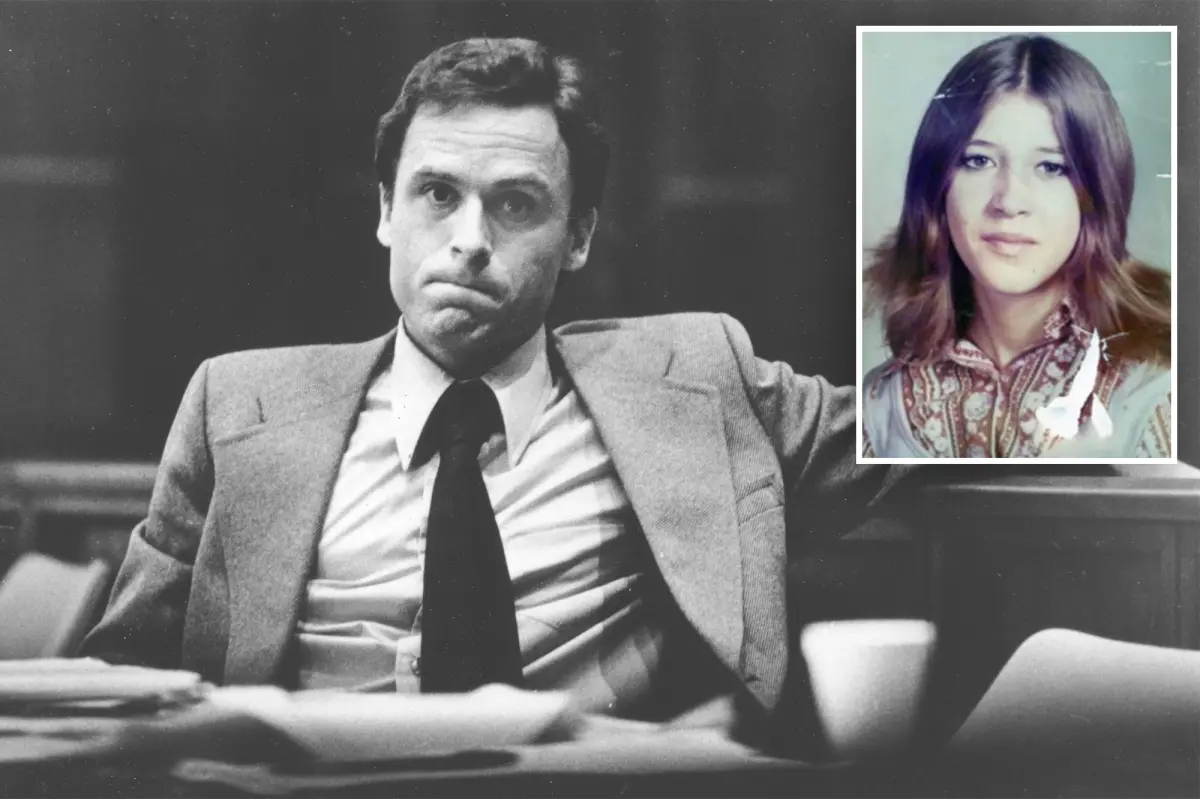
Imagine a bright, 17-year-old girl named Laura Ann Aime, full of life and promise, enjoying a crisp Halloween night in 1973 Lehi, Utah. She was the kind of teen who loved horses, riding through the local trails with a carefree spirit, her laughter echoing in the autumn air. Little did her family know, she had become the target of one of America’s most notorious predators, Ted Bundy—a charming predator who blended into normal society like a chameleon, using his good looks and smooth talk to lure young women into his deadly web. Bundy, who confessed to killing at least 30 women across states like Washington, Oregon, Utah, Colorado, and Florida between 1974 and 1978, had been active in Utah while studying law at the University of Utah. His victims were often hitchhikers or unsuspecting young women, snatched in moments of vulnerability. For Laura, it wasn’t a random roadside encounter; he stalked her meticulously, posing as a protector and even pretending to be her boyfriend months before her brutal end. Her niece, Taura Stucki, a 30-year-old woman grappling with her family history, shared heart-wrenching details from private investigator files. “He approached her multiple times,” Taura revealed, her voice tinged with a mix of revulsion and sadness. It wasn’t just a passing glance; Bundy infiltrated Laura’s world at school, where incidents highlighted his eerie manipulation. Picture a schoolyard filled with teenagers goofing around, leaves flying in the wind as boys teased a young girl by stuffing them down her shirt—a harmless prank gone wrong in an instant. But then, a older man, about 27, steps in, draping his arm around her protectively. “Leave my girlfriend alone,” he says with that disarming smile, making the bullies scatter. Laura, puzzled and defiant, shakes him off and retorts, “I’m not your girlfriend.” In that brief moment, Bundy’s game began, his charm masking sinister intentions. Taura, who grew up hearing whispers of this tragedy from her grandfather—Laura’s heartbroken father—had always sensed there was more to it than meets the eye. She imagined her aunt as a spirited teenager, perhaps rolling her eyes at the stranger’s boldness, never dreaming it was the start of a nightmare. Bundy’s method was chillingly calculated; he didn’t just pick victims on impulse, especially for Laura, who became one of his rarer stalked prey. This wasn’t about opportunity—it was obsession. Like many serial killers, Bundy thrived on control, using feigned romance to isolate his targets. For Laura, a bright-eyed girl with dreams beyond her small town, life was about school, friends, and that wild streak of independence marked by scars from a childhood fall off a horse into barbed wire—scars that would later become grim identifiers. The stalking painted a picture of Laura as someone vulnerable, a minor navigating adolescence, while Bundy loomed as a wolf in sheep’s clothing. Taura, reflecting on her aunt’s story, felt a deep empathy, wondering if Laura ever sensed the danger. “Stalking is crazy because most of his victims were just picked up then and there,” she noted, emphasizing how Laura’s case deviated from Bundy’s pattern of ambush killings. This revelation humanized the horror, transforming Laura from a statistic into a girl who was watched, wooed, and ultimately destroyed by a man whose allure hid a soul blacker than midnight. The family, carrying this burden for decades, found solace in the recent confirmation from Utah County officials that Bundy was “without a shadow of a doubt” responsible, closing a chapter that had haunted generations.
Echoes of Stalking and Deception
Delving deeper into the chilling interactions, Bundy’s pursuit of Laura Ann Aime revealed a darker layer of his predatory nature, one that went beyond his reputation as a killer of hitchhikers. He was a master of infiltration, blending into everyday life to build trust before striking. In Laura’s case, the stalking spanned multiple encounters, making it personal and methodical. Taura Stucki, drawing from investigator files, pieced together fragments of her aunt’s life, imagining how Bundy might have orchestrated these moments. At school, where teens buzzed with gossip and pranks, he inserted himself as a knight in shining armor during the leaf-stuffing incident, turning a minor embarrassment into a pseudo-romantic gesture. “He put his arm around her and was like, ‘Leave my girlfriend alone,'” Taura recounted, echoing the manipulative tactic that fit Bundy’s pattern of feigning affection. This wasn’t impulsiveness; it was deliberate grooming. Laura, a 17-year-old with a sharp tongue and independent streak, rejected his advances outright, but Bundy’s persistence lingered. Picture the schoolyard scene vividly: leaves crunching underfoot, laughter turning to intimidation as branches scratched at exposed skin, and then Bundy’s arrival, his presence commanding attention. He exuded a false sincerity, perhaps flashing a warm smile to lower her guard, but Laura’s quick dismissal—”I’m not your girlfriend”—might have fueled his rage. Serial killers like Bundy often derived pleasure from the chase, and for Laura, this initial rejection could have been the spark that turned admiration into obsession. Taura, reflecting on this, felt a profound sadness for her aunt, wondering what thoughts raced through Laura’s mind afterward. Did she mention the odd encounter to friends, laughing it off as another weird day in adolescence? Or did an uneasy feeling linger, like an invisible shadow trailing her steps? Bundy’s charm was legendary; he used his boyish good looks, intelligence, and conversational skills to disarm people, often posing as students or professionals to gain access. In Laura’s world, this meant integrating into her routine at the University of Utah-adjacent environments or local hangouts, spying from afar before approaching. The human side emerges in Taura’s memories—her grandfather’s grief, her own curiosity as a child hearing hushed stories at family gatherings. Bundy’s deception mirrored a twisted romance novel, where the protagonist is the villain lurking just beyond the page. For the Aime family, this pre-killing phase added layers of anguish; it wasn’t swift violence but prolonged torment, eroding Laura’s sense of safety. Even now, nonfiction accounts from Bundy’s era paint him as charming yet elusive, a law student with potential who hid his dark impulses. Laura, labeled as at least his third victim in Utah, became an outlier in his crime spree. Taura emphasized that most victims were chance encounters, making Laura’s experience eerily unique. This humanized portrayal shows victims not as objects but as individuals with personalities—Laura’s defiance shining through even in tragedy. Her scars from the barbed-wire fall symbolized resilience, a metaphor for the wounds Bundy inflicted. As Taura absorbed these details, she confronted Bundy’s humanity too—his calculated moves reflecting a broken psyche, perhaps forged in his own troubled childhood. The stalking narrative transforms the story from cold facts to a chilling tale of intentional harm, where optimism and rejection clashed in a doomed romance gone horribly wrong.
A Fateful Halloween and a Vanishing Act
On that fateful Halloween night in 1973, Laura Ann Aime was the epitome of youthful exuberance, slipping out for a party in Lehi, Utah, twinkling with costumes and spiced cider. Friends described her as adventurous, always up for fun but grounded enough to make practical stops. “She was last seen leaving a Halloween night party,” beams from witness accounts, heading to a nearby convenience store for a quick errand—perhaps picking up candies or soda, her mind on the festivities back home. This seemingly ordinary decision marked her final moments of freedom, unwittingly leading her into Bundy’s grasp after months of subtle stalking. Taura Stucki, in sharing the story, painted a vivid picture of that evening: the crisp air carrying hints of pumpkin and bonfires, teenagers laughing in costumes, while Laura moved through it all, oblivious to the eyes watching from the shadows. Bundy, already entrenched in her life through those schoolyard run-ins, likely seized the opportunity presented by the party’s distractions. Hitchhiking might have been his initial plan, but for Laura, he adapted, using the convenience store excursion as a trap. Imagine her walking the dimly lit streets, headphones perhaps blasting her favorite rock tunes, when a familiar face appeared—a charming stranger who had once “protected” her. His smooth words, “Need a ride?” could have begun innocently, exploiting the trust built during previous encounters. This human element underscores the tragedy: Bundy’s victims weren’t always strangers; sometimes, they were groomed. Laura, a girl with scars from childhood adventures and dreams of a future beyond Utah, represented innocence—to her family, she was the beloved daughter, sister, aunt, whose vibrant energy lit up rooms. Her disappearance sparked immediate worry, phone calls home unreturned, but no one yet connected the dots back to those earlier Bundy sightings. Taura, hearing these tales from her grandfather and piecing them together as an adult, felt the weight of what-ifs: What if someone had warned her? What if Bundy hadn’t been so adept at blending in? Serial killers like him operated in a world of duality—polite on the surface, monstrous beneath. For Laura, the Halloween night symbolized a bridge between light and darkness, where fun turned to fear. She embodied the era’s young women, navigating a post-hippie world filled with optimism and hidden dangers. Bundy’s allure lay in his veneer of normalcy; he drove a Volkswagen Beetle, studied law, and charmed acquaintances, making him a paradox. Laura’s story, with its multiple contacts, challenges the stereotype of Bundy as a highway predator, revealing a more intimate monster. Her family, clutching photographs of her smiling horseback, grappled with the pain of loss amplified by his stalking. In Taura’s reflections, we see empathy for Laura as more than a victim—she was a vibrant teen, her Halloween plans dashed by a calculated abduction. The humanizing lens transforms the narrative: raucous parties juxtaposed with solitary store aisles, where one wrong turn led to devastation. Taura’s ongoing quest for truth ensures Laura’s memory endures, a reminder that evil wears many masks.
The Grim Discovery and Unbearable Identification
A month later, on Thanksgiving 1973, two college students stumbled upon a scene of unimaginable horror in American Fork Canyon, their planned holiday outing morphing into a nightmare discovery. Laura Ann Aime’s body lay discarded several feet off the highway, naked and severely beaten, her once-vibrant form reduced to a tragic emblem of Bundy’s rage. The brutality was stark: her corpse tossed like refuse, injuries so severe that her own father, Taura Stucki’s grandfather, could not identify her by her face. The scars from a childhood horse accident—a fall into barbed wire leaving distinctive marks on her body—became the heartbreaking identifiers, a cruel twist where past resilience met present atrocity. Taura, recounting this with a quivering voice, shared her grandfather’s anguish: “He had to use those barbed-wire scars… it’s how he knew it was her.” Imagine the scene: the canyon’s rugged beauty contrasting the macabre find, students frozen in shock as they notified authorities. Bundy had disposed of Laura there, perhaps after a reign of terror in his car or a hidden lair, his methodical nature dictating the dumping site. This wasn’t random; Bundy’s murders often involved staging, aiming to evade detection. For Taura, raised on fragments of her aunt’s story, the discovery painted a picture of profound suffering. “She looked upon the daughter of Utah County,” officials later called her, a title honoring an unassuming girl now immortalized in infamy. The human horror lay in the details—the naked body exposed to the elements, the beating’s ferocity reflecting Bundy’s escalating violence. Victims like Laura weren’t just killed; they were violated, their possessions taken as trophies. In Bundy’s confessions before his 1989 execution, he admitted to the murder, but corroborating evidence took decades, leaving the family in limbo. Taura’s grandfather, a man of few words, bore the cross of that Thanksgiving identification, his grief a silent storm. Reflecting on it, Taura humanized the trauma: “He couldn’t recognize her face… it’s no father should know.” Bundy’s pathology—blame-shifting, lack of remorse—made the crime even more sinister. For Laura, a 17-year-old with a life cut short, the canyon became her unintended grave, a remote spot symbolizing isolation. The students’ accounts added empathy; their holiday plans dashed, now forever linked to Bundy’s legacy. In broader context, Bundy’s Utah spree, including Laura as victim number three or more, showcased his mobility and adaptability. He preyed on the quiet, luring with false promises before unleashing savagery. Taura’s revelations from investigator files underscored discrepancies—like other suspects initially considered—delaying justice. Yet, official confirmation brought partial closure, validating the family’s raw pain. Laura’s story transcends statistics; it’s a daughter’s lost laughter, a sister’s untold dreams, a father’s endless sorrow. Humanizing this, we see Bundy not just as a monster, but as a destroyer of spirits, leaving scars on generations.
Bundy’s Shadows and a Killer’s Confessions
Ted Bundy, executed in Florida’s electric chair in 1989 after a sensational trial, remains a chilling archetype of the serial killer—a blend of intellect, charisma, and unchecked evil. Admiring to 30 killings from 1974 to 1978, he crisscrossed the West, targeting young women like Laura Ann Aime with a predatory precision that defied belief. Active while enrolled at the University of Utah, Bundy favored hitchhikers for quick ambushes, often clubbing them before strangling, then posing bodies in grotesque displays. Laura, however, stood out; she was stalked, targeted personally, making her murder intimate and premeditated. Before his death, Bundy confessed verbally to killing the teen, but prosecutors, wary of inconsistencies, kept the case open. Decades later, Utah County officials, sifting through evidence, confirmed his guilt “without a shadow of a doubt,” tying similarities in injuries and patterns—severe beating, naked disposal—to his modus operandi. Taura Stucki, whose life intertwined with this legacy, felt a surge of validation. “They made us feel like family,” she said of the investigators, who dubbed Laura “the daughter of Utah County,” a tender honor underscoring enduring respect. Bundy’s confessions, extracted during interrogations revealing his manipulative side, echoed admissions to other killings: blunt clubs, rape, necrophilia. For Laura, this meant months of fear ended in agony, her body discarded in the cold canyon, mirroring victims whose stories Bundy twisted to suit his narrative. Humanizing the madman means glimpsing his facade—law student by day, killer by night, exploiting trust to snatch lives. He blamed pornography or head injuries, but psychological profiles suggest deeper voids, perhaps from an abusive childhood. Taura, processing this, saw Bundy as a human aberration, his charm a tool that fooled even survivors. Laura’s case, among the few with prior contact, highlighted his adaptability; not all prey were roadside flings. During the 1970s, Bundy’s spree instilled nationwide terror, books and movies mythologizing him as America’s bogeyman. For the Aime family, his confessions brought mixed relief—truth without justice. Bundy’s escape attempts and court theatrics added drama, but beneath lay a calculating mind. Taura’s grandfather, living with denial’s weight, found catharsis in confirmations. Bundy’s humanity emerges in his duality: charming yet pathological, a man who courted women while slaughtering them. Laura’s stalking exemplified this, turning a protective act into predation. In reflecting, Taura imagined Bundy’s cold eyes, contrasting her aunt’s warmth. The admissions, though self-serving, provided crumbs of closure, revealing Laura as a pivotal, stalked victim. Humanizing amplifies the tragedy: Bundy stole not just life, but futures, leaving voids in families like Taura’s.
Closure, Remembrance, and a Family’s Healing Journey
More than half a century after Laura Ann Aime’s death, Taura Stucki feels a bittersweet peace, the Utah County officials’ ruling affirming what the family long suspected—Ted Bundy claimed her aunt’s life, ending decades of uncertainty. “People still cared, 52 years later,” Taura marveled, cherishing the investigators’ familial approach and the title “the daughter of Utah County.” This case, delayed by similarities to Bundy’s crimes yet hampered by discrepancies—other suspects, missing links—mirrors the challenges in serial killer investigations, where evidence erodes over time. Humanizing the resolution involves the emotional arc: relief for Taura, vindication for her grandfather’s grief, and remembrance for Laura’s unexplored potential. Bundy, executed amid media frenzy, left a legacy of fear and fascination, his stalking of Laura underscoring his threat to everyday teens. Taura, sharing messages from supporters, senses her aunt’s spirit—adventurous, scarred yet unbroken—lingering. The story humanizes tragedy, from stalking’s insidious dread to post-mortem honor. Taura’s journey reflects broader healing: preserving Laura’s memory ensures evil doesn’t silence voices. In tying together, the tale weaves victims’ resilience with families’ endurance, turning horror into homage. Laura Ann Aime, forever 17, embodies courage amid cruelty, her story a poignant chapter in American darkness.