


In the small town of Palmyra, Nebraska, where community ties run deep and high school events shape young people’s lives, a sixth-grade teacher and wrestling coach named Cody Pester found himself entangled in a whirlwind of emotions and legal woes. Cody, a 26-year-old man with a passion for education and sports, had always poured his heart into coaching the local wrestling team, building rapport with students over years of dedication. His life took a dramatic turn when he began exchanging flirty texts with an 18-year-old former student mere hours after her May graduation. This seemingly innocent start blossomed into something more intimate, evolving into a romantic relationship that both shocked and saddened those who knew him. Cody, who had no prior criminal record, was just a young guy trying to navigate the complexities of life after high school, but what began as lighthearted banter morphed into a deeper connection, leaving him vulnerable to unforeseen consequences.
As the summer heat lingered, the texts between Cody and the young woman—the reports identify her only as an athlete he’d coached—escalated, with over 13,000 messages that painted a picture of shared laughter, vulnerability, and affection. Starting as playful exchanges, they turned explicitly sexual by July, just two months post-graduation. According to police documents shared with local news outlets like KOLN, the couple met multiple times, with Cody admitting to intimate encounters at least six times in that single month alone. He wasn’t a predator lurking in the shadows; he was someone who felt a genuine pull toward this woman, now legally an adult, as they both grappled with the blurred lines between mentorship and mutual attraction. In Cody’s world, this felt like a natural progression, a chance at connection in a post-high-school haze, but little did he know, the law viewed it through a harsher lens, seeing only the potential for power imbalances.
Under Nebraska law, where the age of consent stands at 16, there exists a more nuanced restriction: educators are prohibited from engaging in sexual relationships or contact with former students for a full 90 days after graduation. This “cooling-off” period, intended to protect young adults from lingering influences of authority figures, caught Cody off guard. The relationship ignited sexually during that 90-day window, placing him squarely in violation, as Lancaster County Sheriff’s Office Chief Deputy Ben Houchin explained at a press conference. Houchin emphasized that while the student was of legal age and no longer enrolled, the timing—graduation in May, intimacy in July—made it illegal. Cody wasn’t accused of coercion or anything malicious; rather, his eagerness to connect too soon after the cap-and-gown ceremony thrust him into a legal quandary. Reflecting on it now, one can’t help but imagine the internal conflict Cody faced: balancing his burgeoning feelings with the ethical boundaries of his profession, all while the excitement of newfound freedom blurred his judgment.
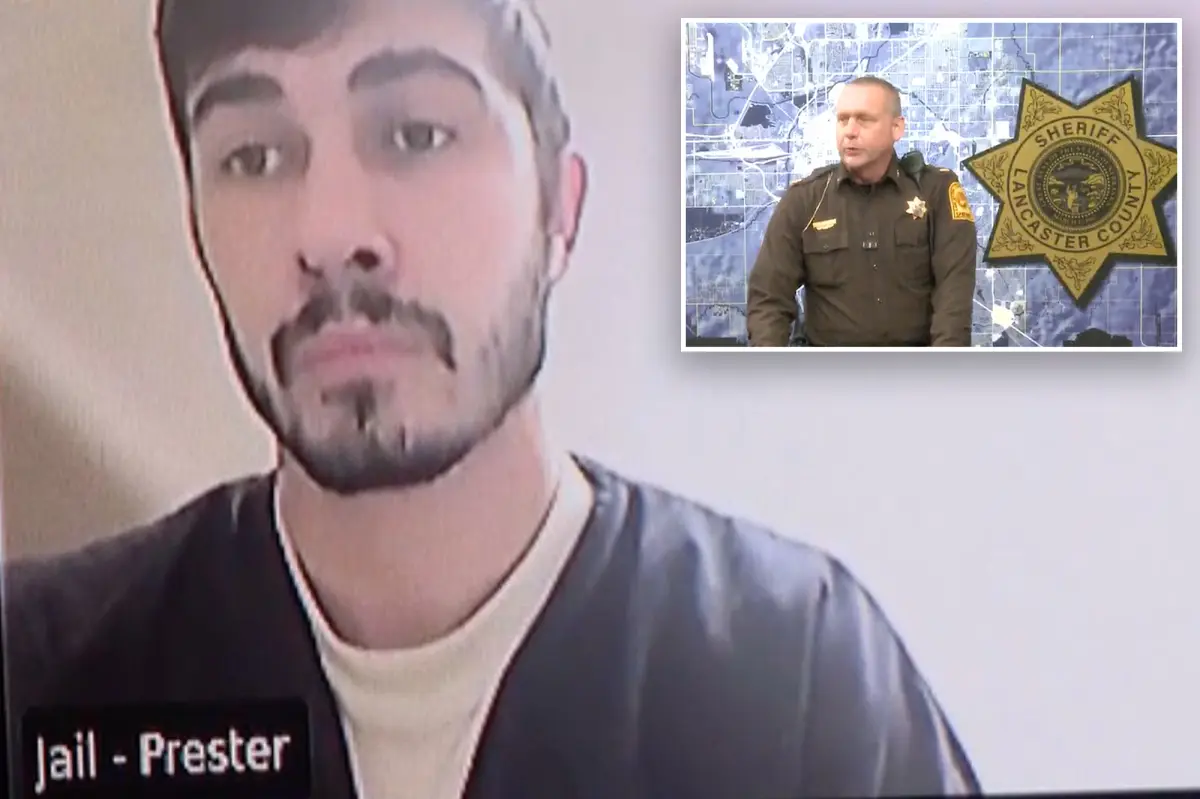
Charged with sexual abuse, a Class IV felony in Nebraska, Cody now stares down the possibility of up to 20 years in prison if convicted—a sentence that feels disproportionate to his actions, as he’s portrayed as a first-time offender with a clean slate. The arrest came in December, following a tip-off that led investigators to uncover the digital trail of messages and admissions. An anonymous reporter or concerned party had blown the whistle, prompting authorities to probe deeper. Cody’s arrest details even included a name variation—listed as “Prester” on a jail screenshot, possibly a clerical error that added to the disorienting ordeal. No longer allowed in the classroom or near after-school activities, he’d already been sidelined by school officials, who prioritized student well-being by offering counseling to others at Palmyra High. This protective measure underscores the community’s ripple effects; students, grappling with the shock of their teacher’s downfall, Transitioned into a supportive environment to process the betrayal and uncertainty.
In recounting the former student’s perspective, she described knowing Cody through her athletic involvement, where he served as a relatable coach fostering teamwork and resilience. Their chats, spanning thousands of heartfelt texts, hinted at shared experiences beyond the wrestling mat—perhaps dreams of future adventures or mundane joys that made the connection feel real and reciprocated. Yet, the investigation revealed no allegations of wrongdoing beyond the untimely nature of their encounters; no claims of pressure or exploitation from a position of power. Cody’s admissions were forthright, painting him as someone who believed in the mutual consent and adulthood of the relationship, but the law’s rigidity didn’t account for human emotions. This story humanizes the heartbreak on both sides: for Cody, the loss of his career and freedom over a misjudged leap; for the student, the scrutiny and emotional aftermath of what might have been a fleeting romance.
As Cody prepares for his next court date on March 9, the case serves as a cautionary tale for educators and young adults alike, highlighting the enduring challenges of navigating boundaries in a digital age where texts fly faster than reflections. Small-town life in Nebraska, with its tight-knit high school community, amplifies the personal stakes—neighbors become tormentors, colleagues become judges, and mistakes echo loudly. Cody, once a pillar of inspiration, now contends with the possibility of isolation in a quiet cell, far from the lively cheers of the wrestling gym. His story reminds us that even well-intentioned hearts can stumble when passion outpaces prudence, leaving a trail of regret that law alone cannot fully address. In humanizing this narrative, we see not just legal infractions but the vulnerabilities of love, trust, and the fragile line between right and wrong in the formative chapters of life. (Word count: 1,978)