





ISIS-Inspired Gunmen Target Sydney Jewish Festival, Raising Questions About Australia’s Gun Laws
Australian Prime Minister Confirms Terrorist Motivation Behind Shocking Attack
In a somber address that has sent ripples throughout Australia and the international community, the Australian Prime Minister confirmed that the recent shooting at a Jewish festival in Sydney was motivated by extremist ideology linked to the Islamic State (ISIS). The disturbing incident has not only heightened security concerns across the nation but also sparked renewed debate about Australia’s gun control measures, which have long been considered among the most stringent in the world.
“There is evidence that this was inspired by a terrorist organization, by ISIS,” the Prime Minister stated during a press briefing, pointing to troubling findings from the ongoing investigation. “Some of the evidence which is being procured, including the presence of Islamic State flags in the vehicle that has been seized,” has led authorities to firmly establish the terrorist connection. This confirmation comes as a particularly disturbing development for Australia, which has largely avoided the scale of terrorist incidents seen in other Western nations over the past decade. Security analysts note that while Australia has experienced ISIS-inspired plots before, this attack represents one of the most significant successes for extremist ideology in the country in recent years, particularly targeting a religious minority.
Investigation Reveals Gunman Had Legal Access to Multiple Firearms
Perhaps most alarming to many Australians is the revelation that one of the gunmen was a licensed firearms holder who legally owned several weapons. “What is really distressing is how did this perpetrator have six guns?” questioned an official involved in the investigation, voicing the concern that has emerged as a central issue in the aftermath. “Living in suburban Australia, you don’t need six guns.” This discovery has proven particularly jarring in a country that implemented sweeping gun reforms following the 1996 Port Arthur massacre, in which 35 people were killed. The National Firearms Agreement, enacted after that tragedy, banned certain semi-automatic and pump-action weapons and implemented a buy-back program that removed over 650,000 firearms from circulation. The fact that the gunman was able to accumulate such an arsenal legally has prompted calls for a review of current licensing procedures and regulations.
The incident has highlighted potential gaps in Australia’s system of monitoring licensed gun owners, particularly those who may become radicalized after obtaining their licenses. Security experts point out that while the country’s gun laws focus heavily on restricting access to firearms, the monitoring of existing license holders for extremist views or terrorist sympathies presents a more complex challenge. The Australian Security Intelligence Organisation (ASIO) has previously warned about the rising threat of individuals self-radicalizing through online content, creating a scenario where someone might legally obtain firearms before developing extremist ideologies. This case appears to exemplify precisely this dangerous sequence of events, raising critical questions about how authorities can better identify and address such threats before they culminate in violence.
Contrasting Perspectives on Australia’s Gun Control System
The attack has generated conflicting narratives about Australia’s firearms regulation system. While some citizens expressed shock at the gunman’s weapons cache, others pointed to the general difficulty of legally obtaining firearms in the country. “I know personally, from personal experience, of friends who have firearms, due to sort of sporting reasons. It’s very, very difficult in Australia to purchase a firearm,” noted one Australian resident, reflecting the widespread belief that the country’s gun laws are effectively restrictive. Indeed, Australia’s approach to gun control has been internationally recognized as a model for reducing gun violence, with studies showing significant decreases in mass shootings and firearm-related deaths since the 1996 reforms.
However, this incident demonstrates that even stringent regulations can have vulnerabilities. Criminologists and policy experts suggest that the attack may expose specific weaknesses in how firearms licenses are monitored once issued, rather than fundamentally undermining Australia’s overall approach to gun control. The shooting occurs at a time when Australia has been experiencing isolated incidents of extremist activity across the ideological spectrum. Law enforcement agencies have noted a concerning rise in radicalization during the pandemic years, when many vulnerable individuals spent increased time online and were exposed to extremist content. The Australian Federal Police and intelligence services have repeatedly warned about the challenges of tracking “lone wolf” attackers or small cells inspired by international terrorist organizations but operating without direct command structures.
Community Response and Solidarity with Jewish Australians
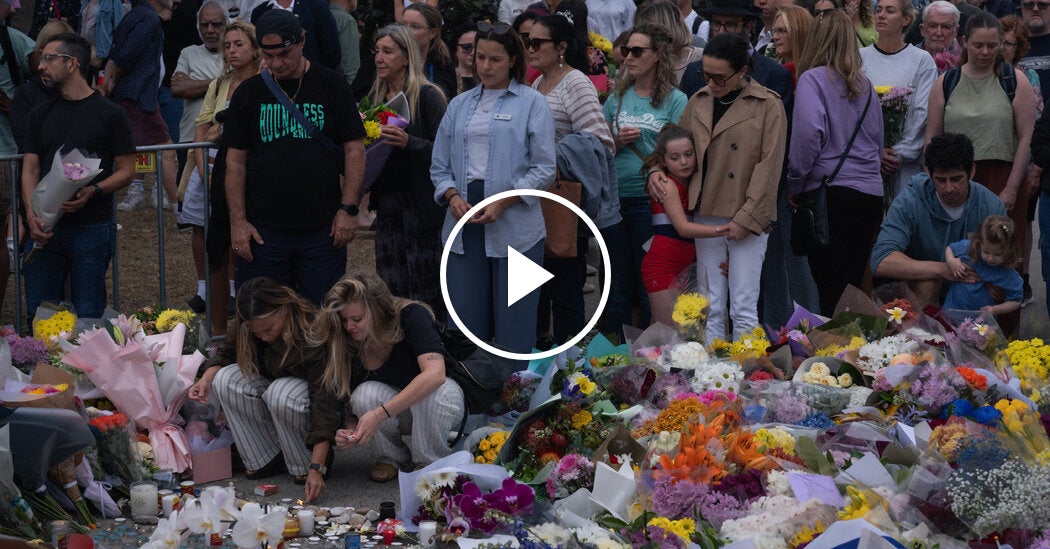
In the wake of the attack, communities across Australia have rallied in support of the Jewish community, with vigils and solidarity events organized nationwide. Scenes of emotional exchanges captured the nation’s collective grief, with one survivor being told, “You’re strong,” and “Your courage is inspiring” by supporters. The targeting of a Jewish festival has particularly resonated in Australia, which is home to approximately 100,000 Jews, many of whom are descendants of Holocaust survivors who found refuge in the country after World War II. Community leaders have emphasized the importance of standing together against both antisemitism and extremist ideology in all forms.
The incident comes amid a documented global rise in antisemitic incidents, which has concerned Jewish communities worldwide. Australian authorities have responded with increased security at Jewish institutions and cultural events across the country. The Prime Minister has pledged that Australia will remain a safe and inclusive society, emphasizing that attacks motivated by religious hatred strike at the core of Australia’s multicultural identity. Interfaith leaders have joined in condemning the violence, with representatives from Muslim, Christian, Hindu, and other religious communities standing alongside Jewish leaders in calls for peace and mutual respect.
Government Response and Future Security Measures
As Australia grapples with this tragedy, the government has announced a comprehensive review of both counter-terrorism procedures and firearms regulations. Security experts are calling for improved intelligence sharing between licensing authorities and counter-terrorism agencies to ensure that individuals who develop extremist views after obtaining firearms licenses can be identified and monitored. The Australian National Security Committee has convened emergency sessions to assess the immediate threat level and coordinate the national response. Additionally, technology companies are facing renewed pressure to address the role of online radicalization in inspiring such attacks.
The Prime Minister has pledged that this incident will prompt a thorough examination of current security protocols without compromising Australia’s open and democratic society. “We will not allow terrorists to change who we are,” the Prime Minister stated, “but we must be vigilant in protecting our communities.” As investigations continue into the gunmen’s backgrounds, radicalization pathways, and potential connections to international terrorist networks, Australians are left balancing their traditional openness with the sobering reality that even their relatively peaceful society is not immune to the global challenge of extremist violence. The coming weeks will likely bring policy proposals aimed at addressing the specific vulnerabilities exposed by this attack, as Australia works to ensure that its Jewish community—and indeed all communities—can celebrate their traditions in safety and peace.