


The Quiet Streets of Tucson: A Community in Unease
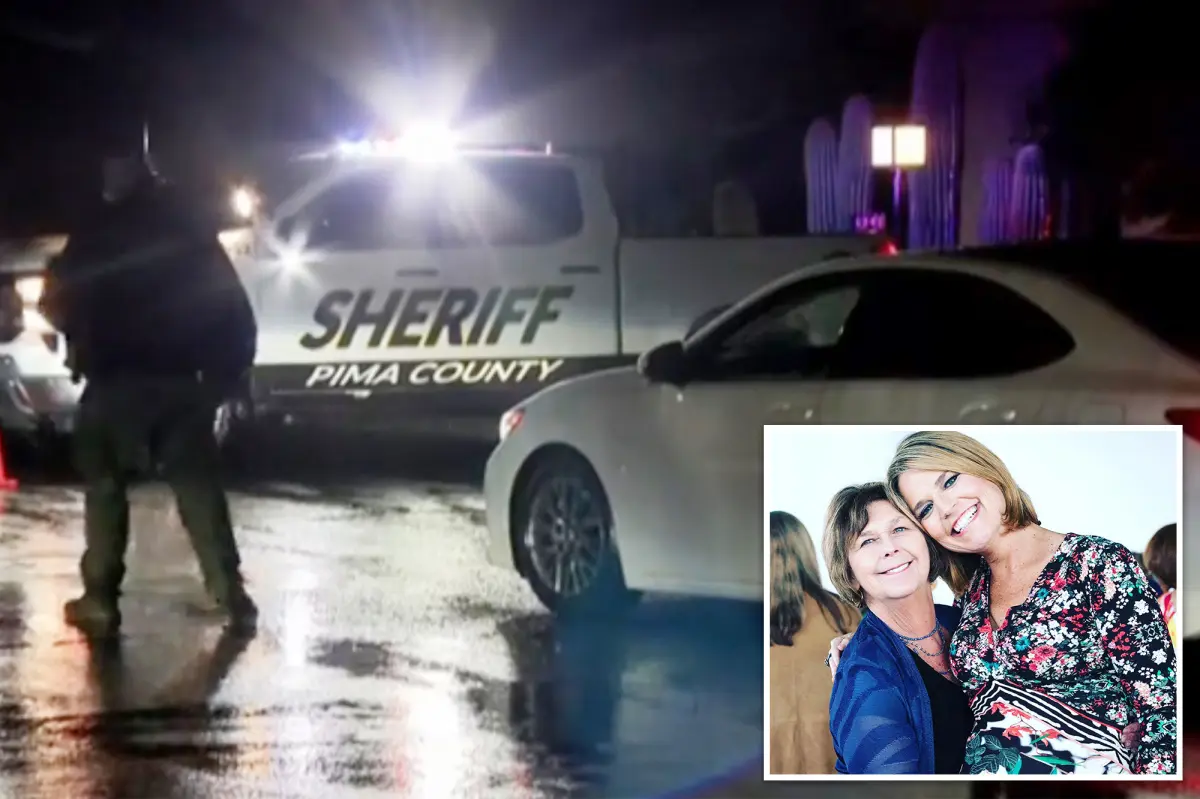
In the sun-drenched suburbs of Tucson, Arizona, where the saguaro cacti stand like silent sentinels against the rugged desert landscape, lived Nancy Guthrie, an 84-year-old widow known for her gentle spirit and simple joys. Neighbors described her as the kind of woman who baked cookies for the block kids and tended her small garden with unwavering dedication, her hands calloused from years of planting petunias and pulling weeds under the relentless Arizona sun. Born in the 1930s, Nancy had witnessed the city’s transformation from a sleepy frontier town into a bustling metropolis, yet she remained rooted in the old ways—church on Sundays, tea with friends, and a life free of the chaos that plagued so many. Her modest home on a quiet street near the Catalina Foothills was a haven, adorned with family photos from happier times: her late husband, a retired mechanic who passed in the ’90s; her two grown children, now scattered across the country; and grandchildren she doted on through video calls and handwritten letters. Nancy wasn’t wealthy by any means, surviving on a modest pension and the goodwill of her community, but she imbued every day with purpose. She walked to the local market most mornings, her plaid scarf tied neatly around her silver hair, pausing to chat with strangers who became fleeting friends. It was this unassuming lifestyle that made her disappearance all the more heartbreaking for those who knew her. On a crisp December day in 2023, Nancy vanished without a trace. She had been seen earlier that week, waving goodbye to her neighbor Mrs. Rodriguez, who recalled Nancy mentioning a routine errand—a quick trip to the pharmacy for her arthritis medication. But as days turned into weeks, and then months, the absence grew into a gaping void. Police reports initially treated it as a possible wanderer case, given her age; perhaps she’d gotten lost in the vast desert expanse, or maybe a family emergency pulled her away. Yet, whispers of foul play began to circulate quietly among her circle. Nancy had confided in a few close friends about feeling uneasy lately—strange cars lingering on her street, odd knocks at her door at odd hours. She brushed it off as paranoia, a product of living alone in a sprawling city where crime could lurk in the shadows. Tucson, with its population of over half a million, boasted vibrant arts scenes and outdoor adventures, but beneath the surface simmered pockets of vulnerability, especially for the elderly. Nancy’s home, nestled just miles from the University of Arizona’s campus and the towering Santa Catalina Mountains, symbolized a bridge between urban life and arid wilderness—a place where coyotes howled at night and neighbors relied on each other for safety. The community rallies that followed her disappearance painted a picture of collective grief: vigils with candles flickering under starry skies, flyers pinned to telephone poles, and heartfelt pleas on social media. Her disappearance wasn’t just a statistic; it was a personal loss, touching lives from the local diner regulars to distant relatives. As spring approached, the investigation intensified, drawing in resources from Pima County’s sheriff’s department, a force known for their dedication to protecting the county’s 1.4 million residents. Detectives pored over security footage, interviewed neighbors countless times, and traced her last known steps through dusty backstreets. Theories ranged from abduction to a possible health crisis exacerbated by the desert’s isolation, but nothing concrete emerged. Nancy’s life, so intertwined with Tucson’s rhythm of dust storms and monsoon rains, now echoed in every corner—the empty rocking chair on her porch, the half-finished crossword puzzles she loved, the family dog, now cared for by a niece. In humanizing her story, one couldn’t help but reflect on the fragility of quiet existences, where an ordinary day could abruptly shatter into mystery.
The Shadows of Investigation: Unanswered Questions Loom
The investigation into Nancy Guthrie’s disappearance had been a labyrinth of despair and determination from the outset. Pima County Sheriff’s Office detectives, seasoned veterans many of whom had patrolled Tucson’s streets for decades, delved deep into her world, searching for clues amidst the mundane details of her daily life. They canvassed her neighborhood door-to-door, speaking with retirees who remembered her as the “sweet lady next door” and younger residents who admired her resilience in an aging body. Nancy’s background revealed a woman of unflinching fortitude: orphaned young during the Great Depression, she worked as a seamstress in factories before marrying and raising a family in a post-war boom. She’d overcome hurdles—burglaries in her youth, health scares that left her frail yet unbroken. Detectives examined her bank records, finding no suspicious withdrawals or patterns that screamed foul play. Her phone records showed calls to family and friends, the last one a voicemail to her daughter Sheila, saying, “Just grabbing some milk, dear; call you later.” Sheila, living in Colorado, recounted their conversations where Nancy hinted at occasional loneliness, wishing for more visits. Crime scene analysts scoured her home, finding no signs of struggle—just her glasses perched on the kitchen counter, a half-eaten sandwich on the plate, and an open door that might have been forgotten in her haste or perhaps left ajar by someone else. Rumors whispered through Tucson swirled like sand devils: was it a random kidnapping, a targeted crime, or even a family member embroiled in deceit? The Sheriff’s Office, collaborators with entities like the FBI for missing persons’ cases, employed advanced techniques—drones buzzing over the desert flats, cadaver dogs sniffing for scents in abandoned lots near her property. Volunteers formed search parties, braving the scorching 100-degree days and chilly nights, sifting through washes and canyons where bodies had been found before. Yet, Nancy’s age and the vast terrain made hope a tenuous thread. Psychologists consulted on possible memory lapses, suggesting Alzheimer’s or a stroke could explain her vanishing act, though her last doctor’s visit had deemed her sharp. Community forums buzzed with theories, some compassionate, others conspiratorial, humanizing the case into a narrative of vulnerability. As weeks passed, frustration mounted among investigators, who faced the emotional toll; one detective, a father himself, likened it to searching for a lost mother in an unforgiving land. The lack of leads created ripples—media outlets hammered for updates, while Nancy’s family grappled with grief, selling her home’s contents for funds to aid the search. Tucson, a city of contrasts with its historic barrios and modern developments, mirrored the duality of the case: vibrant yet perilous. In this context, every tip mattered, from a shadowy figure seen loitering to tire tracks in the dust, weaving a tapestry of shared humanity in the quest for truth.
The Calm Before the Storm: Leading Up to the Raid
As the months wore on, the investigation into Nancy Guthrie’s disappearance evolved into a gripping saga that gripped Pima County, transcending mere headlines into a communal heartbeat. Detectives, piecing together a mosaic of evidence, began focusing on patterns they hadn’t seen initially—subtle anomalies in surveillance footage from nearby businesses showing unfamiliar vehicles cruising her street at inconsistent times. Nancy’s property, a modest single-story ranch with a white picket fence now weathered by time, sat on a quiet cul-de-sac, just blocks from bustling highways yet isolated by the encroaching wilderness. Interviews with neighbors unearthed stories of her occasional unease; one elderly gentleman recalled Nancy mentioning hang-up calls late at night, dismissible at the time as telemarketers but now scrutinized intensely. The Sheriff’s Office collaborated with cyber experts to trace digital footprints, finding no ransom notes or demands, which hinted at motives deeper than money—perhaps personal grudges or a calculated cover-up. Tucson’s diverse populace, encompassing Hispanic heritage, Native American influences, and influxes of retirees, meant a broad spectrum of suspects could emerge. Detectives reviewed Nancy’s past: no enemies from her factory days, no debts, but an old inheritance dispute with a distant cousin over land now relegated to family lore. Psychological profiles painted her as trusting, easy to approach, a trait that might have made her a target in a city where individualism often trumped caution. The media, including outlets like NewsNation, amplified the story, portraying her through tearful interviews with family—Sheila describing her mother’s warm hugs and homemade pies, recipes passed down generations. Community fundraisers raised thousands for private investigators, adding layers of human desperation. As spring unfolded with wildflowers blooming across the arid plains, new leads surfaced: a witness claiming to spot a sedan near her home on the day she vanished, its license plate traced to a rental agency. This breadcrumbs trail led authorities to a cluster of homes nearby, prompting a shift in strategy. Sheriff’s deputies, trained for high-stakes scenarios yet empathetic to human frailty, prepared for the unknown. The raid wasn’t just a tactical maneuver; it was a culmination of relentless pursuit, where every detail—from Nancy’s favorite blueberry-scented soap lingering in her bathroom to her unread library book on desert flora—fuelled the drive. Tucsonians watched with baited breath, sharing stories of similar fears in chat rooms, humanizing the ordeal into a shared vigilance against the unknown. Officers, many with families of their own, steeled themselves for confrontation, aware that this operation could unravel the mystery—or plunge the community deeper into sorrow.
The Tense Moment of Action: SWAT Teams in Motion
On a brisk Friday morning, as Tucson awoke to the familiar hum of traffic and the distant cry of hawks circling the skies, the Pima County Sheriff’s Department launched a meticulously planned operation that would shatter the calm. A SWAT team, clad in tactical gear designed for the unpredictable, converged on a nondescript house located approximately two miles from Nancy Guthrie’s Tucson property—a suburban enclave where stucco homes blended seamlessly with the desert’s muted tans and browns. The target was a modest dwelling, much like Nancy’s own, with a shaded porch and overgrown shrubs that told tales of neglect or seclusion. This wasn’t a random choice; intelligence gathered over weeks pointed to this address as a nexus, perhaps tied to vehicles spotted in footage or alibis that didn’t align. The team, composed of trained professionals who balanced force with humanity—many were fathers and mothers, veterans of similar crises in a county plagued by methamphetamine hubs and smuggling routes—approached with hearts pounding beneath vests. They knew the stakes: retrieve evidence, possibly rescue a vulnerable elder, without escalating to danger. Orders echoed through comms: isolate the residence, ensure safety protocols for bystanders. Neighbors, ordinary folks—teachers, nurses, mechanics—peeked from windows, their lives intersecting with this drama, phones clutched in hands awaiting updates. The SWAT specialists swarmed the home like a well-oiled machine, their movements precise in the oppressive Arizona heat, boots crunching gravel as they secured perimeters. They shouted commands, voices amplified by bullhorns, urging occupants to exit peacefully—a stark contrast to the quiet enigma of Nancy’s disappearance. Adrenaline surged, but professionalism reigned; de-escalation was paramount in a town where community relations mattered. The house, once a symbol of anonymity, became ground zero for relief or revelation. Two individuals, described as compliant in initial reports, emerged willingly, hands raised in surrender, the air thick with uncertainty. Were they accomplices, innocent bystanders, or key players in the puzzle? The scene evoked empathy—the unknowns could be someone’s loved ones, caught in a web. Officers, trained to handle trauma, maintained composure, aware of the human element: fear, confusion, the blur of a moment that could define futures. As the sun climbed, casting long shadows, Tucson residents grappled with vicarious tension, sharing texts and theories, transforming a police action into a collective pulse. This was more than a raid; it was a human chorus against silence.
The Raid’s Immediate Aftermath: Details Emerge and Questions Persist
In the wake of the SWAT team’s decisive action, details began to filter through like tributaries feeding a larger river, painting a clearer yet still foggy picture of the operation linked to Nancy Guthrie’s unresolved case. The two individuals who exited the home—a man and a woman, both appearing in their mid-40s, with the sort of worn expressions that hinted at lives lived under scrutiny—did so without resistance, stepping into the hands of deputies whose job it was to protect and investigate. Eyewitness accounts from neighbors described a tense but controlled scene: no gunfire, no chaos, just the methodical process of securing evidence from within the residence. Forensic teams, wearing protective suits in the dust-laden yard, entered shortly after, their trucks emblazoned with county seals parked curbside, drawing curious onlookers. Items were cataloged meticulously—computers, documents, clothing that might hold traces of Nancy’s presence—remnants of what could be a breakthrough or a dead end. The house itself, upon inspection, revealed signs of habitation: scattered mail, a half-packed suitcase, and faint aromas that recalled domesticity disrupted. Unofficial reports suggested possible connections to illicit activities, though nothing was confirmed, adding layers of speculation in a city where drug trafficking and petty crimes intersected with everyday life. Nancy’s family, watching from afar, expressed cautious optimism; Sheila, in a phone interview, voiced hope that this raid might bring her mother home, her voice cracking with the weight of months of worry. Community reactions ranged from relief to skepticism, online forums buzzing with analyses—some praising the Sheriff’s diligence, others questioning tactics in a rights-conscious era. Detectives, debriefing in hushed tones, sifted through the haul, knowing each piece might humanize an abstract case into vivid truth. The man and woman were interviewed but their custody status remained shrouded, raising questions about rights, evidence, and motive. In Tucson’s tapestry of cultures, where Pima Indians once roamed freely and modern settlers now lived empathetically, this event underscored shared fragility. Lives paused—kids not picked up from school, meals delayed—as the investigation pressed on, each clue a step toward Nancy’s story. Emotionally, it was draining; officers returned home haunted by what-if scenarios, their humanity tested in the line of duty.
Reflections and Hopes: The Case Continues Amid Human Despair
As the dust settled from the raid, Tucson’s community pondered the deeper currents of Nancy Guthrie’s disappearance, a saga that transcended a single house to touch on universal themes of loss and resilience in a sprawling desert metropolis. The operation, while yielding uncertainties, breathed new life into an investigation weary from dead ends, reminding residents that hope persisted like the perennial cactus blooms after rain. Nancy’s absence, now echoing through six months, prompted soul-searching: support groups formed for families of the missing, sharing stories of grief and strength. Prospective leads from the raided property—a possible link via discarded receipts or digital trails—promised progress, yet custody details for the two individuals remained undisclosed, fueling conjectures about guilt or innocence in a system built on due process. Detectives, empathetic allies in this pursuit, continued their work, balancing technical prowess with human insight, refusing to let Nancy become just another case file. Her loved ones, yearning for closure, mobilized: memorials planned, advocacy for better protection for the elderly underway. Tucson, with its blend of natural beauty and human complexity, stood as a backdrop, where the raid symbolized collective vigilance against isolation’s dangers. In humanizing this narrative, one saw Nancy not as a statistic but as a beloved grandmother, her spirit lingering in every vigil and prayer. The uncertainty bred empathy across divides, uniting a city in the quest for answers. Officers, undeterred, pressed forward, their resolve a testament to duty, while the community held space for joy amid sorrow. As months might yet yield revelations, the case evolved into a legacy of perseverance, reminding all that in the face of mystery, humanity’s connection endures. Nancy’s story, intertwined with Tucson’s soul, urged reflection on protecting the vulnerable, fostering bonds that could one day mend the heartache of an empty home.