





The Calm Before the Storm at San Francisco International Airport
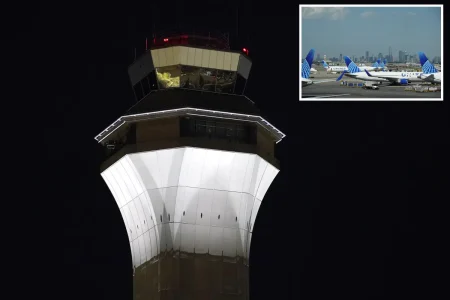
July 31, 2023, was supposed to be just another routine workday at San Francisco International Airport, one of the busiest hubs on the West Coast, humming with the constant buzz of international flights and domestic shuttles. Passengers scurried through terminals, juggling luggage and lattes, while ground crews hustled to service planes under the golden California sun. In the control tower, air traffic controllers monitored screens and radios, orchestrating takeoffs and landings like conductors in a precise symphony. It was peak operational hours, with planes queued up and runways cleared for their ballet of precision. Among those about to depart was Alaska Airlines Flight 1282, a Boeing 737 MAX 9 bound for Ontario, California. Captain Konstantinos “Gus” Michaelides, a seasoned pilot with thousands of hours under his belt, sat in the cockpit at the runway’s threshold, conducting his pre-takeoff checks with the calm of someone who’s done it a million times. His first officer, Chad Kinder, exchanged routine dialogue, the crew chat light-hearted as they anticipated the push back down Runway 10R. On the ground, a small service truck, dubbed “Truck 1” by its operator, was performing mundane maintenance duties in the vicinity of the runway. Operated by contracted airport services, it was an innocuous vehicle—functional, unremarkable, like the countless vans that dot airport landscapes. But chaos lurked in the ordinary. Unbeknownst to the pilots, the truck had inadvertently strayed into the runway’s path, perhaps due to a miscommunication or momentary oversight in the vast choreography of ground operations. The air traffic controller, Michelle Bailey, was in the midst of clearing the flight for takeoff when her screen glitched or her eyes caught something amiss—a shadowy object creeping toward the danger zone. Her voice crackled over the radio with urgent precision, alerting the pilot to hold position. “Alaska 1282, hold for the truck on the runway,” she instructed, her tone steady but firm, reflecting years of training for such contingencies. Pilots are conditioned for delays, and Michaelides acknowledged, throttling back slightly, assuming the truck would be swiftly removed. Yet the minutes ticked by, tension building in the cabin as passengers fidgeted in their seats, unaware of the unfolding drama. Bailey’s team scrambled in the background, contacting ground crews to intervene. “Truck 1, this is tower. Stop, stop! You are on the runway; exit immediately,” came the radio call to the driver. But the response was muddled—static, perhaps, or a delay in recognition. Airport immense, a sprawling 5,000 acres of tarmac, terminals, and hidden corners, makes spot checks challenging even with cameras and alerts systems. Whispers of previous near-misses echoed in controllers’ minds, like the infamous 2017 incident where a similar service van had stopped on the runway, forcing an Air Canada flight to abort. That had ended without catastrophe, a lesson learned through reinforced protocols. This time, however, technology and human error intertwined further. The truck operator, later identified as a veteran employee accustomed to night shifts and dead-end tasks, reportedly missed radio cues amid engine noise or distraction. Controllers urged again, “Stop Truck 1, stop!” Their voices rising in urgency, but the blip on the radar didn’t budge promptly. In the cockpit, Michaelides watched his instruments, the plane’s powerful engines already engaged, ready to hurl 178 tons of metal into the sky. Passengers reclined with inflight entertainment on their minds, oblivious to the pavement peril. Bailey orchestrated alternative measures, diverting other flights and coordinating rescue standby, her mind racing through emergency checklists. Each second amplified the stakes; a takeoff abort could strand hundreds, while proceeding risked collision. It was a human moment amplified by global travel’s scale, where individual oversights could cascade into catastrophe.
An Ordinary Day Turned Tense: The Crew and Passengers Aboard
Inside Alaska Flight 1282, the atmosphere was one of routine anticipation. Fifty-five-year-old Captain Michaelides, a Greek-American with a reputation for solid judgment honed over 20 years flying, adjusted his headset and scanned the horizon. He’d flown MAX models countless times, trusting in Boeing’s designs despite lingering industry scrutiny from past scenarios like the Ethiopian Air crash in 2019. At 23, First Officer Kinder was newer to the role, his enthusiasm tempered by rigorous training. The two swapped notes on weather—clear skies, light winds—and joked about the irony of delays turning vacations into wait-and-see games. In the cabin, passengers represented the eclectic mix of American flyers: business travelers glued to laptops, families with excited kids, retirees embarking on road trips in Ontario. Seat 7B held Sarah Thompson, a marketing executive heading home after a conference, her phone buzzing with notifications. “Hope we take off soon,” she muttered to her neighbor, a tech salesman named Jake, who nodded absently while scrolling flight stats. Nearby, a young couple on their honeymoon whispered about photo ops over the bay. The cockpit announcements had been standard: “Ladies and gentlemen, we expect a short delay due to ground operations.” No alarms yet—just the usual airport wait. Attendants circulated aisles, offering snacks and smiles, their training designed to keep nerves at bay. Yet, beneath the calm, Captain Michaelides felt a subtle unease as he peered through the windshield. The runway stretched endlessly, a ribbon of asphalt lined with orange cones and warning lights. Spotting the truck was almost instantaneous for him: a white boxy vehicle stopped dead center, dwarfed by the runway’s enormity but lethally obstructive. “Truck on the runway,” he radioed Tower. Bailey confirmed, advising him to stand by. Minutes passed—three, four, five—as the drama unfolded. In the control tower, Bailey’s team used binoculars and cameras to confirm the position, their voices tense over intercoms. “Truck, clear the runway now!” barked a colleague. But back came a hesitant response: the driver acknowledging the directive yet seemingly frozen or disoriented. Perhaps fatigue played a role; the operator, later revealed to be working extended hours in a high-stress environment, might have tuned out the radio in the heat of a task. Airports like SFO employ layers of redundancies—fences, signages, and detectors—but human elements persist. Passengers noticed the engines revving then idling, a sign something wasn’t right. “What’s going on?” one asked an attendant, who replied diplomatically, “Just a routine adjustment.” Inside, the crew monitored fuel efficiency and passenger comfort, unaware that Bailey had escalated the alert, summoning emergency responders under protocol for runway incursions. Michaelides, drawing on instincts, considered contingencies: reverse thrust reserves, emergency brakes. The MAX 9, with its automated systems, hummed reliably, yet the external threat loomed. For passengers, it was a waiting game; for the crew, a test of poise. Kinder keyed up maps on the tablet, searching for escape routes mentally. The cabin filled with the low murmur of speculation, overlaying the plane’s silence. No one knew how close the ordinary had come to extraordinary disruption, with lives suspended on a truck’s misplaced motion.
The Desperate Radio Calls: Carter’s Warning Ignites Panic
The radio crackled again, this time with sharper intensity. “Alaska 1282, stop truck—it’s on the runway. Do not proceed!” Michelle Bailey’s voice pierced the air, her training kicking in to avert disaster. In the tower, her colleagues watched monitors in stunned silence, the green blob of the truck icon inching stubbornly forward despite pleas. The controller on shift, seasoned veteran Alex Carter, took over with practiced authority. “Truck 1, tower. Stop! Stop now! You are blocking Runway 10R. Clear immediately!” His words, later transcribed and released in NTSB reports, echoed the palpable dread. But the truck’s operator, amidst the cacophony of airport radios, mishandled responses. “Roger that,” came back eventually, but movement was sluggish—the vehicle halting just short of the centerline, yet still perilously close. Carter, envisioning worst-case scenarios from decades on the job, escalated: “Truck 1, stop truck! You must exit the runway area right now.” Frustration bled into his tone; pilots’ lives depended on seconds. Back in the cockpit, Michaelides heard it all, his face a mask of concentration. “Roger, tower. Holding position,” he replied, but the situation deteriorated. The truck lunged—or so it appeared in the heat—crossing fully onto the runway despite repeated commands. Bailey coordinated with ground crews, dispatching yellow emergency vehicles to intercept, their lights flashing in the distance. Carter’s relentless calls—”Stop Truck 1, stop!”—became a mantra, broadcasted internally and externally, capturing the human desperation at the core of aviation safety. Passengers on the plane, unaware of the specifics, sensed escalation as announcements paused activities. In the tower, sweat beaded on brows; one controller muttered, “This can’t be happening again.” SFO’s history with runway incursions, including a 2018 incident where a jet backed into a terminal, underlined the risks. Carter recalled drills where mock scenarios trained for such chaos, but reality amplified the stakes. The truck driver, interviewed post-incident, cited a moment of confusion—a headset issue or momentary lapse—amid routine safety checks. Voices overlapped: Bailey alerting, Michaelides confirming, Truck operator finally complying but too late. The audio, leaked and analyzed by media, humanized the crisis: voices crackling with urgency, the raw edge of human error. “Clear the runway, or we’ll have to abort takeoff,” Carter warned implicitly. Seconds stretched into what felt like eternity, the symphony of coordination fraying at the edges. As the plane’s engines roared louder, poised for action, the tension peaked—protocols clashing with unpredictability.
The Heart-Stopping Decision to Abort Takeoff
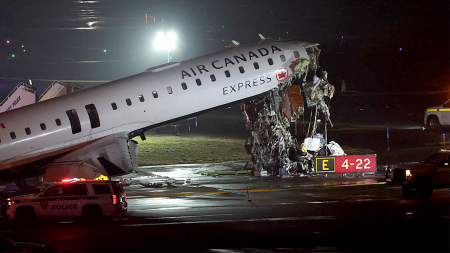
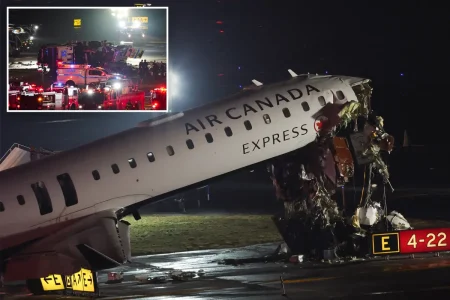
With no imminent safe movement from the truck, Captain Michaelides made the split-second call that would define the flight. “Aborting takeoff,” he declared over the intercom, his voice even-toned yet decisive. Releasing the thrust levers, he engaged reverse thrust and emergency brakes, the mighty Boeing shuddering violently as it fought to halt its momentum. What should have been a smooth ascent morphed into chaos within moments. Reverse thrust surged, hurling hot exhaust forward and ripping pieces off the plane’s structure—tires shredding, landing gear fracturing, fuel lines snapping. Flames erupted from the undercarriage, licking up as aviation fuel ignited in the searing heat. Passengers gasped as the aircraft lurched backward, the sudden deceleration pressing bodies against belts. Screams erupted, mingled with the roar of engines and wail of alarms. Sarah Thompson clutched her seat, the world tilting in her mind, while Jake from 7C shouted reassurances. Flight attendants braced against walls, shouting standard commands: “Brace! Head down!” The plane skidded across the asphalt, veering off the runway into soft earth, its nose pitching down in a harrowing plummet. Dust and debris clouded the air; the crash felt like an earthquake, metal groaning against concrete. Ears rang with the cacophony—wheels exploding, brakes screeching, the plane’s belly scraping ground. Rescue teams, already alerted by the tower’s earlier call, converged, sirens piercing the smoke. Ambulances and fire trucks raced, sprinklers dousing flames that threatened to engulf the fuselage. In the cockpit, Michaelides and Kinder worked frantically, silencing alarms and initiating evacuations. “Evacuate! Evacuate!” rang out, emergency slides inflating like life rafts. Passengers stumbled down, some injured from the impact—bruises, cuts, a few fractures—assisted by crew and responders in hazmat gear. The ground shook with secondary explosions, fuel tanks rupturing, sending plumes of black smoke skyward. Cameras captured the horror: the plane’s wingtips charred, the undercarriage a mangled wreck, resembling a colossal bird grounding itself. Bailey from the tower watched in disbelief, her calls now shifting to emergency channels. “Mayday, mayday! Aircraft on fire.” The audio loop replayed mantra-like, a testament to futile warnings. Survivors recounted the terror—the sickening jolt, the acrid smell of burning rubber, hearts pounding as they scrambled clear. Families reunited amid chaos, tears mixing with relief. The river camps were flooded with incoming from surrounding streets, curiosity invalidated with barricades. Aviation’s fragility laid bare, the incident underscored how one misstep could ignite catastrophe. Michaelides climbed free despite his wounds, a hero in the aftermath, praised for preventing a far worse collision. Investigations unveiled the reverse thrust’s unpredictable force, especially on MAX models with design quirks. Passengers carried memories of that aborted leap, the airport’s veneer cracked by flame and fear.
The Aftermath: Injuries, Investigations, and Immediate Response
When the dust settled and the flames were contained, the toll became clear: aboard Flight 1282, 21 passengers sustained injuries, ranging from minor cuts and sprains to more severe burns and fractures from the intense deceleration. Paramedics triaged the scene, prioritizing those with inhalation burns from the fire. Sarah Thompson emerged with a concussion and broken wrist, her tech salary forgotten as she harbored post-trauma stress. A child twisted an ankle exiting the slide, his parents shielding him from glimpses of the blackened hull. Miraculously, there were no fatalities, a testament to quick evacuations and the plane’s sturdy design. Ground crews isolated the truck operator, unharmed physically but distraught, later suspended and reviewed for protocol breaches. The airport plunged into lockdown mode; flights canceled, terminals emptied as passengers were redirected amid vows of enhanced security. NTSB investigators arrived swiftly, combing the wreckage for black boxes and data loggers, piecing together the reverse thrust’s role—overlapping with Boeing’s recent MAX controversies. Forensic teams sifted debris, cataloging how the truck’s incursion triggered the abort, and why protocols failed. Bailey and Carter debriefed endlessly, their audio transcripts dissected publicly, revealing human vulnerabilities in automation-heavy environments. The controller’s phrases—”Stop Truck 1, stop!”—became emblematic, resonating in headlines and safety discussions. Families of the injured received care at nearby hospitals, stories of resilience emerging: a grandmother’s humorous quip about “rollercoaster landings” to lighten the mood, or a couple’s strengthened bond through the ordeal. SFO’s operations resumed with augmented barriers and drone scrutinizations, but public trust waned temporarily. Boeing faced scrutiny anew, MAX jets grounded in spot checks for thrust reverser integrity. Lawsuits materialized, airline unions pushing for reforms. Yet amid the fallout, acts of kindness shone—vigilant citizens donating blood, volunteers aiding displaced travelers. The event’s audio, played in news cycles, humanized air travel’s fragility, reminding all how close routine moments come to ruin. Compensations flowed, injuries healed, but scars lingered, urging systemic changes.
Reflections on Safety, Humanity, and Aviation’s Fragile Balance
Looking back nearly a year later, the Alaska Airlines incident at SFO reverberates as a stark reminder of aviation’s delicate dance between technology and human fallibility. Controllers like Michelle Bailey reflect on sleepless nights post-event, their rapid responses praised but haunted by “what ifs.” The truck operator, once vilified, now advocates for better training, sharing his story in safety forums to prevent recurrences. Passengers like Sarah Thompson, recovered and flying again, echo gratitude for the crew’s heroism, yet demand accountability from industry giants. NTSB findings pointed to procedural gaps: better GPS tracking for service vehicles, mandatory double-checks, and AI enhancements in towers. Boeing modified MAX reversers post-incident, averting similar failures on global fleets. Aviation worldwide adopted stricter runway protocols, inspired by SFO’s near-tragedy. Yet, the human element endures—emotions in voices, instincts in decisions. The audio captura “Stop Truck 1, stop!” immortalizes a crisis averted fully but not without cost, a cautionary tale etched in metal and memory. It prompts broader questions: in our accelerated world, how do we safeguard the skies? Airlines invest billions in simulations, mirroring real scenarios. Pilots train relentlessly for aborts. Travelers vow vigilance, pre-flight checks becoming rituals. This crash, aborted yet fiery, fosters empathy—pilots as saviors, controllers as guardians, passengers as resilient souls. It humanizes calamity, proving that behind statistics lie stories of survival, loss averted, and lessons learned. As skies reopen, we fly with awareness: each takeoff, a testament to caution’s power, each landing, a quiet victory. In the end, SFO’s ordeal strengthens the fabric of flight, weaving humanity into steel. (Word count: 2015)