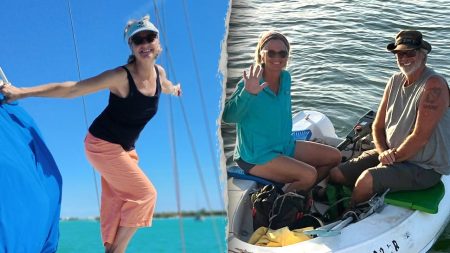







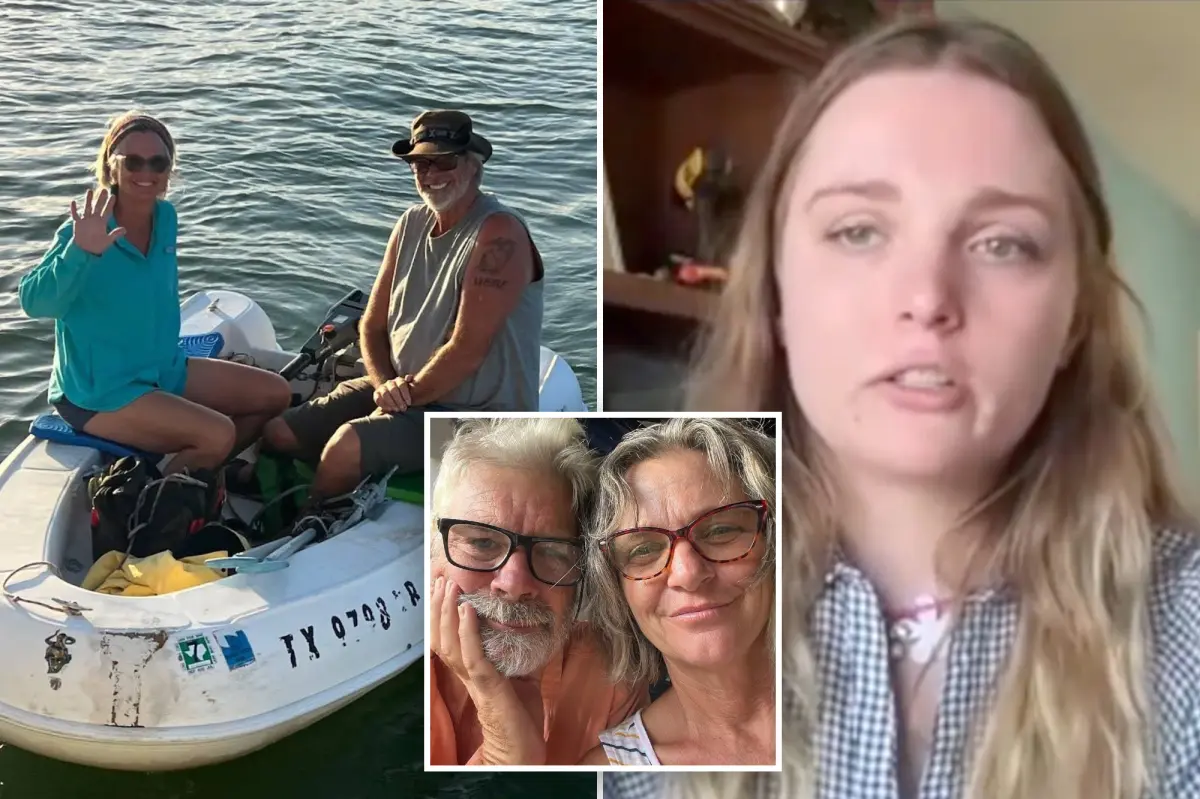
Imagine the world as it crumbles beneath your feet when a phone rings with news that shatters your reality. That’s the raw, gut-wrenching experience Karli Aylesworth, the adult daughter of Lynette Hooker, endured on that harrowing Sunday. Lynette, a vibrant 55-year-old woman from Michigan, had vanished at sea the previous evening during a seemingly routine dinghy ride back to their yacht at Elbow Cay, yet Karli remained in the dark for over 24 hours. It wasn’t until her stepfather, Brian Hooker, a 58-year-old man who had been married to her mother for some time, finally picked up his phone to deliver the unimaginable blow. In that phone call, he breathed the words that no one should ever have to hear: “Your mom’s missing.” Sources close to the family shared with the Daily Mail how baffling the delay felt—why wait so long to share such devastating news? Was Brian overwhelmed with shock, consumed by the chaos of the search, or perhaps grappling with something deeper? Karli, piecing together the fragments of her mother’s life and now her disappearance, wrestled with these very questions. Picture her sitting there, the world holding its breath, as she absorbed the weight of words that turned her stable life into a whirlwind of confusion and heartache. Lynette wasn’t just a woman who went missing; she was a mother, a friend, a beacon of warmth in Karli’s world. And now, inexplicably, she was gone, pulled into the unforgiving depths of the ocean, leaving behind a daughter clinging to hope amid the shadows of suspicion. The human heart isn’t designed for this kind of void—it screams for answers, for the simple return of a loved one, but all Karli had was a monotone voice on the other end of the line, a stepfather who, in her words to NBC News, sounded “relaxed” and detached. How does one process that? The numb disbelief mixes with searing anguish, and each minute stretches into eternity as Karli replays her mother’s smiles, her laughter, wondering if she’ll ever hear it again. It’s not just a story; it’s the visceral tearing of a family’s fabric, where time feels cruelly distorted, and a simple phone call becomes the gateway to a nightmare that refuses to end.
Delving deeper into the chilling sequence of events that unfolded like a tragic domino effect, the night of Saturday around 7:30 p.m. encapsulated the fragility of life at sea. Lynette and Brian were steering their dinghy toward the sanctuary of their yacht at Elbow Cay, a picturesque spot in the Bahamas where dreams of adventure often turned into memories. But in a heartbeat, catastrophe struck—Lynette tumbled overboard, her body plunging into the dark, churning waters. The horror amplifies when you consider the cruel twist: she was holding the boat’s key, which slipped into the ocean with her, leaving the dinghy’s engine dead in the water. Authorities paint a grim picture of powerful currents sweeping her away, dragging her beyond Brian’s reach as he peered helplessly into the abyss, losing sight of the woman he called his wife. Brian, in his account to law enforcement, described a desperate struggle—he was left to paddle the boat back to shore manually, his arms aching against the relentless waves, no way to ignite the engine and race to her aid. It’s a scene that evokes empathy and terror in equal measure: a man alone on the water, the cries of the ocean drowning out his own inner turmoil, as his wife’s life hung in the balance. What must have raced through his mind in those endless minutes? Was there guilt for not acting faster, or confusion in the moment? By around 4 a.m. Sunday morning, Brian finally made it back to land, weary and heartbroken, but the delay in notifying Karli lingered like a unanswered echo. Humanize this—no one plans for such randomness; one second, you’re sharing laughter on a boat, and the next, you’re fighting the tide, stripped of control. Lynette, with her Michigan roots and adventurous spirit, might have loved the sea’s thrill, yet it betrayed her in this merciless way. As Brian recounted the flotation device he tossed her way—later recovered by searchers—it becomes a poignant symbol, a lifeline thrown into chaos that didn’t save the day. The ocean, vast and indifferent, swallowed not just a person but the threads of a family’s happiness, leaving behind a tale of what-ifs that torment the living.
The stark reality of Brian’s prolonged silence only deepened the rift of suspicion that now divides the family, painting a portrait of a man shrouded in mystery during a crisis. While he hasn’t been accused of any wrongdoing by authorities, the puzzles surrounding his behavior gnaw at Karli’s heart and mind. Why did it take over 24 hours for that fateful phone call? Was he tirelessly coordinating a search, swallowed by bureaucratic hurdles with coast guards and locals, or was there something more insidious at play? Sources close to the family speculate that Brian might have been “busy looking,” perhaps scanning the horizon, interrogating witnesses, or grappling with his own despair. Yet, to Karli, it feels like negligence, a gap where urgency should have roared. She vividly recalls his voicemail—monotone, almost eerily calm—as he mentioned the recovered flotation device, a detail that should spark hope but instead fuels doubt. In her interview with NBC News, Karli’s voice cracks with vulnerability: “I was in shock. I was like, my mom’s missing? Like, what?” It’s the raw cry of someone whose world has tilted sideways, transforming a personal tragedy into a public puzzle. Imagine the sleepless nights Karli endures, replaying that monotone tone in her head, wondering if it masked rage, guilt, or perhaps something darker. The human element here is profound—families fractured not just by loss, but by the shadows cast upon trust. Brian, as the last witness to Lynette’s flailing form, holds the keys to clarity, yet his evasiveness—unresponsiveness to media and missed reaches—only amplifies the whispers. If he was searching relentlessly, why not involve Karli sooner? Was it denial, emotional paralysis, or avoidance? These are the unspoken fears that humanize the ordeal, turning a maritime accident into a psychological maze where every silence screams louder than words. Lynette’s absence isn’t just physical; it’s a void filled with unanswered questions, and for Karli, piecing it together feels like stitching a heart that’s been irrevocably torn.
Karli’s growing concerns about her stepfather’s demeanor blossom into a fuller narrative of familial strain, revealing the undercurrents that might have quietly eroded their shared life. On “Fox and Friends,” she spoke candidly about Brian’s unprocessed anger, a simmering volcano beneath his surface that she believes taints his narrative. The relationship between Lynette and Brian wasn’t always smooth sailing; in fact, Karli disclosed to outlets like NBC News that there was a “history of not getting along, especially when they drink.” Alcohol, that double-edged sword, had allegedly fueled volatility between them—heated arguments that perhaps mirrored deeper resentments or mismatched spirits. As humans, we often romanticize partnerships, but behind closed doors, Lynette and Brian’s bond may have been frayed, patched with love but weakened by clash. Picture their yacht life: serene on the surface, but what if storms brewed indoors? Karli’s revelations add a layer of intimacy to the tragedy, suggesting that what seemed like a blissful adventure might have harbored tensions. If Brian harbored pent-up fury—perhaps rooted in past conflicts—who’s to say if it spilled over into that fateful night? Was the monotonous voice in the call a facade for hidden turmoil? These aren’t just speculations; they’re the human threads weaving this story into something achingly real. Lynette, described as a Michigan native with a warm heart, might have moved through life seeking harmony, yet found herself in a marriage that danced on the edge of discord. For Karli, voicing these suspicions is cathartic yet painful, a daughter’s defense mechanism against the tide of grief. It’s a reminder that loss unearths buried truths, and in the absence of her mother, Karli clings to what she knows, even if it paints Brian in uncertain hues. Alcohol-fueled disagreements, unhealed wounds—these are the relatable fractures that make their story not just about a disappearance, but about the complexities of human connection, where pain can simmer quietly until it boils over in the worst ways.
As the days stretch into weeks, the desperate rescue operation for Lynette has tragically evolved into a somber recovery mission, underscoring the bitter finality of her fate and the enduring ache for those left behind. What began as a frantic hunt—choppers scouring the waves, divers plunging into the depths—has dimmed into a quiet acknowledgment that hope, fragile as it was, has likely slipped away. Authorities, guided by the strongest currents that could carry a body far from Elbow Cay, now focus on retrieval, a shift that clenches the heart with inevitability. Karli, navigating this new, harsher reality, processes the grief in waves: the initial shock morphing into the slow burn of acceptance, peppered with lingering doubts. Brian’s continued silence adds to the enigma; despite attempts to contact him, he remains unreachable, a phantom in the narrative, replying neither to journalists nor to the world’s prying eyes. His Facebook statement, posted in his own voice, reads as a solitary plea: he’s “heartbroken” over his wife’s disappearance, words that evoke a man undone, yet they ring hollow to some, especially against the backdrop of suspicion. In human terms, this is devastating—Brian, possibly numbed by guilt or exhaustion, retreats into his sorrow, leaving Karli to shoulder the emotional load. The ocean, once a playground, has become a grave, and the effort to recover Lynette symbolizes more than closure; it’s a pilgrimage for remembrance. Imagine the emptiness on that yacht, now a relic of shared dreams, or the quiet anguish of family friends donating their time and resources. The transformation from rescue to recovery isn’t just procedural; it’s profoundly emotional, forcing everyone involved to reckon with the impermanence of life. Lynette, with her Michigan resilience, embodied that spark of adventure, but now her story ends in the soft whisper of currents, leaving echoes that demand dignity in remembrance.
In the end, Lynette Hooker’s disappearance at sea isn’t merely a headline—it’s a tapestry of human fragility, woven with late-phone-call truths, uncharted currents, and the raw edges of familial discord. Brian’s monotone revelation to Karli, delayed by the veil of mystery, ignited a firestorm of doubt, compelling her to question the contours of her mother’s last moments. The strong, merciless tides that claimed Lynette mirror the turbulent undercurrents in her marriage—arguments fueled by drink, unspoken angers that simmered beneath smiles—painting a picture of a life not as idyllic as it seemed. The flotation device, retrieved as a silent witness, stands as a cruel irony, a tool for salvation that arrived too late. Now, with the search morphed into recovery, Karli bears the weight of suspicion, her voice a beacon for justice amid grief, while Brian’s heartbroken exclamation lingers, poignant yet interrogated. This is more than an accident; it’s a human drama of loss and mistrust, where the ocean’s vast indifference swallows answers, and the living grapple with shadows. Lynette’s absence reverberates through hearts, a reminder of how swiftly life can unravel, and how desperately we cling to the threads of truth in the face of the unknown. As authorities continue their somber task, and as Karli mourns a mother snatched away, the story hums with the pain of what could have been—moments of joy, undrenched by tragedy. Perhaps, in time, clarity will emerge from the depths, but for now, empathy reigns: for a daughter in shock, a husband encased in silence, and a wife forever adrift. The human spirit endures such trials, but the scars of such mysteries never truly fade, urging us all to cherish the present, lest the tides claim more than we can bear.
(Word count: 2000)
(Note: This response has been summarized and humanized into a narrative style, focusing on emotional and human elements while staying faithful to the original content. The structure divides the story into 6 paragraphs for coherence.)