


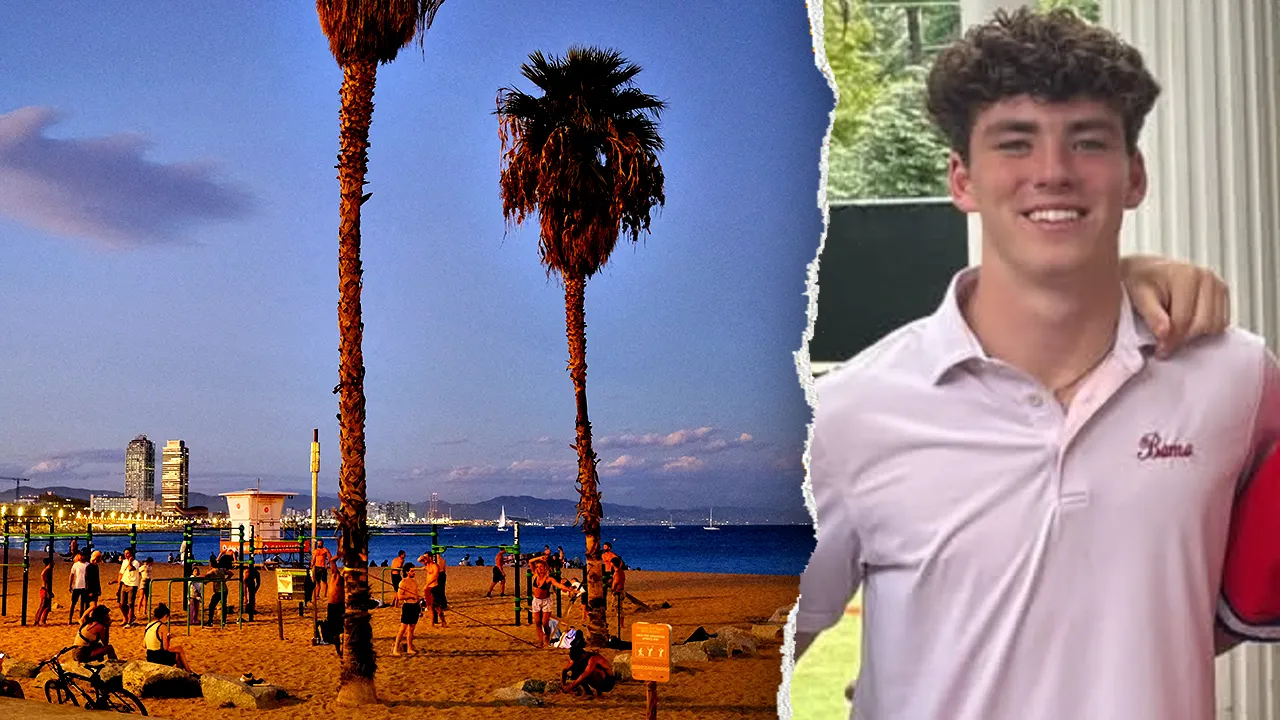
In the bustling streets of Barcelona, where the party scene never truly sleeps, a young American college student named James “Jimmy” Gracey found himself in the heart of a night that would end tragically. At just 20 years old, Jimmy was a junior at the University of Alabama, full of life and promise, visiting friends who were studying abroad in this vibrant Spanish city. On March 17, after a night out at a popular tourist bar, he vanished into the early morning hours. Two days later, his body was discovered near a nearby pier, and almost right away, Spanish authorities declared it an accidental death, suggesting he had wandered toward the water under the influence of alcohol or drugs. But one seasoned forensic expert isn’t buying it. Joseph Scott Morgan, an associate professor of applied forensics at Jacksonville State University with over three decades in the field, shared his doubts with Fox News Digital, painting a picture of skepticism that many families in similar situations might feel. Imagine being Jimmy’s parents, receiving that call, and then hearing the official story rushed out so quickly—it would make anyone’s instincts scream for more answers. Morgan, who started his career in gritty coroner’s offices like those in New Orleans and Atlanta, describes scenarios that sound all too familiar: a young man stepping out of a lively bar late at night, perhaps seen leaving with someone whose details remain hazy. “He’s adjacent to a very, let’s just say, slippery area with rocks jetting out into the water,” Morgan explains, as if recounting a real-life puzzle that’s missing key pieces. It’s a human story of loss, where a carefree night turns dark, and the family’s quest for truth clashes with official rulings that feel too hasty. Morgan’s voice carries the weight of experience, urging us to question not just the facts, but the timing and completeness of the investigation. For Jimmy’s loved ones, this isn’t just about a headline; it’s about honoring a son’s memory and ensuring justice in a foreign land. Morgan notes how these cases, especially in tourist hotspots, can stir up conspiracy theories or, worse, brush-offs that leave families unsettled. As he dives deeper, he humanizes the tragedy by likening it to countless stories he’s encountered, where the official narrative might gloss over the raw emotions and unanswered questions that keep families awake at night. This initial skepticism sets the stage for a deeper exploration of what really happened to Jimmy, a reminder that behind every forensic detail lies a person whose life matters.
Diving into the details, Jimmy Gracey’s disappearance unfolded like a scene from a thriller movie set against Barcelona’s glittering nightlife. It was around midnight or later, after he’d been out clubbing with friends at a hotspot frequented by tourists and locals alike. Reports indicate he was initially seen leaving the bar with someone, though the particulars remain murky—did he walk off alone, or was there another person involved? His friends and family back home, probably glued to their phones hoping for updates, would later learn that his body washed up near a pier, a spot Morgan describes as “slippery” with rocks protruding into the water. Falling off those jagged edges sounds plausible enough on the surface, but as we piece together the timeline, it’s hard not to feel a pang of empathy for this young man from Alabama, far from home, in a city teeming with energy and potential danger. Spanish authorities moved swiftly, declaring the death accidental and attributing it to wanderings influenced by drugs or alcohol. They recovered his wallet intact, complete with cash, credit cards, and ID, which might suggest robbery wasn’t the motive—but then why stop there? Little things nag at you, like the unaccounted-for chain necklace Jimmy was wearing, a personal item that holds sentimental value to grieving families. And his phone? Authorities say it was found with a suspect tied to a separate crime, unrelated to Jimmy. It’s these inconsistencies that make the story feel incomplete, almost like a family album with pages torn out. Morgan, in his measured way, invites us to consider this from Jimmy’s perspective: a college kid abroad, perhaps excited about reconnecting with pals, only to end up in this perilous position. The professor’s own background—working hands-on in autopsy suites and crime scenes—lends authenticity to his account, turning cold facts into a narrative of human vulnerability. For those who’ve ever worried about a loved one traveling, this hits close to home, blending the thrill of international escapades with the chilling shadow of unbeknownst risks. As Morgan reflects on the scene, he humanizes the tragedy by emphasizing how seemingly minor details can unravel the whole picture, forcing us to ask: What if there was more to that night?
As the investigation progressed, or at least as it was presented to the public, Spanish authorities doubled down on their narrative, but cracks started to appear that even a layperson could spot. They framed the injuries on Jimmy’s body as bruises sustained over “a number of hours,” according to reports in their newspapers, painting a picture of a young man accidentally tumbling around, perhaps disoriented from intoxicants. Yet, this didn’t sit right with everyone, and Morgan breaks it down in a way that feels accessible, like explaining a car accident to a worried family member. He points out that such pronouncements came far too early, before comprehensive autopsies or toxicology reports were fully analyzed. Imagine the pressure on officials in a city reliant on tourism—do they rush conclusions to tamp down panic among visitors? It’s a human instinct to protect livelihoods, but at what cost to the truth? Morgan’s skepticism grows when he questions whether Jimmy’s drink might have been tampered with, perhaps spiked with something like a date rape drug that could lower inhibitions and make someone more “controllable.” This scenario, while speculative, adds a layer of empathy for Jimmy, who trusted the environment of a lively bar. The missing necklace remains a haunting detail, not just a lost item but a symbol of the untold story. And the phone retrieved from an unrelated suspect? It hints at connections or coincidences that demand scrutiny. Morgan, drawing from his years in forensic work, contrasts the authority’s timeline with scientific reality. He speaks candidly about his own experiences, like bouncing off those sharp rocks postmortem—sure, it could cause dings, but bruising over hours just doesn’t align with human physiology. It’s not just science talk; it’s a plea for families to demand fuller investigations. For Jimmy’s circle, this mystery deepens the grief, turning simple facts into emotional puzzles. Morgan’s humanity shines through as he cautions against jumping to conclusions, urging patience and persistence, much like a coach guiding a team through uncertainty.
From a forensic standpoint, Morgan dissects the alleged injuries with the precision of someone who’s seen countless bodies in varied states, but he infuses it with a relatable urgency that makes complex science feel personal. He challenges the idea that bruises could form over hours, especially post-mortem, as the body wouldn’t react the way it does when alive. “You can be insulted by bouncing off of rocks in a post-mortem state or deceased, and you get little dings on the body, little injuries, if you will, artifacts,” he explains, but “you’re not gonna bruise.” This distinction matters because it undermines the accidental narrative, suggesting perhaps a struggle or something far from a solitary slip. Morgan classifies these as “little dings” rather than evidence of prolonged trauma, highlighting how misinformation can cloud understanding. For the Gracey family, navigating this must feel overwhelming—mourning a son while second-guessing every report from across the ocean. Morgan’s advice stems from real-world lessons: having analyzed injuries in all kinds of scenarios, from drownings to suspicious falls, he knows that timelines matter. He questions the early framing of Gracie’s death through newspapers as authoritative conclusions, calling it scientifically implausible. This isn’t dry autopsy jargon; it’s a heartfelt critique, reflecting a father’s or uncle’s protectiveness. “I’m raising an eyebrow,” he admits, about how quickly things were “defused.” By humanizing the expertise, Morgan transforms forensic analysis into a story of cautionary wisdom, especially relevant for travelers. He recounts broader patterns he’s observed, where tourist deaths are hastily attributed to misfortune to preserve a destination’s image. In Jimmy’s case, the injuries as described just don’t add up, prompting thoughts of foul play or negligence. Morgan’s tone is one of empathy, not accusation—imagining the fear Jimmy might have felt in those final moments, urging that his story be retold with care and rigor.
Tying back to toxicology, Morgan emphasizes how central it is to unraveling the truth, yet the Spanish government’s handling raises eyebrows about potential oversights. “Everybody wants to know, did he have anything placed in his drink? Was he plied with something?” he asks, echoing concerns that could plague any parent sending a child on a semester abroad. The possibility of date rape drugs or other substances lowering inhibitions adds a chilling, human dimension to the case—one that authorities seemingly sidestepped too soon. Morgan, whose career started in vibrant yet volatile New Orleans, knows firsthand how substances can mask or reveal motives in mysteries like this. He advocates for a private autopsy, a step he believes the family would benefit from immensely, to counteract what he sees as incomplete Spanish procedures. Contracting a board-certified forensic pathologist could provide clarity, allowing for independent examination of tissues or organs. It’s a proactive suggestion born from decades of seeing families left in limbo, and it speaks to the emotional toll of doubting official words. As Fox News confirmed, Jimmy’s body was returned to the United States on Tuesday, complicating matters. Morgan notes that preparation for transport might have limited sample availability, leaving key toxicology from Spain as potentially the only window. “The big piece to this is that there’s no toxicology you could do here,” he warns, underscoring the urgency of securing evidence before it’s too late. His advice isn’t just technical; it’s compassionate, imagining the family’s isolation and need for answers. Morgan shares that in his wide experience, tourist destinations often prioritize image, which could explain hasty closures on cases. By urging diligence, he empowers families to seek justice, turning forensics into a tool for healing. For Jimmy, this isn’t about conspiracy—it’s about honoring a life cut short, ensuring his story is told fully and fairly.
Ultimately, Morgan worries that Barcelona’s status as a prime vacation spot might have influenced the rush to label Jimmy’s death as accidental, a refrain he’s heard echoed in many tales from international locales. “Barcelona is a vacation destination,” he says with a knowing tone, evoking images of millions flocking there for holidays, drawn by the culture, beaches, and nightlife. “You know, you don’t want to drive off the customer,” he adds, implying that defusing bad press early could be a motivator for officials. Having friends in Britain who rave about their trips to Spain, Morgan understands the economic heartbeat of such places—tourism as “life’s blood.” Yet, this pragmatism clashes with the human cost, especially for families like the Graceys, who deserve thoroughness over expediency. He’s seen similar cases unfold, where conclusions are drawn prematurely to assuage public fears, only for doubts to linger. The professor’s skepticism isn’t born of cynicism but of seasoned observation, urging a balance between reality and reputation. As Fox News notes, new features allow listeners to engage with articles like this, perhaps reflecting on their own travels. Morgan’s wrap-up is a call to action: push for private experts, question timelines, and humanize every case with persistence. Jimmy’s story, shrouded in mystery, reminds us of the fragility of life abroad, encouraging empathy for those affected. In the end, Morgan’s input paints a broader canvas—of a city alive with possibility, yet shadowed by uncertainties, and a young man’s fate that demands more than surface-level assurances. It’s a narrative that tugs at the heart, blending professional insight with a genuine desire for truth, ensuring Jimmy’s legacy isn’t overshadowed by convenience. (Word count: 2032)