




Early Return for SpaceX Crew-11 Due to Medical Concern
In an unexpected turn of events, four astronauts from the SpaceX Crew-11 mission will be returning to Earth much earlier than planned due to a medical concern affecting one of the crew members. NASA announced that the team will undock from the International Space Station (ISS) on Wednesday afternoon and splash down off the California coast early Thursday morning—cutting their mission short by approximately four months from the original May return date. The affected astronaut is in stable condition, though specific details remain confidential due to medical privacy protocols. This development highlights the inherent challenges and unpredictability of extended space missions, where even with rigorous training and medical screening, human health considerations must always take precedence over mission timelines.
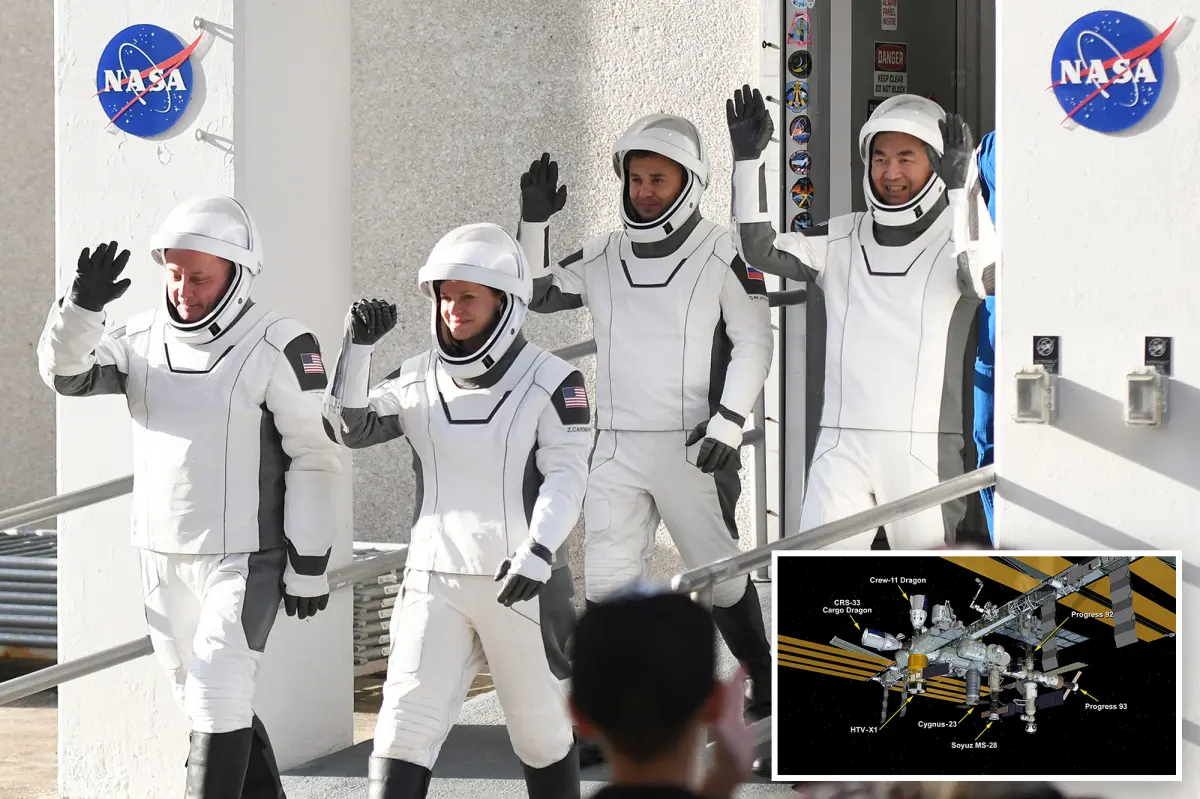
The returning crew consists of a diverse international team: NASA astronauts Mike Fincke and Zena Cardman, Japan Aerospace Exploration Agency (JAXA) astronaut Kimiya Yui, and Roscosmos cosmonaut Oleg Platonov. Before departure, Fincke participated in a symbolic ceremony, handing over command of the ISS to Roscosmos cosmonaut Sergey Kud-Sverchkov. During this transition, Fincke expressed his appreciation for the team’s collaboration, noting, “We got a great team, everybody really rose to the occasion for our expeditions and it’s really been a pleasure to be here.” This handover ensures continuity of operations aboard the space station despite the unexpected crew departure, demonstrating the resilience and flexibility built into space station protocols for handling contingencies.
The early return of Crew-11 represents a significant adjustment to the carefully orchestrated rotation schedule that NASA and international partners maintain for the ISS. The astronauts, who launched in August and were originally scheduled for a standard mission duration, will now end their time in orbit after approximately six months—still a substantial period in space, but considerably shorter than planned. Meanwhile, three crew members who arrived at the station in November will remain aboard until the SpaceX Crew-12 mission arrives in February for what is expected to be a nine-month assignment. This reshuffling showcases the dynamic nature of space mission planning, where adaptability is essential to accommodate unexpected situations.
NASA Administrator Jared Isaacman addressed the situation at a press conference last week, emphasizing the agency’s commitment to astronaut safety above all other considerations. “I’m proud of the swift effort across the agency thus far to ensure the safety of our astronauts,” Isaacman stated, reflecting NASA’s longstanding prioritization of crew wellbeing. The decision to bring astronauts home early is never taken lightly, involving extensive consultation among flight surgeons, mission managers, and international partners. While early returns due to medical issues are rare in the history of space exploration, the protocols for such contingencies are well-established, demonstrating the space agencies’ thorough preparation for various scenarios that might arise during extended missions.
This unexpected development comes at a time when space agencies worldwide are planning for increasingly ambitious long-duration missions, including potential journeys to Mars that would require astronauts to spend years away from Earth’s medical facilities. The current situation serves as a reminder of the critical importance of medical research in space and the development of capabilities to handle health issues during extended missions. Space agencies continue to study the effects of microgravity on the human body, implementing countermeasures to mitigate risks like bone density loss, muscle atrophy, and immune system changes. Events like this early return provide valuable data points for understanding the full spectrum of human health considerations in space, ultimately contributing to safer future missions.
Despite the shortened mission, the Crew-11 astronauts have contributed significantly to the scientific mission of the ISS during their time in orbit. They have conducted numerous experiments across various scientific disciplines, maintained the complex systems of the space station, and participated in international collaboration that continues to define the ISS as one of humanity’s greatest achievements in peaceful cooperation. As they prepare for their return journey, the focus now shifts to ensuring their safe descent through Earth’s atmosphere and recovery in the waters off California. Meanwhile, the remaining crew aboard the ISS will continue the station’s vital scientific work, awaiting the arrival of fresh colleagues in the coming months to restore the station to full operational capacity.