






South Korea Stands Firm on Domestic Nuclear Submarine Program Despite Trump’s Offer
President Lee Reaffirms National Defense Autonomy Amid Shifting Geopolitical Tides
In a decisive statement that underscores South Korea’s commitment to military self-sufficiency, President Lee Jae Myung has reaffirmed the nation’s determination to develop its own nuclear-powered submarines, politely declining a suggestion from former U.S. President Donald Trump that such vessels could be built in American shipyards. This stance highlights the growing tension between maintaining crucial alliances while pursuing strategic autonomy in an increasingly unpredictable security environment in Northeast Asia.
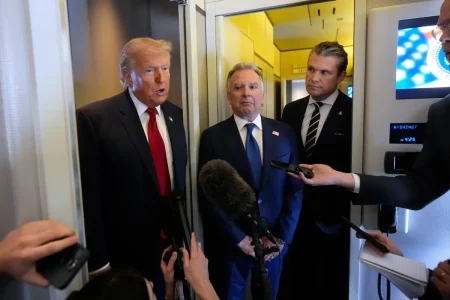
“While we deeply value our enduring partnership with the United States, South Korea must develop certain critical defense capabilities domestically,” President Lee stated during a press conference at the Blue House in Seoul. “Nuclear submarine technology represents not just a military asset, but a cornerstone of our long-term national security strategy and industrial development.” The President’s comments came just days after Trump, during a foreign policy address, proposed that South Korean submarine production could be shifted to American facilities, a move he suggested would strengthen bilateral ties while creating U.S. manufacturing jobs.
Strategic Implications of Domestic Nuclear Submarine Development
South Korea’s pursuit of nuclear-powered submarines represents one of the most ambitious military modernization efforts in the nation’s history. Unlike conventional diesel-electric submarines, nuclear-powered vessels can remain submerged for months rather than days, dramatically extending operational range and strategic capabilities. This enhanced endurance is particularly valuable in the waters surrounding the Korean Peninsula, where naval tensions with North Korea and increased Chinese maritime activity have intensified concerns about regional stability.
Defense analysts note that domestic production offers several critical advantages beyond the immediate military benefits. “By developing this technology indigenously, South Korea gains not just the submarines themselves, but the knowledge base, industrial infrastructure, and sovereign control over a strategic asset,” explains Dr. Park Min-ho, director of the Institute for Maritime Security Studies in Seoul. “The technological spillover effects will benefit numerous sectors of the economy, from advanced materials to nuclear engineering.” The program is expected to create thousands of high-skilled jobs and generate significant technological innovation, with potential applications extending well beyond defense.
Balancing Alliance Obligations with National Defense Priorities
The submarine issue exemplifies the delicate balance South Korea must maintain between strengthening its own defense capabilities and coordinating closely with its principal ally. The U.S.-South Korea alliance, formalized in the 1953 Mutual Defense Treaty, remains the linchpin of security arrangements in Northeast Asia. However, successive South Korean administrations have emphasized the importance of developing greater self-reliance in defense matters, particularly as regional threats evolve and questions occasionally arise about the long-term consistency of U.S. security commitments.
“President Lee is navigating a complex strategic landscape,” notes Dr. Sarah Johnson, senior fellow at the Center for Strategic and International Studies in Washington. “On one hand, maintaining strong U.S. ties is non-negotiable for South Korea’s security. On the other, Seoul has legitimate reasons to develop certain capabilities domestically, especially given the unpredictability we’ve seen in alliance relationships globally in recent years.” This balancing act has become increasingly challenging as great power competition between the United States and China intensifies, with South Korea carefully avoiding being forced to choose sides definitively while maintaining its security relationship with Washington.
Technical Challenges and International Regulatory Considerations
The development of nuclear-powered submarines presents South Korea with formidable technical and regulatory hurdles. Under the current nuclear cooperation agreement between Seoul and Washington, South Korea faces restrictions on enriching uranium and reprocessing nuclear fuel – both potentially necessary steps for developing naval nuclear propulsion systems. These limitations stem from broader non-proliferation concerns, though they do not explicitly forbid South Korea from pursuing nuclear propulsion for military vessels.
“The technical challenges are substantial but not insurmountable for a country with South Korea’s industrial and scientific capabilities,” explains naval engineer and defense consultant Kim Tae-woo. “The real complications lie in navigating the international regulatory framework while maintaining transparency with allies and partners.” South Korean officials have emphasized that any nuclear submarine program would adhere strictly to international non-proliferation standards, with the reactors using low-enriched uranium that poses minimal proliferation risks. The defense ministry has already allocated approximately $1.5 billion for initial research and development, with industry giants like Hyundai Heavy Industries and Daewoo Shipbuilding & Marine Engineering positioned to play leading roles in the program.
Regional Reactions and Security Implications
South Korea’s nuclear submarine ambitions have elicited mixed reactions throughout the region. Japan has expressed measured concern about the potential for an arms race, while maintaining that sovereign nations have the right to develop defensive capabilities within international frameworks. China has been more openly critical, viewing the program as potentially destabilizing and part of a broader U.S.-led containment strategy. North Korea, predictably, has condemned the initiative as “aggressive” through its state media, though such rhetoric is standard for Pyongyang.
“Every significant military advancement in this region creates ripple effects,” observes Dr. Elena Sorokina, professor of international relations at Singapore National University. “The question isn’t whether South Korea has the right to develop these capabilities – it clearly does – but rather how the program will be perceived by neighbors and what countermeasures might emerge in response.” Some security experts suggest that by developing the submarines domestically rather than purchasing them from the United States or other allies, South Korea may actually be taking a less provocative approach, emphasizing the defensive nature of the program rather than presenting it as part of a broader allied military posture aimed at specific regional actors.
Looking Forward: Timeline and Strategic Implications
The South Korean nuclear submarine program represents a generational commitment rather than a short-term project. Current estimates suggest the first domestically-produced nuclear-powered submarine wouldn’t be operational until at least 2035, with significant milestones including reactor design verification, hull construction techniques, and propulsion integration to be achieved along the way. This timeline reflects both the technical complexity involved and the methodical approach Seoul is taking to ensure the program develops sustainably.
President Lee has emphasized that the nuclear submarine initiative exists within a broader framework of national defense modernization, which includes enhanced missile capabilities, cyber defenses, and space-based assets. “Our commitment to peace remains unwavering,” the President stated. “These capabilities are being developed precisely to ensure that peace endures through strength and deterrence.” As the program progresses, South Korean officials will continue consultations with American counterparts, seeking to maintain alliance harmony while advancing national security priorities. The submarine program thus stands as a powerful symbol of South Korea’s evolution as a military power – still deeply committed to its crucial alliance with the United States, yet increasingly confident in charting its own course in matters of national defense and technological development.