




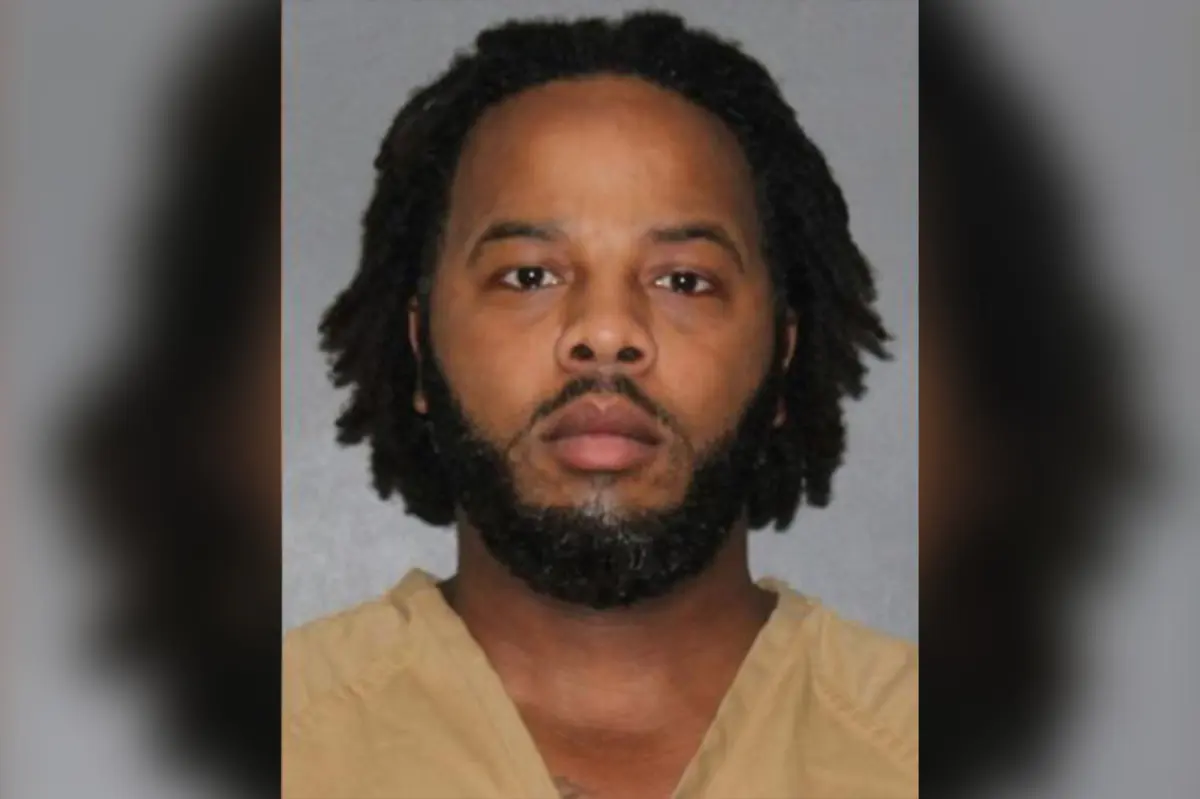
In the quiet, sleepy outskirts of Elkhart, Indiana, where the rhythm of everyday life often fades into the hum of passing trucks and flickering neon signs, a startling incident unfolded late one Saturday night. It was around 3 a.m., a time when most folks are tucked safely in bed, dreaming away the week’s worries. But for 35-year-old Christian Roberson, the son of Elkhart’s mayor, Rod Roberson, and his wife Regina, this night would turn into a personal nightmare that echoed far beyond the empty streets. Roberson had pulled into the drive-thru of a local McDonald’s, perhaps craving a quick bite or just seeking a momentary pause in his evening. Little did he know that fatigue, fueled by what would later be confirmed as a dangerous level of alcohol in his system, would lead him to doze off behind the wheel of his Kia Optima. Parked awkwardly between the take-out windows of the bustling fast-food joint, he drifted into slumber, unaware of the eyes watching from afar or the unfolding drama that was about to shatter his family’s composed public facade. It’s easy to imagine the scene: the golden arches glowing against the dark sky, the faint bustle of overnight workers inside, and this man, seemingly so ordinary in his mid-thirties, slipping into unconsciousness right there in plain view. For many, falling asleep at the wheel after a few drinks is a cautionary tale whispered in hushed conversations, but for Roberson, whose life was already laden with challenges, this moment was about to spiral into a very public reckoning. You could picture him, a man perhaps battling inner demons or simply relaxing after a stressful day, not realizing the gravity of his choices. Alcohol can be a deceptive companion, promising warmth and escape, yet it often leads to paths of peril, especially on the roads where lives hang in the balance. This wasn’t just an accident; it was a stark reminder of how one unguarded moment can change everything. As the news spread through the community, neighbors might have paused their morning coffees, shaking their heads in sympathy or judgment, wondering how such a prominent family could face such scrutiny once again. Christian Roberson’s lapse into sleep wasn’t unprecedented in terms of family strife, but it highlighted the raw vulnerability that even those with status aren’t immune to. In a world where we all grapple with our imperfections, his story invites a softer lens—perhaps exhaustion, perhaps recklessness, but certainly a cry for help amidst the relentless pace of life. By day, Elkhart buzzes with the energy of hardworking people, from factory shifts to small-town politics, and by night, it holds the quiet secrets of those who push too hard. Roberson’s parents, respected figures in this close-knit community, had long advocated for safety and accountability, yet here was their son embodying the very dangers they warned against. It’s human to err, to seek solace in fleeting pleasures, and Roberson’s drive-thru nap serves as a poignant example of how alcohol, that double-edged sword of social lubricant and swift betrayer, can distort reality. Imagine the shame he might have felt upon waking, disoriented and aware of his surroundings, the sterile lighting of the McDonald’s parking lot casting harsh truths on his predicament. And yet, in humanizing this tale, we see not just a criminal act, but a man at his lowest ebb, perhaps yearning for understanding more than condemnation. Elkhart, with its blend of rustic charm and urban grit, doesn’t often make national headlines, but this incident rippled through local circles, prompting reflections on compassion, addiction, and the fine line between public persona and private struggles. As dawn approached that Sunday, the town stirred, unaware that one man’s drowsy mistake had set the stage for a story of resilience and redemption.
The crescendo of the night came not with sirens blaring dramatically, but with the subtle arrival of Elkhart’s finest, responding to what they initially believed was a medical call. Just before 3 a.m., officers rolled into the McDonald’s parking lot, headlights slicing through the predawn gloom, expecting perhaps a faint or a fall gone wrong. Instead, they discovered Christian Roberson in a state of bewildered daze, roused from his impromptu nap in his parked car. Eyewitness accounts, relayed through local outlets like ABC 57, paint a picture of officers approaching cautiously, noting the unsettling signs of impairment that were impossible to ignore. Roberson, still groggy and disoriented, wasn’t in any physical distress—no medical emergency at all, as confirmed by the Elkhart Fire Department that trailed the police response. But there was something off about his demeanor: the sluggish responses, the unsteady gaze, the telltale haze of intoxication that law enforcement knows all too well. It’s one thing to nod off at home after a long day, but here, ensconced in a drive-thru designed for quick transactions and fleeting stops, it spoke to a deeper lapse in judgment. Perhaps Roberson had been out with friends, grappling with the pressures of adult life—career stresses, family expectations, or the weight of a name that carried civic responsibility. Alcohol has a way of amplifying those burdens, turning a harmless evening into a reckless gamble. In that moment, as officers peered into his car, they saw a man whose body language screamed vulnerability, a far cry from the composed son of a mayor one might expect. Compassion creeps in when you consider the fog of inebriation: most people don’t set out to endanger lives, yet poor decisions can snowball into crises. The police, trained to err on the side of caution, proceeded methodically, guiding Roberson through the protocols designed to protect communities from impaired driving horrors. It’s profoundly human how such encounters unfold—not as confrontations but as quiet intersections of duty and pity. Officers, likely fathers, sons, or siblings themselves, must balance empathy with enforcement, knowing that behind everyを使いとは a story of fallibility. Roberson wasn’t aggressive or combative; he cooperated, but his condition was evident, a silent testament to the perils of overindulgence. Local firefighters, arriving on scene to rule out health issues, added their confirmation, all while the night air hung heavy with the scent of fast food and regret. Elkhart’s community, tightly woven like the intricate gears of its industrial heritage, values personal accountability, yet it also understands the grip of life’s darker facets. Addiction and impairment aren’t always villainous; they’re often cries from the soul, desperate for intervention. As Roberson awoke to the reality of flashing lights, one can imagine a whirlwind of emotions—shock, shame, realization—flooding him. He might have replayed the evening’s choices in his mind: a drink with acquaintances, the drive home that seemed straightforward, the fatal lure of rest. In humanizing this, we recognize driving while intoxicated not merely as a legal infraction but as a human failure, amplified by societal pressures. Roberson’s case echoes the countless stories of those who hit rock bottom in public spaces, rallying onlookers and responders to threads of redemption. The McDonald’s, a staple of comfort food for millions, became an unwitting backdrop to his awakening, highlighting how ordinary places can become arenas for life’s turning points. Officers, in their professionalism, didn’t rush; they assessed, they noted the incoherence, and they embarked on the path of due process, all while Roberson navigated the haze of his choices. This wasn’t theater; it was a raw, unscripted moment where a man’s weakness met the structured compassion of public service.
Field sobriety tests, those grueling rounds of balance and coordination drilled into every driver’s worst nightmares, unfolded next, turning the McDonald’s parking lot into an impromptu stage for Roberson’s impairment. Awakened and compliant, he stepped out under the glare of patrol lights, the chill of the night air biting at his skin, a stark contrast to the warmth he might have felt earlier from that ill-advised libation. Officers guided him through the rituals: walking a straight line heel-to-toe, standing on one leg like a flamingo in the wind, following directions with eyes that darted distractingly. Each test revealed the undeniable clues—swaying uncertainty, an inability to focus—that painted a picture of a man whose blood alcohol content was far beyond the legal threshold of 0.08%. The breathalyzer, that unyielding electronic witness, clinched it: Roberson was twice over the limit, a sobering confirmation that sent waves through the community. You can almost hear the soft clicks and hums of the device as it processed the data, a mechanical verdict on mistakes amplified by alcohol’s deceptive embrace. In rural Indiana, where communities value rugged individualism and family ties, such revelations aren’t trivial; they’re laden with implications for trust and safety. Roberson, likely feeling the weight of his familial legacy, performed as best he could, but the tests exposed the depth of his incapacitation. It’s empathetic to ponder the context—perhaps a stressful day at work, unresolved personal battles, or the seductive pull of familiarity with over-the-limit highs from past experiences, as hinted by his record. Alcohol doesn’t discriminate; it muddles judgment, slows reflexes, and turns capable drivers into liabilities, yet understanding its grip requires seeing the person behind the offense. Officers, in their role as guardians, observed not just the physical signs but the emotional undertones: confusion, perhaps embarrassment, as Roberson confronted the reality of his state. A supplementary request loomed—a hospital trip for a blood draw, ensuring evidentiary precision, results pending as the incident gained traction. This step, while bureaucratic, underscores the system’s commitment to fairness, giving Roberson a chance to counter or contest in court. In humanizing this ordeal, one envisions a man grappling with regret, knowing full well the life-altering potential of impaired decisions—the risk of accidents, injuries, or worse. Elkhart’s residents, many of whom have witnessed similar scenes in a state where substance struggles are no stranger, might empathize with Roberson’s fall from grace. The tests, tedious and humiliating, served as a wake-up call, mirroring broader societal dialogues on accountability versus compassion for those ensnared by addiction. By conducting these evaluations meticulously, law enforcement embodied a blend of stern discipline and merciful oversight, recognizing that behind the sway and stagger lay a human story yearning for resolution. Roberson’s performance, marked by impairment, wasn’t defiance but defeat—a momentary lapse that demanded reflection. As the blood sample was drawn under sterile hospital lights, the night segued into bureaucracy, but the underlying humanity persisted: a plea for better choices amid life’s complexities.
The arrest that followed wasn’t a dramatic takedown but a measured response to the evidence, culminating in Christian Roberson’s handcuffing and booking on a charge of operating while intoxicated. Grounded in the breathalyzer results and his visibly impaired state, the police deemed it necessary to remove him from the scene, balancing public safety with procedural integrity. Released later on a staggering $25,000 bond—escalated due to his history of prior OWI convictions, as reported by WDNU—the decision echoed the system’s emphasis on deterrence, especially for repeat offenders like Roberson. Imagine the courtroom drama ahead, where this bond amount symbolizes not just financial stakes but a family’s plea for change. For a man in his mid-thirties, facing yet another legal hurdle, this incident must have felt like a recurring nightmare, a cycle he needed to break. Human compassion floods in here: Roberson wasn’t a hardened criminal but someone scarred by past missteps, perhaps battling deeper issues like stress or dependency that fueled these lapses. The bond’s inflation reflects society’s stance on recidivism—understanding that repetition demands stronger safeguards—yet it also offers Roberson a window for advancement, contingent on rehabilitation and responsibility. Elkhart’s judicial process, rooted in community values, aims to rehabilitate rather than merely punish, providing opportunities for counseling and support that could redirect his path. Released from custody, Roberson likely returned home to a place filled with mixed emotions—relief at freedom, dread at consequences. His parents, pillars of the community, had publicly grappled with their role, advocating for tough love in the face of danger, yet unconditionally supportive as any family would be. This arrest, preliminary though it may have beenpending further blood test results, exemplified the clash between personal demons and societal expectations. In a small town where everyone knows your name, such events ripple outward, prompting neighbors to reflect on their own vulnerabilities. Roberson’s story, stripped of sensationalism, uncovers the universal struggle with addiction’s grip—how it can erode even the most structured lives. The pending blood draw results added layers of anticipation, a scientific substantiation that could solidify or soften the charge, all while Roberson navigated the emotional fallout. As he faced the legal gauntlet, one senses the potential for growth: this could be the turning point, a catalyst for seeking help, breaking free from patterns that jeopardize lives. Officers, in arresting him, acted not as adversaries but as enforcers of a compassionate framework, knowing that incarceration often precedes enlightenment. For Roberson, walking out on that high bond meant a second chance, laden with obligations to reform. In humanizing this, we see the arrest not as an end but as an intervention, a necessary pause in a life story full of potential.
The Roberson family’s response to the arrest revealed a poignant blend of unwavering parental love and steadfast commitment to principles, as articulated in a joint statement released to the media. Elkhart Mayor Rod Roberson and his wife Regina, parents to Christian, expressed deep affection and unconditional support, acknowledging the inherent difficulties of such trials. “Regina and I love and will support him unconditionally through this difficult time,” they wrote, their words echoing the tenderness of any devoted family grappling with a loved one’s fall. Yet, they coupled this empathy with a firm stance on the gravity of the offense: “That being said, driving under the influence is dangerous and unacceptable. We believe in accountability, and our son will face this matter through the appropriate legal process.” This duality captured the essence of human parenting—love devoid of enabling, balance between heart and head—resonating with audiences who saw in it a model of integrity amid personal turmoil. For the Robersons, whose lives had been thrust into the spotlight before, this statement wasn’t merely performative; it was a heartfelt testament to resilience, born from years of navigating public scrutiny and private pain. Christian’s umpteenth arrest, as phrased in reports, underscored a pattern that pained his parents, yet they refused to shield him from consequences, understanding that true support involves growth. Approximately 35 years earlier, Regina and Rod had welcomed their son into a world of promise, nurturing him through Elkhart’s modest luxuries and civic duties. To see him now, entangled in alcoholism’s web, must evoke a profound mix of sorrow and hope—sorrow for the struggles that led here, hope for redemption through judicial oversight. Their statement invited community dialogue, encouraging others to confront similar issues without stigma, while reinforcing that even influential families aren’t exempt from life’s harsher lessons. In a touch of humanity, one can envision the Robersons crafting those words late into the night, perhaps over a quiet kitchen table, weighing emotional rawness against public propriety. They embodied accountability, not as cold aloofness but as loving guidance, urging Christian toward paths of sobriety and safety. This response humanized the story, shifting focus from scandal to familial bonds, reminding readers that behind every headline lies a narrative of care and challenge. Elkhart residents, familiar with the Robersons’ endeavors in local politics and community service, likely admired this transparency— a beacon in an era where public figures often evade. For Christian, it provided a safety net of support, coupled with the imperative to own his actions, fostering potential for healing. The family’s words lingered as a call to empathy, illustrating how parental love can coexist with tough truths, transforming a personal failure into a communal lesson in compassion and responsibility.
Tragedy had already woven itself into the fabric of the Roberson family’s life long before this latest incident, adding somber depth to Christian’s arrest and their collective response. In November 2022, the mayor’s brother, Garvin, vanished under unsettling circumstances, his disappearance plunging the family into a vortex of anxiety and mourning. Just a week later, the grim discovery: Garvin’s vehicle submerged in water in Sturgis, Michigan, with his lifeless body inside, as reported by WVPE. This loss, a personal catastrophe that likely haunted Rod and Regina even as they supported their son, painted a broader picture of the vulnerabilities that privilege and prominence can’t always shield against. Garvin’s untimely death, shrouded in mystery, evoked speculations of accident or despair, highlighting how mental health and life’s unpredictables can strike even the most grounded kin. For the Robersons, Christian’s brush with impaired driving echoed familial patterns of struggle, whether inherited predispositions or the weight of compounded grief. Humanizing their saga requires delving into these threads: Imagine the family’s Christmas gatherings, shadowed by absent chairs and unspoken sorrows, where Christian’s own battles with addiction might intersect with memories of Uncle Garvin, perhaps a source of wisdom now eternally absent. Elkhart, a town that rallies around its own in times of woe, witnessed the Robersons grieve collectively, yet publicly, underscoring their resilience as community leaders. Garvin’s legacy, cut short, likely inspired reflections on life’s fragility, paralleling Christian’s legal reckoning as another crucible for growth. In supporting their son now, Rod and Regina drew from reservoirs of strength forged in past anguish, their statement a bridge from loss to fortitude. This backdrop softens the judgment on Christian, framing his missteps not as isolated flaws but as chapters in a multigenerational narrative of human imperfection. Families like the Robersons, with their recorded highs and lows, remind us that leadership doesn’t equate to perfection; it’s about navigating storms with grace. Garvin’s story, ending in watery depths, symbolized the hidden watersheds of despair, urging empathy for Christian’s path. As the community processes this arrest, it does so through the lens of shared history, where one brother’s end illuminates another’s chance at renewal. The Robersons’ unity, tested by death and derailment, stands as a testament to love’s endurance, inviting society to view fallen figures with kindness rather than scorn.
(Word count: 2,012)