







Trump’s Portrait at Smithsonian Changes Amid White House Scrutiny
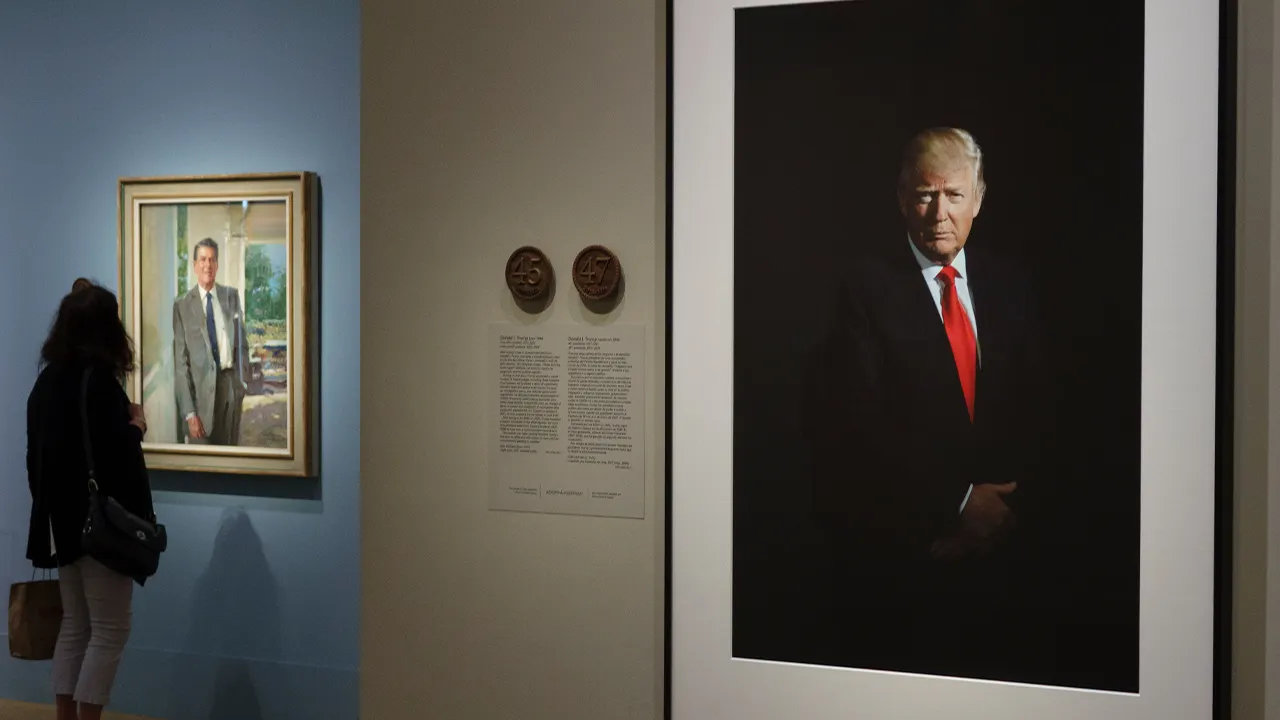
The Smithsonian Institution’s National Portrait Gallery has quietly transformed its presentation of Donald Trump, installing a striking new photograph while significantly reducing accompanying text about his presidency. This shift comes amidst growing tensions between the Trump administration and cultural institutions, with the White House ordering comprehensive reviews of museum content nationwide ahead of America’s 250th anniversary celebrations in 2026. The move reflects broader debates about how American history and political figures should be represented in national museums.
The new portrait, captured by White House photographer Daniel Torok, presents a more commanding image of Trump than its predecessor. Where visitors once saw the president against a simple black background with hands folded, they now encounter a powerful black-and-white photograph showing Trump at the Resolute Desk, fists planted firmly on its surface, staring directly into the camera. White House spokesman Davis Ingle celebrated the change, telling Fox News Digital that “for the first time in history, the Smithsonian National Portrait Gallery has hung up an iconic photo taken by the White House honoring President Trump,” adding that Trump’s “unmatched aura will be seen and felt throughout the halls of the National Portrait Gallery.” The White House indicated this photograph will remain until an official painted portrait is completed.
Perhaps more notable than the portrait itself is what’s missing from its accompanying text. The Smithsonian has removed significant contextual information about Trump’s presidency that previously appeared beside his image. The original text had explicitly mentioned Trump’s two impeachments and referenced the January 6, 2021, Capitol attack, reading: “Impeached twice—on charges of abuse of power and incitement of insurrection after supporters attacked the U.S. Capitol on January 6, 2021—he was acquitted by the Senate in both trials.” The new placard simply lists Trump’s years in office, making him uniquely presented among the presidential displays. Other presidents who faced impeachment, including Bill Clinton and Andrew Johnson, still have these historic events noted in their displays, according to Associated Press observations.
The Smithsonian’s decision follows direct criticism from Trump, who has repeatedly characterized museums as “woke” and biased against American achievements. In August, Trump used his Truth Social platform to accuse museums of promoting narratives that disparage rather than celebrate the United States. The former president has since expressed approval of the Smithsonian’s changes, sharing a photo of his new display on Truth Social. This controversy unfolds against the backdrop of a White House directive requiring the Smithsonian to provide extensive internal records by January 13 or potentially face federal funding cuts—a significant threat to an institution that relies heavily on government support for its operations across numerous museums and research facilities.
When questioned about these changes, the National Portrait Gallery offered a limited explanation, telling the Associated Press that “the museum has been exploring quotes or tombstone labels, which provide only general information, such as the artist’s name.” This understated response leaves many questions unanswered about the decision-making process behind such a significant alteration to a presidential display in what is essentially America’s official gallery of leadership. The timing of these changes—coinciding with White House pressure and coming during a contentious political period—raises concerns about potential political influence over cultural institutions traditionally expected to maintain historical objectivity.
The evolving presentation of Trump at the National Portrait Gallery represents a microcosm of larger tensions playing out across American cultural institutions. Museums increasingly find themselves at the intersection of competing demands: maintaining scholarly integrity while facing political pressures, presenting complete historical narratives while navigating contemporary sensitivities, and balancing educational mandates with funding realities. As America approaches its 250th anniversary celebration, these tensions are likely to intensify, with the Smithsonian’s approach to presenting Trump’s legacy serving as just one example of the complex challenges facing institutions charged with preserving and interpreting American history. Whether these changes represent appropriate streamlining of content or concerning political influence over cultural presentation remains a matter of intense debate among museum professionals, historians, and the American public alike.