






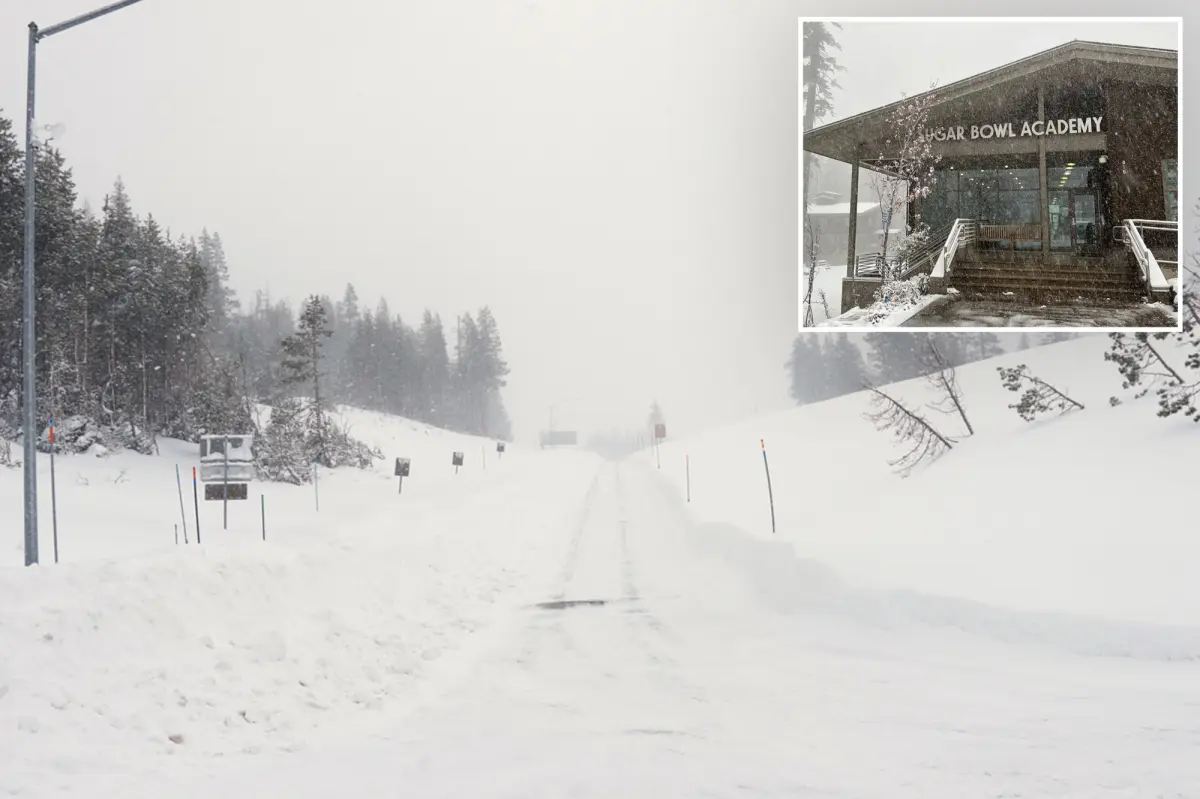
The avalanche that struck Castle Peak near Truckee, just a stone’s throw from the glittering shores of Lake Tahoe, wasn’t just a random act of nature—it was a brutal interruption of lives deeply interwoven with the rhythms of mountain passion and community spirit. On Tuesday morning, February 17, 2026, as the sun began to peek over the jagged Sierra Nevada peaks, families and friends in the Donner Summit area were gearing up for another day of backcountry skiing, a pursuit that defined this tight-knit circle. The Sugar Bowl ski resort, with its renowned academy, had long been at the heart of it all, nurturing young athletes who dreamed of carving perfect turns on powder like this. Among the 15 people swept away by the monstrous slide—four guides and 11 guests—were beloved members of that ski school, individuals whose laughter and determination had echoed through ski lifts and training days. Six survivors, a mix of men and women aged 30 to 55, were pulled from the snow after a grueling rescue effort, their stories of survival now mingling with the heartbreak of those who didn’t make it. Eight confirmed dead, one still missing, and the community grappled with the unimaginable: these were not distant strangers, but neighbors, mentors, and dreamers who lived for the thrill of the slopes. Sugar Bowl’s statement on Wednesday captured the raw grief pulsing through the resort, describing how the avalanche had claimed “multiple” from their academy and others with roots in the area. It spoke of a community grieving together, highlighting the academy’s commitment to supporting athletes, staff, families, and even extended connections in the weeks, months, and years ahead—an echo of the enduring bonds forged in the shadow of Castle Peak.
In the intimate world of Sugar Bowl Academy, the victims were more than skiers; they were the life’s blood of the program. Executive Director Stephen McMahon, his voice heavy with emotion, shared how profoundly the loss reverberated: “We are an incredibly close and connected community. This tragedy has affected each and every one of us.” He painted a picture of a family-like group where coaches pushed athletes to their limits, where staff organized fundraisers for gear, and where even casual visitors felt the warmth of belonging. The academy wasn’t just teaching ski techniques; it was instilling resilience, camaraderie, and a love for the outdoors that transcended the sport. One victim, a young racer with a future scholarship on the line, had been known for his infectious enthusiasm, rallying fellow students during tough training sessions. Another, a guide with decades of experience, was a local legend who mentored newcomers, sharing tales of epic runs over campfires. Parents, athletes, and instructors now faced the void left by these absences, their shared grief a testament to the human connections built amid the snow-capped majesty. McMahon’s words underscored that supporting the bereaved families wasn’t optional—it was a collective duty: “The depth of support for the families whose lives have been changed forever reminds us of how special this community is.” In this reflection, one could sense the unspoken understanding that the best response was enveloping survivors and loved ones in care, allowing space for the tears and healing that would follow.
The avalanche’s toll extended beyond Sugar Bowl Academy, touching lives across the region’s backcountry enthusiasts. The slide occurred in conditions fraught with danger, as Nevada County Sheriff Shannan Moon explained in her grim update 24 hours later. With the grief still fresh, she detailed how rescuers battled “highly dangerous” terrain, compounded by an ongoing avalanche warning and looming snowstorms that threatened to bury clues further. The six rescued—a man and five women—had been part of the trapped group, their escapes stories of luck, quick thinking, and the heroism of search teams who navigated the chaos. Among them was a 35-year-old mother whose husband didn’t survive, now navigating motherhood alone amid the emotional wreckage. Another survivor, a 50-year-old guide, had pulled others to safety before collapsing from exhaustion, his bravery embodying the selflessness skiers often display. Yet, for every survivor, there was the harrowing reality of loss, with eight confirmed dead and one skier still unaccounted for, their bodies elusive in the swirling white. The sheriff’s caution about the search highlighted the ongoing peril, as teams probed unstable slopes where a wrong step could trigger another disaster. Community members, many of whom had skied these peaks themselves, waited anxiously for more details, their hearts aching for the missing soul while mourning those already lost. This wasn’t just a statistic; it was personal dramas unfolding in the limbs and lives of real people, each with stories, dreams, and families waiting in the valley below.
As dusk fell on Wednesday, parents connected to Sugar Bowl grappled with the tragedy’s weight, their reluctance to speak underscoring the profound shock. Kurt Althof, whose son thrived in the race program, echoed a common sentiment: “The only comment that I can possibly make is that it’s an absolute tragedy. My heart, my family’s heart, goes out to all of those that have been impacted by this.” His words, though brief, revealed a depth of empathy born from shared joys and now shared sorrow. Families like the Althofs had invested hours in ski lodges, cheering from sidelines as kids perfected moguls or celebrated podium finishes. Now, those victories felt distant, overshadowed by the avalanche’s cruelty. A mother of a lost academy member described her daughter as a radiant soul with a passion for weather and wild places, someone who collected avalanche forecasts like others did recipes. Grieving parents envisioned futures stolen—proms, graduations, mountain adventures—now replays of happy memories looped painfully. Despite the hesitation to share publicly, behind closed doors, stories flowed: of coaches who treated athletes like kin, of late-night pep talks around academy fires, of bonds that made victories sweeter and losses harder. This human side of the story emphasized that the avalanche wasn’t merely a news headline; it was a cascade of personal devastations, where love, ambition, and the mighty Sierra collided in tragedy.
Town Council Jan Zabriskie hinted that the release of victims’ names was imminent, a prospect that heightened the community’s anticipation and dread. With details slow to emerge, speculation mingled with sorrow, as residents bonded over vigils and shared meals, drawing strength from collective rituals. The Donner Summit area, known for its rugged beauty, had always united in adversity—hurricanes, wildfires, economic woes—but this avalanche struck at the heart of its identity as a ski haven. Names would soon paint faces on the statistics: a local guide whose charisma made even novices feel elite, a student-athlete eyeing Olympic trials, a devoted volunteer who organized community ski events. Families braced for the emotional reckoning, knowing that seeing names in black and white would make the loss inescapable, transforming abstract grief into intimate pain. Yet, this process promised closure, allowing remembrance to begin—a candlelit gathering on Castle Peak’s flanks, perhaps, or a memorial run in honor of the fallen. In humanizing the victims, the community honored their legacies: the guide who taught patience, the skiers who chased horizons, the spirits that danced in the snow. Zabriskie’s assurance offered a glimmer of resolve, reminding all that facing the truth, however agonizing, was a step toward healing within this resilient, mountain-forged tapestry of lives.
ultimately, the avalanche on Castle Peak stands as a poignant reminder of the fragility of pursuits we cherish, underscored by the outpouring of support from both the ski community and beyond. As Sugar Bowl and Donner Summit rallied with offerings of counseling, financial aid, and simply being present, the tragedy evolved from devastation into a narrative of endurance. Survivors recounted miracles—how a buried cell phone become a lifeline, how avalanche beacons led rescuers through the abyss—mirroring the human will to overcome. Families, though forever altered, spoke of honor in memory, planning scholarships in victims’ names or rides to reopen beloved trails. The academy’s pledge to support in the coming years echoed a communal ethos, where grief fostered deeper connections rather than divisions. In this humanized chronicle, the avalanche wasn’t just a calamity; it was a chapter in a larger story of love, loss, and the unbreakable bond of those who call the mountains home. Emergent voices—from social media tributes to symbolic gestures like the placing of skis at the peak’s base—ensured the stories lived on, transforming sorrow into a testament to resilience, where every turn in the snow whispered the names of those beloved souls forever entwined with the Sierra’s eternal legacy.