





The Push for Tighter Voter Rules in a Divided Senate
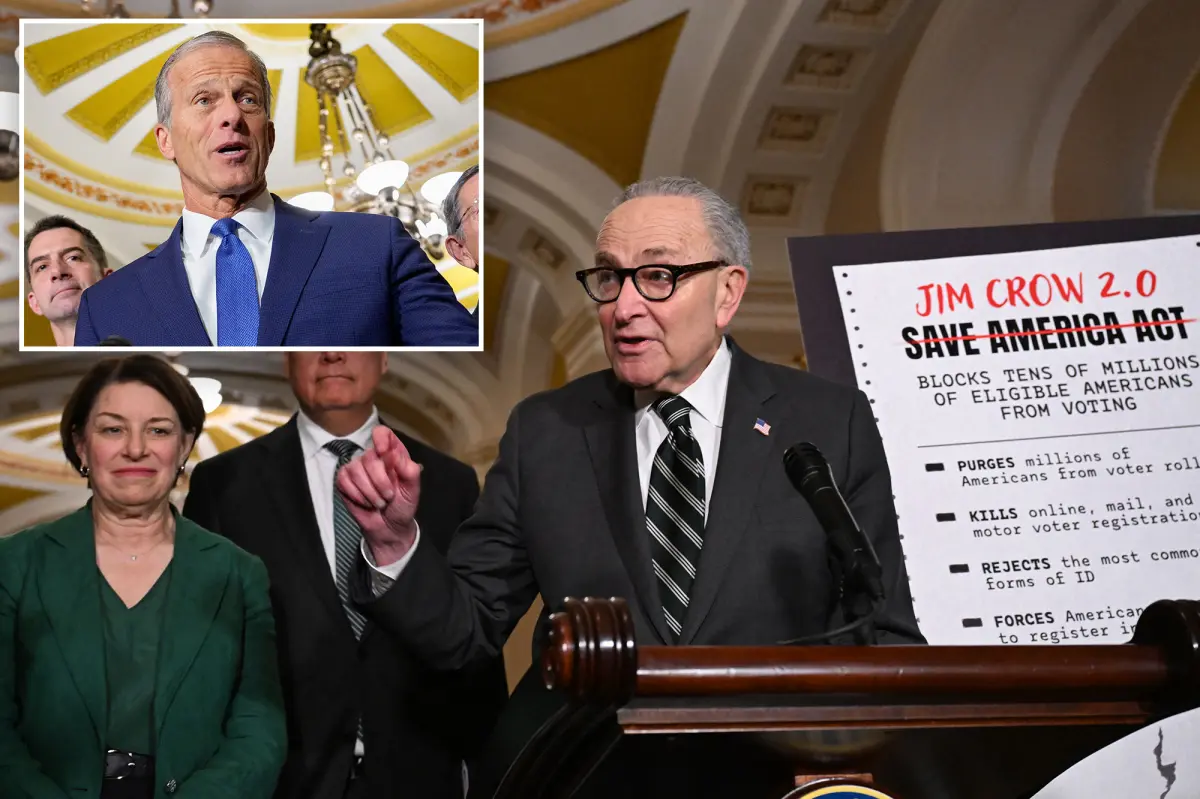
In the bustling heart of Washington, D.C., where the air is thick with political tension and the echoes of heated debates reverberate through the marble halls of the Senate, Republicans took a bold step forward with a bill aimed at reshaping who can participate in America’s elections. The Safeguarding American Voter Eligibility (SAVE) America Act, championed as one of President Trump’s top priorities, requires voters to present photo identification at the polls and prove their U.S. citizenship upon registration. This wasn’t just another legislative battle; it felt like a showdown on the very integrity of democracy itself. On a crisp Tuesday afternoon, Senate Republicans mustered just enough votes—51 in favor and 48 opposed—to advance the motion for debate, brushing aside unified Democratic resistance and even splitting their own ranks. It was a moment that underscored how partisan divides have deepened, turning what should be a straightforward conversation about fair elections into a high-stakes political chess game. As the motion carried, Majority Leader John Thune from South Dakota stood firm, though the path ahead was murky. With majority support falling short of the 60 votes needed to seal the deal, the debate could drag on, consuming precious Senate time. Picture the scene: lawmakers huddled in their chambers, arguments flying like sparks in a forge, each side convinced their vision of America—a secure ballot box versus an inclusive democracy—was the true pathway forward. This bill, tucked into a broader package of carves and compromises, represented Trump’s insistence that election integrity wasn’t negotiable, especially with midterm elections looming in 2026. Republicans argued that millennials and immigrants alike were at risk if lax rules persisted, while Democrats painted it as a thinly veiled attempt to suppress votes from communities that leaned their way. The vote itself was a microcosm of American politics: deliberate, divisive, and unrelenting. Senators like Mitch McConnell, the grizzled Kentuckian with decades under his belt, nodded approvingly as the tally came in, while minority leaders like Chuck Schumer peered across the aisle, their gazes steely and unyielding. In this polarized environment, even small defections mattered. One Republican, Lisa Murkowski from Alaska, broke ranks, voting nay in a move that hinted at principle over party loyalty. Meanwhile, Democrats stood as a wall of opposition, their 47 votes a unanimous roar against what they saw as exclusionary tactics. The atmosphere was electric, with aides scurrying back and forth, whispering updates, and the weight of history pressing down—echoing past fights over civil rights and suffrage. At the core, this was about trust in the system: Republicans pointed to anecdotal evidence of fraud, like noncitizens slipping through cracks in close races, while Democrats countered with fears of ordinary citizens—lawful voters—being wrongly barred. The bill’s provisions to purge noncitizens from rolls promised rigor but raised alarms about bureaucracy snares that could snarl the electoral process. Trump’s own rhetoric had infused the debate with urgency, framing it as a battle against “cheaters” who threatened the republic. In interviews and retreats, he decried delays, urging Congress to fast-track the measure over pet projects. This wasn’t abstract policy; it was personal for many lawmakers. Take Pennsylvania’s John Fetterman, who quickly cast his no vote, embodying the Democrat’s early defiance and underscoring how individual stories—like his rise from blue-collar roots—shaped their stances. Or Thom Tillis from North Carolina, who abstained altogether, a quiet protest against the bill’s reach. As speeches unfolded, Schumer’s words hung in the air: a willingness to stall indefinitely to protect against “voter suppression.” The Senate floor became a stage for oratory, with Republicans invoking patriotism and security, and Democrats lamenting disenfranchisement. Public opinion, as captured by surveys, leaned toward the bill’s intent—85% favoring citizen-only voting—but party divides persisted. This legislative saga wasn’t over; it was just getting started, with amendments looming and the clock ticking toward potential cloture votes. In the grand theater of American governance, where every vote counted like a heartbeat, the SAVE Act embodied the nation’s soul-searching over who gets a voice in its future.
The Core Provisions and Clashing Arguments
Diving deeper into the SAVE America Act, you can imagine it as a blueprint for a fortress guarding electoral integrity, but to opponents, it’s more like a drawbridge pulled up too high, risking to close out those who belong. The bill’s twin pillars stand out vividly: a mandated photo ID for voting, echoing the commonsense checks we use daily—like showing a license at the bank—and stringent proof of citizenship during registration, a step beyond current patchwork state laws. This isn’t whim; it’s a response to what Republicans describe as cracks in the foundation of fair play. They’ve highlighted real cases where noncitizens allegedly voted, influencing razor-thin outcomes in elections that decided everything from local seats to congressional majorities. Picture a contest where a single ballot tipped the scales—suddenly, the stakes feel existential. Democrats, however, argue passionately that these measures could inadvertently turn away lawful voters, especially in diverse communities where citizenship documents might be slower to produce or harder to access due to socioeconomic barriers. The bill’s language requires states to actively comb through rolls, striking off those without proof, but critics warn of overreach: what if a naturalized citizen misplaces papers, or language barriers delay verification? In personal terms, think of families who’ve built lives here, contributing tax dollars and dreams, only to face hurdles at the ballot. Republicans counter that citizenship documentation isn’t onerous; after all, immigrants navigate complex paths to become Americans—they can surely provide proof to participate. This isn’t about banning immigrants, they insist; it’s about safeguarding the privilege of native-born and naturalized alike. Debates swirl around potential disenfranchisement: studies suggest minority voters, often reliant on mobility-challenged seniors or those in rural areas, might bear the brunt, reducing turnout among groups that Democrats champion. Republicans point to polls where overwhelming Americans cross-party lines to endorse stricter rules, fearing exploitation in an era of misinformation and foreign interference. The act’s architects drew from past legislation, like earlier voter ID laws that boosted confidence without calamity, yet opponents cite court battles over suppression tactics disguised as security. In the Senate’s ornate debate chamber, these claims collided like thunderclaps—Republicans evoking responsibility and purity, Democrats decrying exclusion and bias. Fetterman’s swift no-vote exemplified this friction: a Democrat from a swing state like Pennsylvania, where industrial legacies mingle with suburbia, he positioned himself as a pragmatist wary of overkill. Murkowski’s dissent added human flesh to the Republican feud; an Alaskan with a libertarian streak, she likely fretted over federal overreach into state prerogatives. Then there’s the eerie precedent: allegations of fraud that crackle through social media, fueling narratives of stolen elections, though investigations often uncover minimal scope. This bill attempts to address that anxiety, but at what cost? As lawmakers pondered, the provisions felt like a mirror to society—reflecting divisions over identity, belonging, and power. With amendments pending, the discussion promised to peel back layers: perhaps refining who qualifies as noncitizen, calibrating timelines for purges, or adding safeguards against discriminatory enforcement. Trump’s adamant support amplified the drama, painting Democrats as defenders of deceit, while he positioned Republicans as guardians of democracy. Polling underscored public yearning for change—71% backing the act outright, rising to 91% among Republicans—but Democrats at 50% hinted at unease. This wasn’t just policy; it was about trust. In a nation built on immigrant dreams, who decides the borders of voting rights? The SAVE Act challenged everyone to reckon with that question, blending legal ingenuity with raw emotion in a chamber where voices shaped the republic’s fate.
Key Votes and the Drama on the Senate Floor
The roll call that day in the Senate wasn’t just a tally; it was a snapshot of America’s fractured soul, where party lines blurred into personal convictions and strategic gambles. Fifty-one Republicans, led by John Thune’s unflappable demeanor, pushed the motion forward, their aye votes echoing like affirmations of a shared doctrine. Mitch McConnell, the Senate’s elder statesman with his gravelly voice and no-nonsense gaze, anchored the yes camp, a veteran who knows the rhythm of parliamentary warfare. But fractures appeared: Lisa Murkowski’s nay stood out, a principled rebellion from a red state where individualism often trumps partisanship. Alaska’s vast, untamed landscapes might have hardened her stance against what she saw as an unwarranted intrusion into local affairs. Democrats, a bloc of 47, voted en masse against, their solidarity a defiant wall against perceived suppression. Chuck Schumer, with his finger-wagging intensity, delivered a fiery floor speech, vowing to keep the Senate in session “all day, all night” if needed. His words crackled with urgency—a New Yorker’s plea for inclusion, drawing on his history navigating Jewish heritage and urban pluralism. John Fetterman, the quirky Pennsylvanian with his hooded sweaters and folksy charm, cast his vote early, a break from typical Democratic lockstep that showcased his maverick ethic. Thom Tillis, a North Carolina Republican, abstained altogether, a silent protest from someone who’d once supported ID requirements but now balked at the bill’s sweeping scope. His non-vote left the tally opaque, whispering of internal GOP dissent. As debates spilled into speeches, the floor transformed—lawmakers invoked anecdotes: tales of vanishing voter rolls in battleground states, or heart-tugging stories of elders turned away for want of IDs. Republicans leaned on patriotism, citing Trump’s rallies where he accused opponents of rigging games for longevity in power. Democrats countered with data-driven rebuttals, highlighting how such laws had depressed turnout among poor and minority communities in states like Texas. The atmosphere buzzed with anticipation; senators pored over amendments, their aides scribbling notes in the galleries. Schumer’s threat to filibuster wasn’t idle—it reflected a party’s resolve to drag out proceedings, forcing compromises. Thune’s press clarity—”We don’t know we don’t have 60 votes yet”—evinced optimism tempered by realism, acknowledging the hurdle of a filibuster-proof majority. Murkowski’s dissent humanized the divide; perhaps she empathized with Alaskans whose remote lives complicate documentation. Fetterman’s vote, meanwhile, stirred whispers of bipartisanship’s faint pulse. Votes aren’t just numbers; they’re narratives of beleaguered parents, ambitious newcomers, and retiring citizens—all wrestling with access to power. Trump’s shadow loomed large, his Mar-a-Lago pep talks propelling Republicans forward. In this crucible of democracy, every ballot recounted in debate underscored why elections matter: they’re the heartbeat of self-rule. With speeches poised to stretch, the Senate braced for a marathon, where eloquence might yield to exhaustion, and principles to pragmatism. The drama wasn’t contrived; it was a living testament to divided governance, where a single vote could sway the republic’s course.
Contextual Ties to the House and Trump’s Urging
Zooming out from the Senate’s tight confines, the SAVE America Act’s journey weaves through a broader tapestry of legislative hustle in Washington, where priorities clash and personalities duel under a watchful eye. Just last month, the House had muscled the bill’s essence into a Senate-passed package with a squeaker of 218-213, burying voter rules amid unrelated allies like funding streams—no mean feat in a chamber where procedure often trumps substance. Republicans, flush from that victory, saw the SAVE Act as a natural sequel, a way to institutionalize protections they’d already nudged forward. Picture House members, whips cracking to secure votes, trading favors like currency in the ornate rotunda. Democrats fumed, accusing procedural sleight-of-hand of obscuring suppression tools. Enter President Trump, the catalytic force, his bombastic calls to action turning priorities upside down. He exhorted Republicans to “shelve all other legislative priorities” in favor of sending this bill to his desk, elbowing aside crucial votes on government surveillance powers and homeland security funding for a battered department. In his blunt style, Trump framed it as a crusade against Democrats’ alleged penchant for electoral skullduggery, claiming they’d “cheat” and jeopardize Republican dominance for generations. His words, delivered during a House retreat at his Florida golf haven, pulsed with bravado: threats not to sign other bills until this passed. This wasn’t policy flair; it was a calculated thrust, leveraging goodwill from recent executive actions like immigration curbs to rally the base. The president’s rhetoric humanized the stakes—evoking “MAGA” diehards terrified of losing clout, or families fretting over secure polling stations. For independents tuning into cable news, it painted Democrats as obstructionists prioritizing theft over fair play. Yet, the House’s prior passage highlighted bipartisanship’s erosion; many Democrats stayed unified in dissent, viewing the tuck-away as a smokescreen for controversial changes. Republicans countered that integration into must-pass bills was survival tactics in a divided Congress. Trump’s pledge to veto alternatives underscored control— a chess master refusing pawns without checkmate. Funding for Issues like foreign spying faced delay, a casualty of this single-minded push. This context enriched the Senate drama: the SAVE Act wasn’t isolated; it was a domino in Trump’s agenda, linking voter integrity to broader nationalism. Polls revealed this resonated—85% backed citizen-only voting, crossing aisles—but partisan gaps hinted at thunderous disagreements ahead. Lawmakers recalled history: eras when suffrage expanded, now scrutinized for slippages. In personal spheres, senators imagined impacts—like rural Alaskans grappling with ID logistics, or immigrants chasing the dream. Trump’s urging, with its theatrical edge, amplified urgency, making the bill less transaction and more crusade. Challenges loomed: funding tightens for DHS, whose enforcement might flesh out purges, or surveillance lapses exposing vulnerabilities. Yet, the House win buoyed spirits, proving momentum possible. As Senate debates unfurled, this backdrop reminded all: elections aren’t abstract; they’re personal reckonings with power’s pulse. Trump’s voice, echoing from Florida sands, steered the ship, blending ego with earnest plea for a safeguarded republic.
Public Sentiment and Potential Electoral Ripples
Beneath the Capitol’s dome, where debates raged on the SAVE America Act, public opinion simmered like a pot about to boil, offering a glimpse into the hearts of everyday Americans and how this legislation might ripple through the ballot box. A Harvard-Harris survey from February captured the zeitgeist: 85% of voters championed reserving ballots for U.S. citizens alone, a resounding affirmation that electoral purity isn’t radical—it’s mainstream. Delving deeper, 71% directly backed the SAVE Act, with Republicans leading the charge at 91%, independents at 69%, and even half of Democrats nodding approval. This cross-party support underscored a shared yearning for transparent elections, especially amid distrust sown by disputed races and conspiracy murmurs. Yet, the 50% Democrat backing hinted at internal fractures—perhaps moderates eyeing security over ideology, or progressives wary of perceivable biases. For voters like Maria, a naturalized teacher in Texas, such rules might simplify participation; for Jamal, a community organizer in swing states, they evoked dread of barriers excluding low-income demographics. Republicans saw validation: this wasn’t manufactured suppression; it was democratic will responding to fraud whispers, like unsubstantiated claims of absentee ballot abuses. Democrats, viewing the poll as incomplete, stressed nuance—why would 50% of their base approve if suppression fears were unfounded? Interpretations varied: supporters hailed it as populism’s triumph, critics as erosion of inclusivity. Electorally, the act carried heft for 2026 midterms, where margins could tilt fate. Trump prophesied half-century Republican reins, a hyperbole framing Democrats as existential threats. In truth, it gamified politics: stringent IDs might depress turnout among transient workers or students, bolstering GOP bases in suburban enclaves. Conversely, fraud-prevention could legitimize results, casting doubt on “stolen” narratives. Public sentiment isn’t monolithic; it ebbs with cycles—post-2020 fervor for reform clashed with pre-2024 skepticism. Imagine a retiree in Florida, proud of her American flag, cheering safeguards; or a young activist in California, fearing disenfranchisement for diverse kin. The poll’s demographics revealed divides: urban cosmopolitans split on rigor, rural heartlanders embracing it. Implications stretched globally—echoing voting reforms in countries like Australia or Estonia, where identity verification bolstered trust. Domestically, it dovetailed with broader trends: post-COVID turnout innovations, or social media’s role in voter myths. For lawmakers, this public pulse was a North Star—Thune’s optimism drawn from it, Schumer’s defiance rooted in counterevidence. As debates spilled into light, amendments might cater to moderates, softening edges. Yet, the bill’s heart—citizen exclusivity—mirrored national introspection: in an immigrant-nation era, who holds keys to democracy? Polling proved people cared deeply, their voices a chorus urging refinement. This act wasn’t mere law; it was a bridge to restored faith, vulnerable to missteps like bureaucratic blunders or legal challenges. With 2026 near, its fallout could reshape Congress, inspiring grassroots movements or sparking backlashes. Voters, from coastal elites to heartland farmers, weighed in—85% affirming a citizen-centric ballot. Amid discord, this consensus beckoned unity, humanizing a fraught debate into a quest for equitable power.
Uncertainty Ahead and the Path Forward
As the Senate’s gavel fell on the SAVE America Act’s debate motion, a cloud of uncertainty hung over Capitol Hill, like fog rolling in before a pivotal storm, leaving the nation’s legislators—and its electorate—to ponder what comes next in this tale of electoral safeguards and partisan strife. With the 51-48 vote clearing the hurdle, consider the marathon ahead: speeches could extend indefinitely, amendment by amendment, as filibuster threats loom without the magical 60-vote invocation to close debate. Thune’s cautious optimism—”How it ends remains to be seen”—captured the essence: momentum existed, but failure lurked if moderates bolted or filibusters dragged. Picture the chamber alive with oratory: Republicans honing arguments on security, Democrats dissecting potential harms, each side refining their case. Amendments might tweak provisions—grace periods for purges, exemptions for hardship, or enhanced training for poll workers—to court swing votes. Murkowski’s defection flagged vulnerabilities; could more Republicans waver over federal mandates encroaching on state sovereignty? Tillis’s absence amplified doubts, perhaps driven by philosophical qualms or strategic silence. Democrats, emboldened by Schumer’s stamina, eyed protracted sessions as a weapon, forcing reckonings with exhaustion and compromise. Trump’s ultimatum not to sign alternate bills added pressure, transforming the act into a litmus test of GOP resolve. Beyond the Senate, real-world ramifications beckoned: elections officers braced for logistical upheavals, communities debated conformity costs, and courts prepared for lawsuits alleging discriminatory intent. Public opinion, per polls, favored rigor but demanded fairness—71% approval tempered by stories of disenfranchised souls. In the annals of history, this mirrored suffrage struggles: expansions like the 19th Amendment, now probed for fissures. For voters, the act symbolized security versus access—a retiree in Idaho appreciating IDs, a student in Nevada fearing obstacles. Broader implications rippled: international allies scrutinized U.S. integrity, while domestic polarization deepened divides. Implementation hinged on DHS’s role in enforcement; underfunded or politicized, it could falter, breeding more cynicism. The path forward wasn’t linear; it meandered through votes, vetoes messaging. Yet, amidst turbulence, glimmers of hope emerged—bipartisan appeals for modernization, like digital verification bolstering trust. Trump’s vision dominated, picturing generational dominance, but reality counseled patience. As debates unfolded, senators humanized the bill: sharing constituent tales,urging empathy. This wasn’t enmity; it was earnest grappling with democracy’s fragility. With 2026 horizons, the SAVE Act stood as a pivot—either strengthening resolve or exposing fractures. In the end, it invited Americans to envision a future where elections embodied shared ideals, not zero-sum gambles. Time will unveil the verdict, but in Washington’s crucible, every word and vote forged a legacy of debate and determination. The act’s journey, from House skirmishes to Senate deliberations, underscored relentless pursuit of equitable governance, blending policy acuity with human aspiration in a republic forever evolving.