






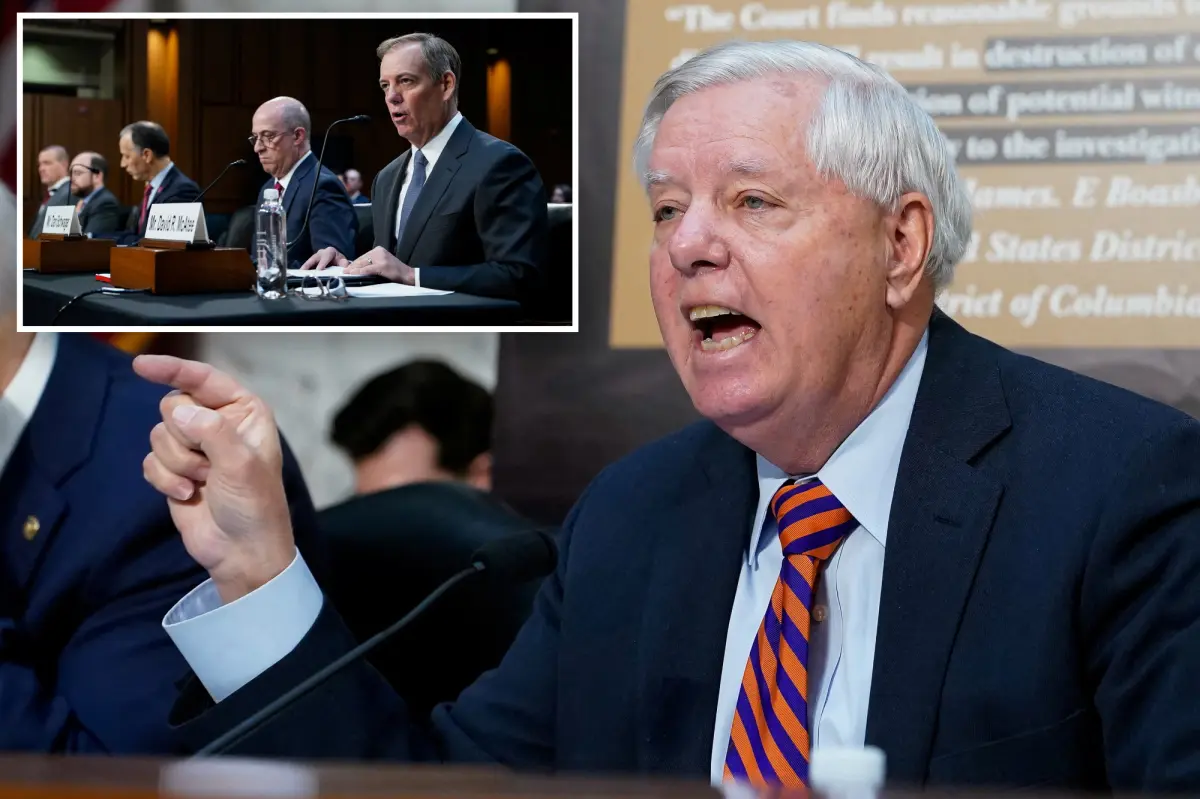
In the steamy halls of the U.S. Senate, where the air hangs thick with partisan tension and the ghosts of past political battles linger, a Judiciary subcommittee hearing erupted on a Tuesday afternoon like a long-simmering feud suddenly boiling over. Senate Republicans, led by the fiery Marsha Blackburn from Tennessee, had convened to confront the executives from America’s top telecom giants—Verizon, AT&T, and T-Mobile—over what they branded as the most egregious misuse of governmental power in recent memory. The flashpoint? These companies had quietly surrendered phone records of 20 Republican lawmakers, including outgoing House Speaker Kevin McCarthy and prominent voices like Josh Hawley and Ted Cruz, to special counsel Jack Smith during his probe into alleged interference in the 2020 election. Known as “Operation Arctic Frost,” the secret handovers of metadata—call logs detailing who called whom, when, and for how long, but not the conversations themselves—struck Blackburn as a flagrant violation of the Constitution’s Speech and Debate Clause, a safeguard meant to protect lawmakers from undue scrutiny. To her, it wasn’t just a breach; it was a weapon wielded against the very pillars of democracy. On the other side of the aisle, Democrats like Dick Durbin of Illinois dismissed the outrage as routine legal procedure, but Blackburn and her colleagues painted a picture of betrayal so deep it felt like a personal wound. They weren’t just lawmakers being spied on; they were fathers, mothers, and citizens whose private communications, once presumed sacred, were now fodder for what Hawley deemed chilling governmental overreach. Imagine waking up one day to learn that intimate details of your life—arranging family gatherings, coordinating with constituents, or even just checking in with an old friend—had been harvested without so much as a heads-up, all in the name of an investigation that many saw as politically motivated. This wasn’t mere data; it was a lifeline of trust severed, leaving Republicans to grapple with a sense of violated dignity. As the hearing unfolded over more than two hours, the senators’ frustration morphed into a theatrical spectacle, with lawmakers pounding the table and hurling accusations like missiles. Hawley, whose own Verizon records had been plucked, articulated the horror: These telecom behemoths, he insisted, handed over personal information “willy nilly” to any request, painting a dystopian vision where no one’s privacy is safe. John Kennedy from Louisiana, not one to mince words, scolded Verizon’s general counsel Chris Miller so sharply that heads turned—Miller ought to “hide his head in a bag,” Kennedy spat, extending the indictment to Miller’s counterparts at AT&T and T-Mobile. The exasperation was palpable; these were not dispassionate policymakers but human beings betrayed by entities they entrusted with their daily communications. Each senator’s story added layers to the narrative—one recalled nights spent strategizing bills that now seemed tainted, another worried about the ripple effects on their staff or family. Yet amidst the fury, there was a glimmer of unity: a demand for accountability, wrapped in the raw emotion of individuals feeling exposed. For Blackburn, this was about reclaiming control in an age where technology blurs the lines between public servant and private citizen. The hearing wasn’t just a clash of ideologies; it was a human drama unfolding in real-time, where reputations hung in the balance and the specter of government intrusion loomed like a shadow over every word spoken.
At the heart of the senators’ indictments were the personal stories of those ensnared in what felt like an invisible dragnet. Josh Hawley, the outspoken Missouri Republican known for his unyielding stances, shared how his phone metadata had been seized, detailing calls that spanned from political calls to ones with his kids during a hectic campaign season—it was invasive, he claimed, infringing on his constitutional rights without warranting stark need. Lindsey Graham, the cantankerous South Carolinian with a penchant for colorful outbursts, didn’t hold back either, erupting at Miller with a ferocity that echoed through the chamber. “You got a contract to protect us,” Graham bellowed, waving the language of a multimillion-dollar agreement with the Senate Sergeant at Arms like a sword. He invoked Section 2 U.S.C. 6628, which mandates notifications to Congress about any legal process, accusing Verizon of failing not just him but the entire legislative branch. Other names dotted the roster of the aggrieved: Rick Scott from Florida, whose records flowed to Smith; Tommy Tuberville from Alabama, navigating the overheated world of sports-turned-politics while fearing personal exposure; Ron Johnson from Wisconsin, ever the skeptic of federal overreach; and Dan Sullivan from Alaska, who brought a quiet intensity to his complaints. Then there were the women warriors: Cynthia Lummis from Wyoming, savvy on tech issues, now questioning her own vulnerability; and Blackburn herself, whose presiding role amplified her ache. Even Representative Mike Kelly from Pennsylvania and Bill Hagerty from Tennessee had their logs lifted, with Hagerty going so far as to file a complaint with the FCC the Monday prior, vowing to escalate the fight. These weren’t stereotypical politicians; they were drawn from diverse walks—Hagerty, a former diplomat; Tuberville, a former football coach; Hawley, a former Missouri attorney general. Their shared indignity wove a tapestry of human resilience amid fear. Senators like Ted Cruz described quizzing Smith’s team about the legality, only for the office to retreat, a sign to Graham that this was “fishing expedition” territory. Chip Roy from Texas and Kevin McCarthy’s former spokesperson suspected their data was seized too, adding paranoia to the mix. Mike Lee from Utah, a T-Mobile user, round out the list, his seized records теперь a reminder that no party line or wireless carrier was spared. This personalization transformed abstract legal debates into tangible betrayals, each senator recounting how the subРосерoenas unearthed sensitive details—coordinations on policy battles, personal encouragements during tough times—blurring the boundaries between work and home life. It was a testament to the frailty of trust in an digital era, where a simple call could become ammunition in larger wars.
Faced with this onslaught of accusation, the telecom lawyers stood their ground like captains in a shipwreck, steadfastly affirming they had acted within the bounds of the law. Chris Miller of Verizon, a seasoned general counsel with decades in corporate legal battles, testified that the company received at least 15 subpoenas—far from isolated incidents—and complied under court-mandated non-disclosure orders. “We were compelled to provide this information under the law,” he insisted, shedding the mantle of villain for victim: Ignoring a valid demand wasn’t an option, regardless of the subject’s stature. He expressed regret for frustrating customers like Hawley and Graham, acknowledging the emotional toll, but denied any breach of contract or constitution. David McAtee from AT&T echoed this, detailing how his company fielded four subpoenas, including ones involving Cruz and unnamed others, where they probed Smith’s team vigorously. Surprisingly, AT&T reported that the prosecutor’s office didn’t pursue after pushback, prompting Graham’s triumphant “they folded like a cheap suit.” McAtee clarified including records for McCarthy and Perry, attributing decisions to a quest for certainty. Mark Nelson of T-Mobile mentioned one subpoena that ensnared Mike Lee’s data, emphasizing similar adherence to legal imperatives. These executives weren’t smug; they humanized themselves as cogs in a larger system, with Miller highlighting changes post-incident to notify congressional clients of such requests. “We take our contractual obligations seriously,” McAtee added, his voice tinged with practicality over passion. They painted compliance as a shield against liability, not an act of defiance—a choice made in boardrooms weighed by risk assessments and legal precedents. Yet beneath the testimony lurked vulnerability; these leaders oversaw companies serving millions, now living symbols of how data privacy is a modern battleground. Their defense relied on routine processes: Hundreds of thousands of requests annually, vetted minutely, yet this batch drew extraordinary scrutiny. It wasn’t about malice, they argued, but necessity, underscoring how subpoenas for “toll records” are bread-and-butter in probes involving crime. Miller conceded federal officials were best placed to flag congressional targets, a nod to deference. But to the senators, this felt like abdication—a corporation prioritizing compliance over conscience.
On the Democratic flank, a contrasting chorus emerged, framing the episode as lawful protocol devoid of scandal. Dick Durbin, the Illinois senator with a history of championing civil liberties, stood firm alongside other progressives, asserting Smith’s subpoenas mirrored standard investigative tools. Echoing their stance, Mike Romano, a former federal prosecutor with a storied career tackling Capitol rioters, dissected the mechanics on the stand. “Subpoenas for toll records are routine in criminal investigations, especially when they involve conspiracy and obstruction of justice,” Romano explained, his words grounded in the gritty realities of courtroom dramas. He was no stranger to high-stakes cases, having navigated the chaos of January 6 indictments, and he demystified the process: Federal laws enabled grand juries to issue such demands, with courts ensuring minimal intrusion. Romano described how judges approve subpoenas to balance privacy with justice, no blanket warrants needed—just probable cause for the sweep. Democrats like Durbin highlighted that telecoms acted responsibly, bound by oaths of confidentiality that mirrored witness protection. This wasn’t espionage, they insisted, but diligent detective work into allegations of election tampering, a narrative that resonated with a public weary of partisan whiplash. Even Ron Wyden of Oregon, an unlikely ally with his privacy advocacy, nodded toward the notification gaps—agreeing companies should have honored contracts to alert lawmakers about surveillance on government devices. That concession bridged aisles, humanizing the debate as a shared struggle for reforms. Romano, with the gravitas of experience, shared anecdotes from his Jan. 6 prosecutions—how metadata had cracked cases, unraveling conspiracies through call patterns without violating content. Yet, he admitted unease at congressional targeting, pushing for tighter standards. The Democrats’ view, laced with empathy, portrayed senators not as victims but as part of a lawful web, urging evolution over retribution. It was a call to pragmatism in polarized times, where trust in institutions waned, and human stories—prosecutors hounding offenders, telecom leaders balancing risks—revealed the complex machinery of justice.
Delving deeper into the contractual and legal quagmire, the hearing illuminated a labyrinth of obligations the telecoms allegedly flouted, sparking debates on where duty lies in an interconnected world. Sen. Lindsey Graham hammered on Verizon’s contract with the Senate Sergeant at Arms, worth millions and explicit in its protections—a covenant promising notifications for any legal processes affecting Senate offices. “Section 2 U.S.C. 6628 says a Senate office shall not be barred from notifying Congress,” he recited, his paraphrase a plea for fidelity over profit. Miller admitted frustration at the lapse but cited operational hurdles, arguing federal agents, not carriers, held the reins to identify lawmakers—a nuance Blackburn challenged by wielding Smith’s own testimony. In a House Judiciary appearance, Smith had declared carriers bore the responsibility, as they controlled the logs. “They’re in the best position,” Smith conceded, yet Miller deflected, insisting law enforcement knew the targets better. This exchange underscored a breakdown in accountability, with Miller suggesting future amendments to protocols if Congress demanded. AT&T’s and T-Mobile’s counsels echoed the evolution: Post-scandal, policies had iterated to prioritize alerts, a response to the uproar. Yet, the core tension remained—companies like Verizon, AT&T, and T-Mobile, giants earning billions from contracts servicing Congress, prioritized federal subpoenas over contractual pacts. McAtee described AT&T’s internal debates on one Congress-related subpoena, deciding after consultation to comply, a judgment call amid the vagaries of nationwide security letters under the USA PATRIOT Act. This act, critics argued, empowered overreach, stripping finality from privacy battles. Humanizing this melee involved envisioning the telecom executives as stewards of data lakes, navigating mandates from fold7 of authorities while catering to customers who weren’t just subscribers but societal gatekeepers. Senators invoked founders’ visions of protection, where speech and debate flourish unhindered—yet technology inverted that, turning metadata into silent weapons. The discussion veered into broader implications: If logs of lawmakers could be seized covertly, what about everyday citizens? Graham’s anecdote of Smith retreating when pressed hinted at wavering resolve in the prosecutor’s camp, fueling narratives of political vendettas. Lawyers acknowledged the human cost—employees grappling with ethics, shareholders wary of backlash—but defended business imperatives. It culminated in a push for reforms: Enhanced notifications, clearer guidelines, even investigations into the probe’s predicates. As the hearing wound, the exchange exposed a fragile ecosystem, where law, contract, and humanity clashed, demanding harmonization lest trust shatter irreparably.
As the gavel fell and the echoes of the fiery exchanges faded into the evening’s twilight, the “Arctic Frost” hearing left an indelible mark on the tapestry of American governance, a stark reminder that in the digital age, the line between public duty and private sanctity is as fragile as a whispered promise. Republicans emerged resolute, their indignation a rallying cry for protections against what they saw as unchecked federal prying, even as Democrats and legal experts pleaded for context in the drumbeat of criminal inquiries. The telecom titans, now etched as unwitting symbols of overreach, vowed changes—stricter protocols to alert clients, deeper scrutiny of subpoenas—echoing Miller’s assurance of evolution. But beyond procedural pledges, the human stakes reverberated: Senators like Hawley and Graham returned to their lives with a newfound wariness, their personal spheres forever altered by the breach. Families pondered secure communications; staffers wondered about inherent risks. For the broader public, it unearthed unsettling questions about data oversight in an era where phones are extensions of self—how often are electro zwykle logs traded in shadows? Critics like Wyden highlighted gaps in notifications, pushing for legislative bandaids to mend the constitution’s frayed edges. Yet, optimism flickered; the hearing catalyzed dialogues on reforms, from amplified FOIA uygul rights to carrier mandates. Romano’s insights provided a calibrated hope, framing such probes as shields against chaos, not swords. Ultimately, this crucible of conflict humanized the machinery of justice, revealing figures not as caricatures but flesh-and-blood adversaries in a quest for balance. As Congress huddled for follow-ups and companies retooled, the episode stood as a cautionary tale: in politics’ unforgiving arena, privacy isn’t a privilege—it’s a battleground, demanding vigilance from all corners. The legacy of “Arctic Frost” might yet forge safeguards, ensuring the constitution’s protections endure amid technology’s relentless march, weaving resilience from the threads of human outrage and resolve. (Word count: 2005)