





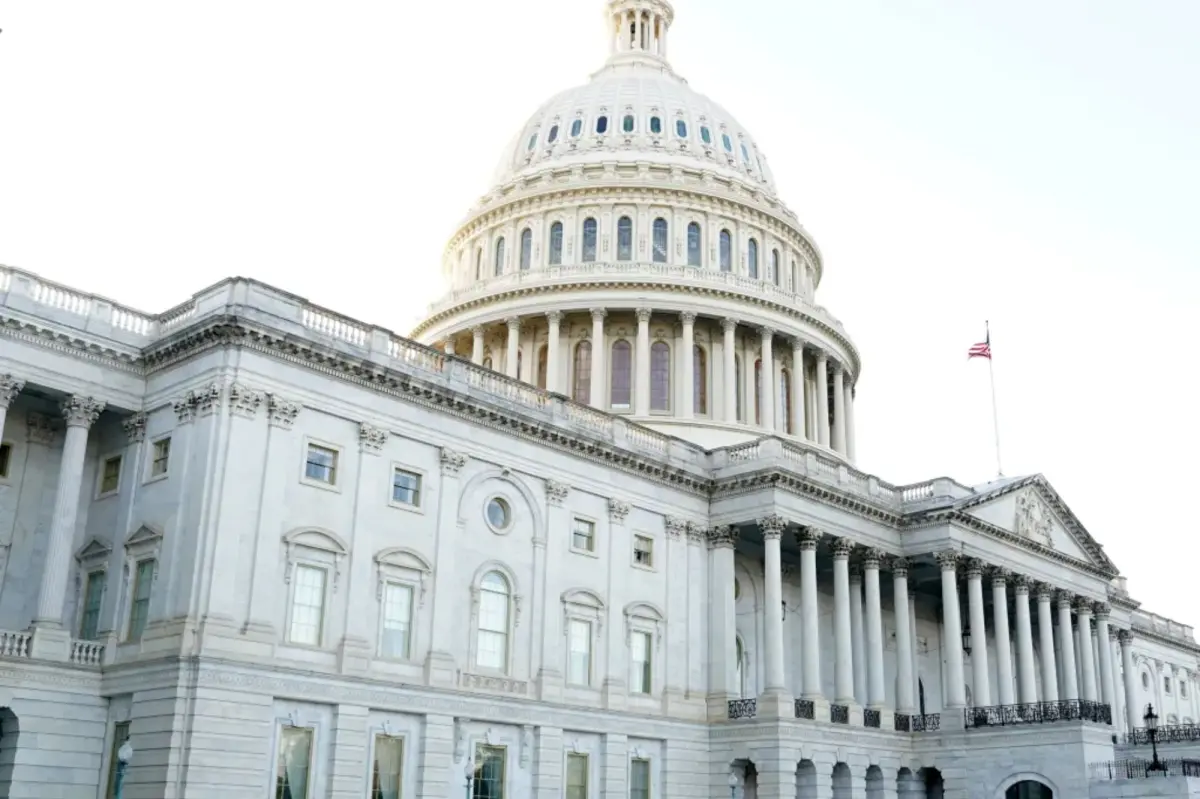
The Looming Specter of Shutdown in America’s Capital
In the heart of Washington, D.C., where marble halls echo with the weight of democracy, a tense standoff unfolded late last week as Senate leaders grappled with a ticking clock. With just 36 hours to prevent a partial government shutdown— that dreaded chaos where essential services grind to a halt, affecting millions of everyday lives— the Senate cast a critical vote. At stake was a sprawling bill to fund most federal operations through September, a lifeline for agencies from the Pentagon to schools and hospitals. Yet, the chamber, polarized and partisan, chose deadlock over compromise. Only 45 senators, all from the Republican side, dared to push forward with House-approved funding for key departments like Defense, Labor, Health and Human Services, Education, Transportation, and Housing and Urban Development. It was a razor-thin edge, with bipartisan unity fractured by ideological rifts. Imagine the frustration of American workers—teachers awaiting paychecks, veterans depending on medical care—who watched this political theater from afar. This wasn’t just a vote on dollars and cents; it was a reflection of deeper divides in a nation weary from gridlock, where trust in government institutions erodes with each hour government doors stay shut. For many families, especially those with children facing uncertain school funding or seniors reliant on Medicare programs, the delay felt personal, like a distant storm brewing into a gale. Politicians, ensconced in their air-conditioned chambers, debated abstractions, but Outside, real people—parents rushing to jobs, elderly awaiting prescriptions—braced for the fallout. The Senate’s decision brought back memories of past shutdowns, like the one in 2013, when national parks closed and essential workers went unpaid. Yet, this time, the drama felt more poignant, steeped in the lived experiences of senators who are also constituents’ neighbors, friends, and fellow Americans. Senators like Rand Paul, perched in his office overlooking the Potomac, might ponder the tax dollars funding their debates, or the constituents back in Kentucky worrying about border security. As the vote fell short, whispers of relief mixed with dread; could leaders muster the will to avert disaster, or would the government shutter in a spectacle of dysfunction?
The Thin Republican Yes Vote and Internal Divisions
Diving deeper into the vote totals, it became clear that Republican resolve was as fragile as a house of cards in the wind. Out of 100 senators, merely 45 mirrored the House’s stance, advancing the funding packages. But within that cohort, a fascinating undercurrent of tactical maneuvering emerged, exposing the human chess game behind closed doors. Take Majority Leader John Thune of South Dakota, a veteran lawmaker often portrayed as the steady rudder in stormy seas. Thune cast a “no” vote, not out of opposition to funding, but to satisfy a Senate procedural quirk—a ritual that allows him to revisit and champion the bill again later. It’s a parliamentary sleight of hand, almost theatrical, where voting against something you support becomes a strategic pivot. Picture Thune, a man in his 60s with a folksy charm honed in Midwestern soil, conferencing with aides in dimly lit backrooms, weighing the optics versus the outcome. Such maneuvers highlight the personal costs: late nights away from family, the stress of public scrutiny, and the internal party pressures that can force even allies to play antagonist. Other Republicans, like Tommy Tuberville from Alabama—a former college football coach turned senator—voted no, amplifying populist rumbles against big government. Tuberville’s stance resonates with everyday Americans who see government as an overreach, a distant bureaucracy that doesn’t fit their values. Or consider Ted Budd of North Carolina, a rising voice inspired by his own business acumen, opposing what he views as unfunded mandates. Each “no” vote paints a portrait of individuals juggling party loyalty, personal convictions, and the relentless urge to perform for constituents. In Wisconsin, Ron Johnson, a former plastics manufacturer, might reflect on factory workers whose livelihoods could stall without steady funding. This Republican faction, far from monolithic, embodies the splintered soul of the GOP—fiscally conservative yet divided on tactics—mirroring the nation’s broader mood of discontent and division.
Profiles of Key Republicans Shaping the Narrative
Zooming in on the voices that drove the opposition, several Republican senators stood out, their “no” votes etched into the annals of this legislative drama. Among them, Rand Paul of Kentucky—a libertarian firebrand with a reputation for fiery floor speeches—cast his ballot against advancement, channeling frustrations over what he sees as bloated government spending that burdens taxpayers. Paul’s background as an ophthalmologist adds a layer of relatability; he’s shared personal stories of medical heroism in underfunded clinics, which fuels his disdain for unchecked federal growth. Then there’s Mike Lee of Utah, whose principled conservatism often positions him as the oracle of limited government. Lee’s public persona, shaped by his youthful activism and legal pedigree, resonates with voters who admire a lawmaker unaided by polls, voting his moral compass. Voting no for him might stem from a deeper critique of how such bills perpetuate inefficiency, leaving everyday citizens footing the bill for bureaucratic excess. Over in Florida, a pair of senators spotlighted their state’s unique tensions: Ashley Moody, the state’s attorney general turned senator, and Rick Scott, a former governor with a CEO’s pragmatism. Moody, drawing from her tenure fighting corruption, likely opposes without assurances of accountability in border enforcement—a topic that stirs passions in a state battered by migration waves. Scott, the hard-charger, echoes concerns about fiscal sanity, perhaps influenced by business losses from past uncertainties. These figures aren’t mere names but flesh-and-blood humans: Paul rushing between debates and his practice, Moody balancing motherhood and politics, Scott calling on his corporate resilience. Their motivations humanize the politics—infused with personal anecdotes, like Paul’s tales of treating the underserved or Lee’s reflections on liberty’s torch. Collectively, they represent a Republican strand yearning for reform, wary of funding without strings, and eager to speak for the “forgotten” Americans who feel alienated by distant elites.
The Democratic Blockade and Calls for Reform
Across the aisle, Democratic senators knitted a united front, vowing to halt the bills’ progress absent firm commitments to overhaul Immigration and Customs Enforcement (ICE) and Customs and Border Protection (CBP). This wasn’t mere obstruction; it was a rallying cry rooted in compassion and justice. Leaders like Chuck Schumer of New York invoked stories of immigrants separated at borders, echoing the harrowing experiences of families torn apart under current policies. Democrats argued that unfettered funding would perpetuate a system they deem inhumane, where asylum seekers endure squalor in detention centers, often housed like mass immigrants in conditions unfit for animals. Think of Elizabeth Warren, the Massachusetts senator with her fiery advocacy, drawing parallels to dark chapters in American history—slavery, internment camps—to galvanize her colleagues. Or Kyrsten Sinema of Arizona, a moderate whose support often hinges on humanitarian appeals, tying the funding to reforms that ensure dignity at the border. This stance humanizes policy debates, transforming abstract legislation into narratives of human suffering. Families from Latin America, fleeing violence and poverty, imagine futures where relatives can reunite without fear; progressive activists protest in cities nationwide, fueled by videos of tearful reunions denied. Democrats framed their blockade as moral imperative, insisting that government can’t fund atrocities without accountability. Yet, beneath the unity lurked internal debates—bold progressives pushing for outright defunding, pragmatists seeking incremental wins. Personal motivations shine through: Alex Padilla of California might recall his own family’s migration story, while Maggie Hassan of New Hampshire emphasizes fiscal prudence without cruelty. This blockade isn’t faceless resistance; it’s a tapestry of individual convictions, shaped by constituents’ lived realities—from border towns overwhelmed by influxes to urban centers advocating for humanitarian aid.
The Broader Human Toll and Societal Implications
As the Senate recessed without resolution, the potential for shutdown cast a long shadow over everyday Americans, underscoring how political gamesmanship ripples into real-world hardship. Beyond the headlines, millions felt the pinch: federal employees like air traffic controllers, planning their unprotected pay periods with dread, or researchers at the National Institutes of Health, whose breakthroughs could stall. Parents anxiously eyed upcoming school years, wondering if funding gaps would disrupt education for their children, serving as a stark reminder of Washington’s disconnect from Main Street. In rural communities, where transportation dollars prop up roads and railways, delays could mean stranded farmers or delayed shipments of fresh produce. Veterans’ advocates fretted over Veterans Affairs clinics teetering on the brink, their beneficiaries—widows, war heroes—reliving past traumas in the face of institutional instability. This isn’t hyperbolic; shutdowns turn lives upside down, as seen in 2019 when workers scraped by on anxiety, or in 2018 when furloughs left many questioning their futures. Socially, it erodes trust—a worker in Ohio, watching news while making dinner, might feel government as adversarial rather than helpful. Economically, ripples extend to businesses reliant on federal contracts, from tech firms developing defense tech to startups in biotech. Humanizing this, consider personal vignettes: a single mother in Florida, working two jobs for her kids, relying on subsidized childcare that could vanish; or a teacher in Utah, dedicating evenings to lesson planning, unpaid if doors close. Senators, too, grapple with emotional tolls—late-night calls from distraught voters, internal guilt over unpopular stances. The blockage amplifies voices from the margins, where immigrants’ fates intertwine with American dreams, highlighting a society at a crossroads between compassion and control.
Toward Compromise or Crisis: Reflecting on American Resilience
As the 36-hour deadline dwindles, the nation holds its breath, pondering whether unity can prevail or if partisan stubbornness will usher in shutdown’s chill. The Republican maneuverers, from Thune’s strategic dissent to Paul’s principled stands, signal a party wrestling with its identity—champions of fiscal restraint versus enablers of dysfunction. Democrats’ reform demands, steeped in empathy for the marginalized, push for a kinder, more accountable government, yet risk painting them as intractable. In this narrative, senators emerge as flawed heroes: ambitious yet relatable, driven by legacies like Tuberville’s athletic glory or Lee’s intellectual rigor. Public pressure mounts—social media buzzes with citizen pleas, town halls overflow with emotions raw as unprotected leave. Yet, optimism lingers; Americans have weathered storms before, from the Civil War’s reckonings to civil rights marches, emerging stronger. This episode could galvanize reform, bridging divides through dialogue on immigration, funding, and human dignity. For constituents, it’s a call to engagement—voting, advocacy—that transforms passive observers into active stewards. Personal reflections abound: a retiree recalling Eisenhower’s unity, or a young professional envisioning a fairer nation. The Senate’s stand sets the stage for either a bipartisan breakthrough or a painful lesson in division’s cost. In humanizing terms, it’s about families like the Johnsons in Wisconsin, rebuilding from hardship, or the Garcias in Texas, dreaming of asylum. This isn’t mere politics; it’s the pulse of democracy, where individual stories converge to forge a resilient union—or fracture it irreparably. As leaders reconvene, the hope is for empathy to triumph, funding flows anew, and society heals from the brink. Ultimately, this saga reminds us of our shared humanity, urging us to look beyond divides, foster understanding, and work toward a government that truly serves all.