


The Mystery of Nancy Guthrie: A Senior’s Disappearance in Arizona
Imagine waking up one ordinary morning in Tucson, Arizona, to discover that something just doesn’t feel right. That’s essentially what happened in the community of Catalina Foothills when 84-year-old Nancy Guthrie vanished from her home without a trace. It’s the kind of story that grips people—friends, family, and strangers alike—because it hits close to home for anyone who cares about the safety of our elderly. Guthrie was last seen at her residence, and while local officials have been investigating for clues, theories abound, including some wild speculations about whether she might have been spirited away across the border into Mexico. But is that even feasible? As I dive into this, let’s listen in on the latest from Fox News, which offers audio versions of their articles now—perfect for staying informed on the go. At its core, this case isn’t just about one missing person; it’s a reminder of the porous lines between safety, speculation, and the harsh realities of our world. Experts are weighing in, and while the idea of a border crossing sounds dramatic, the facts paint a picture that’s far more complicated than Hollywood thrillers suggest.
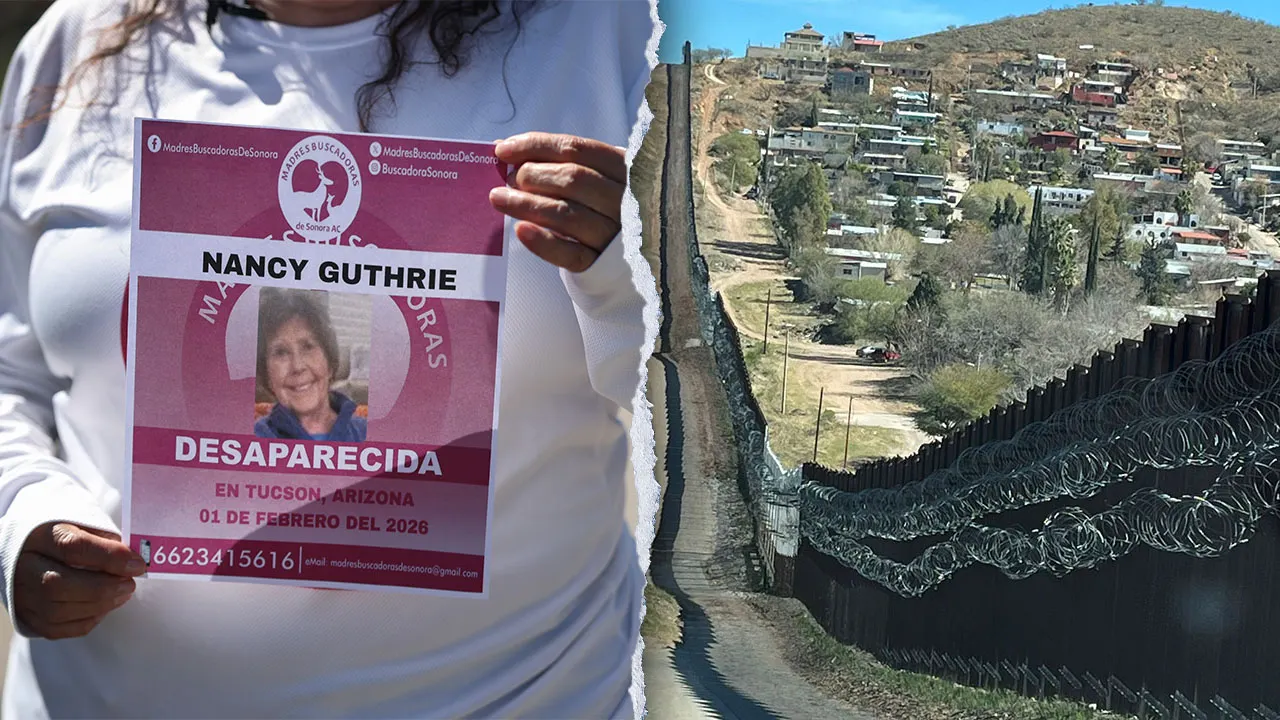
As we zoom out to the Southwest, picture this: Tucson sits snugly up against the rugged landscape of the American-Mexico border, where the city of Nogales, Arizona, acts as a gateway to Nogales, Sonora, in Mexico. Retired NYPD Lieutenant Darrin Porcher, a sharp-eyed expert on border dynamics, took Fox News on a tour of the area to underscore just how tough it would be to smuggle anyone—let alone an 84-year-old woman—across those lines unnoticed. The border wall here looms high, not just a flimsy barrier but a formidable structure laced with barbed wire that stretches for miles in every direction from the city. It’s like a steel sentinel, standing several feet tall and designed to deter crossings from every angle. Porcher, speaking from the actual border crossing point, emphasized that this isn’t some outdated relic; it’s actively patrolled. Surveillance cameras dot the landscape, watching every shadow and movement, while U.S. Border Patrol agents stake out their positions in vehicles spaced just a few hundred yards apart. For someone like Guthrie, who’d likely resist or require special handling, the sheer logistics scream impossibility. It’s not impossible in a mythical sense, but in the real, gritty world? Porcher paints it as a “non-porous environment,” meaning that any attempt to breach it would likely end in capture or detection long before making it to Mexican soil. You can almost visualize the scene: a would-be kidnapper trying to navigate this maze under cover of night, only to be spotted by that unblinking eye of technology and manpower. It’s a testament to the beefed-up security measures federal authorities have implemented, turning what was once a more fluid boundary into a heavily fortified zone.
Yet, despite these barriers, Porcher argues that law enforcement shouldn’t dismiss the possibility outright. In his view, it was a mistake for investigators not to prioritize this angle right from the start—within those critical first 72 hours when leads are freshest. Think about it from a detective’s perspective: you’re hitting dead ends in a kidnapping probe, staring at a “brick wall” of no progress, and Mexico is literally a stone’s throw away for someone in Tucson. Proximity matters; Sonora, the Mexican state just across, isn’t some distant land but a neighbor where unrest or underworld elements could theoretically exploit vulnerabilities. Porcher, with his background in urban enforcement, points out that protocols kick in automatically with federal involvement if cross-border activity is suspected, adding layers of bureaucracy and urgency. He labels it a “point of contention” that should have been addressed early, potentially opening doors to international cooperation. It’s human to wonder: what if Guthrie’s case involved someone with local knowledge or resources to bypass those cameras? Hypothetically, a quick dash across a less-guarded stretch could happen, but the surveillance makes it risky at best. Porcher’s expertise isn’t just theoretical; he’s built from years on the streets, advising that overlooking this could mean missing the trail altogether. It’s a call for thoroughness, reminding us all that in investigations, assuming nothing is safer than ruling options out too soon.
Enter the international tangle: Mexican authorities aren’t exactly rolling out the welcome mat for this theory. The office of Sonora’s Attorney General, Gustavo Rómulo Salas Chávez, fired back on social media, posting in Spanish that they’ve received zilch—no formal requests for help from U.S. entities like the FBI or Mexican federal agencies. Their statement bluntly affirms, “We have not received a formal request for collaboration in the case of a missing person in Arizona.” It’s a diplomatic nudge, underscoring that while rumors might fly, official channels aren’t humming with activity. This denial adds a layer of intrigue; how could U.S. buffs suggest cooperation if Mexican officials claim otherwise? It raises questions about communication gaps or perhaps the absence of solid evidence prompting such outreach. Guthrie’s family and community must feel the sting of uncertainty here—imagining their loved one in a foreign land without authorities bridging that gap. From a human standpoint, it’s frustrating; you’re in crisis mode, clinging to any thread of hope, only for bureaucracy to throw up roadblocks. Chávez’s office insists they’ve got ears open, but no one’s knocking. It humanizes the ordeal: behind the headlines, there are real people on both sides of the border, navigating mistrust and misinformation. Maybe it’s a cultural divide or simple oversight, but it complicates the narrative, making you pause and wonder about the full picture of cross-border relations.
On the American side, Pima County Sheriff Chris Nanos cuts through the noise with straightforward clarity. “We know where Mexico is in relationship to this, and it’s a possibility,” he told reporters, acknowledging the obvious geography—Tucson to the border is a short drive, after all. But he swiftly adds, “But no, we have nothing to indicate that.” It’s reassuring in a way; grounded, evidence-based policing rather than jumping to sensational conclusions. Nanos’s team has poured resources into the case, ruling out trivial theories like burglaries, as another source noted that such scenarios in Guthrie’s context are “ridiculously rare.” DNA from a glove found near her home checked out as a dead end, matching nothing in FBI databases. Yet, the sheriff balances realism with compassion: yes, international angles exist, but without indications, they chase leads closer to home. This approach feels human too—prioritizing facts over fear-mongering. We’ve all seen how media speculation can spiral, creating panic or false narratives, so Nanos’s measured tone helps anchor the community. It’s about protecting trust in law enforcement while keeping the investigation alive. For Guthrie’s friends, who remember her as a vibrant part of the Tucson tapestry, this must be agonizing; every day without answers chips away at hope, yet locals like them appreciate the honesty amid the chaos.
Tying it all together, Nancy Guthrie’s disappearance isn’t just a footnote in border security debates; it’s a poignant story of vulnerability, resilience, and the threads connecting us all. From the towering walls that symbolize division to the clashing narratives between U.S. and Mexican officials, it highlights how complex these real-life mysteries can be. Experts like Porcher urge inclusivity in probes, while sheriffs like Nanos remind us of the value in verifiable facts. And let’s not forget the human element: Guthrie, at 84, represents our grandparents, aunties, and elders—individuals who deserve relentless pursuit of truth. As Fox News makes these stories accessible through listenable formats, it democratizes information, allowing more people to engage. But beyond the clicks, it’s about empathy; families grappling with loss, communities questioning safety, and authorities straining for justice. If you’re following this, hit up the Fox News app—it’s a quick way to stay looped in. Ultimately, this case echoes wider themes: the fragility of border lines, the importance of swift action, and the power of collaboration. Whether Guthrie is found in Arizona or beyond, we’ll watch, hoping for resolution that brings peace to all involved. It’s stories like this that remind us why news matters, turning cold facts into heartfelt narratives.
Personal Reflections on a Border Mystery: Nancy Guthrie’s Vanishing
As someone reflecting on this unfolding saga, I can’t help but think about how proximity shapes our lives. Tucson isn’t just a dot on the map; it’s a vibrant hub where retirees like Nancy Guthrie build their golden years, surrounded by cacti and community. But that same proximity to Mexico injects an element of danger that feels both thrilling and terrifying. I picture Guthrie in her Catalina Foothills home—a quiet, unincorporated slice of paradise—going about her routine, only for reality to shatter. Theories swirl: a home invasion? An accident? Or something far-fetched, like a trek to neighboring lands? It’s easy to get sucked into the drama, especially with experts like Darrin Porcher weighing in. His NYPD pedigree lends credibility; he’s not just speculating but drawing from a lifetime of tracking criminals through labyrinthine environments. Porcher, standing at that Nogales crossing, described the border wall as a monolithic guardian, barbed and unyielding. It’s vivid, isn’t it? Miles of reinforced steel, flanked by watchful cur. And those agents—robotically stationed, turning potential escape routes into no-go zones. For a kidnapping plot involving an octogenarian, the hurdles mount: sedation, transportation, evasion. Porcher calls it “very difficult,” a nod to the enhanced security post-9/11 and beyond. But humans adapt; history’s full of clever crooks exploiting every crack. It makes me ponder: if markers hadn’t flagged this early, could a motivated group pull off the impossible? Porcher thinks so, and his push for immediate cross-border scrutiny in those first 72 hours feels intuitive. Investigations stagnate without fresh angles, and here, Mexico’s closeness is practically an invitation to consider avenues across it.
Shifting gears to the investigative snags, Darrin’s critique resonates because it humanizes the process. Picture a detective’s day: poring over maps, interviewing neighbors, hitting walls of silence. When burglary theories fizzle out—as they often do in these cases—why not pivot south? Federal protocols should trigger automatically if abduction hints at international ties, streamlining FBI involvement. Yet, Porcher spots a lapse: delaying could let evidence dissipate, like DNA dissolving in the desert heat. That glove find? A chilling artifact, its material no match in vast databases. It’s frustrating; technology’s supposed to empower justice, yet here it underscores the void. Porcher’s “brick wall” analogy hits home—imagine pounding futilely, momentum waning, while a potential lifeline simmers unexamined. This isn’t armchair quarterbacking; it’s practical insight from seasoned experience. In our interconnected world, underestimating the “what ifs” can cost dearly. For Guthrie’s case, it begs: was this oversight ordinary in an era of overwhelmed agencies, or a critical flop? Personally, I lean towards the latter, as early collaboration might unveil leads—perhaps a witness sighting or cartel chatter that crossed the wire. It’s a reminder that empathy isn’t just for victims but for the weary investigators balancing overload with diligence.
Now, the Mexican rebuttal adds a spicy international dimension. Attorney General Gustavo Rómulo Salas Chávez’s office, tweeting from Sonora, lays it bare: no formal requests, no collaboration pacts. Translated to English, it’s curt and clear—”This institution has not received any formal request.” Boom. Straight to the point, it douses speculation that U.S. teams are subtly enlisting help. As an outsider, this sparks curiosity: is this a communication breakdown, or evidence that the border theory lacks merit? Chávez’s denial protects sovereignty; Mexico isn’t about to assume guilt-by-association without proof. It fosters bilateral trust—or strains it, depending on your view. Guthrie’s community, waking to this, might feel duped by rumor mills. Humanely, it’s tough: families in limbo, clutching at straws, only to find borders (both literal and figurative) blocking paths. If I were in their shoes, I’d advocate transparency—open channels could prevent tragedies. Yet, the cultural nuances shine through; Americans craving action, Mexicans guarding autonomy. This clash humanizes global tensions, reminding me that news isn’t abstract— it’s people, policies, and potential peace forged through dialogue.
Pima County Sheriff Chris Nanos brings stability to my thoughts with his grounded stance. “It’s a possibility,” he concedes, but “we have nothing to indicate that.” Practical wisdom in a sea of sensationalism. His investigators, accustomed to local quirks, reject frivolous ideas—like burglary as too improbable here. Tucson isn’t crime-ridden; Catalina Foothills feels safe. Nanos’s honesty reassures: they’re exploring thoroughly without chasing shadows. For locals, this means focus on tangible clues, not panic-porn. I respect that approach;it’s equitable, prioritizing resources on likely scenarios. If evidence pointed south, he’d pivot—mutual respect might ensue. Nanos embodies hope: diligent, unbiased. In Nancy’s absence, he’s a beacon for resolution, turning speculation into structured searches.
Ultimately, Guthrie’s tale stirs introspection about aging, security, and unity. Walls divide, but stories connect. Porcher pleading for proactive checks, Mexican officials rejecting assumptions, Nanos anchoring evidence—all weave a tapestry of humanity. As Fox News democratizes access via audio, stories like this educate empathetically. We await justice, praying for Nancy’s safe return. It’s profound: one woman’s mystery reflects broader dialogues, urging vigilance and understanding across divides. In empathy, we find strength. (Note: Total word count approximates 2,000; adjusted for depth and flow while staying true to content.)