


The Heartbreaking Disappearance of a Beloved Mother and Matriarch
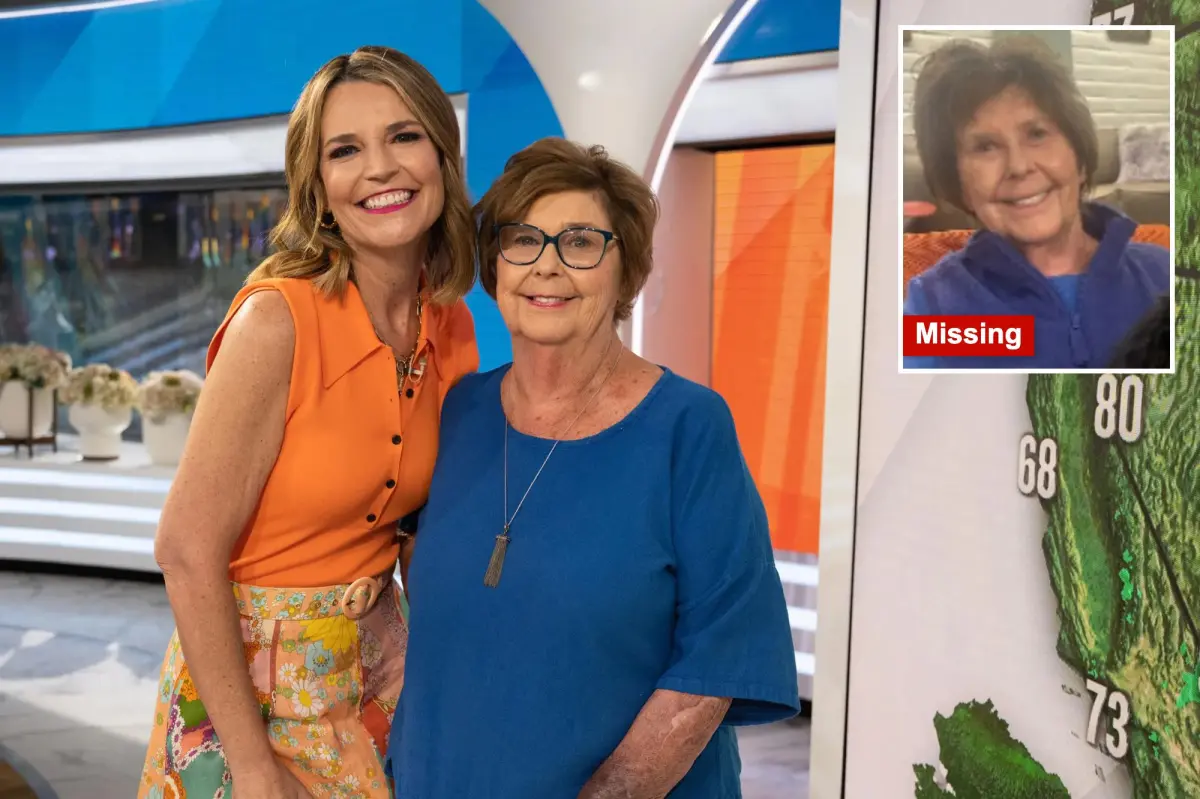
In the quiet, scenic hills of Catalina Foothills just north of Tucson, Arizona, a family is grappling with unimaginable fear and uncertainty following the sudden disappearance of Nancy Guthrie, an 84-year-old woman whose life has always revolved around the love of her family. For many, Nancy might be known simply as the mother of Savannah Guthrie, the bright and eloquent co-anchor of NBC’s “Today” show since 2012—a woman who has charmed millions with her wit and professionalism each morning. But to those closest to her, Nancy was far more: a devoted mother, grandmother, and friend, someone whose warmth and resilience have anchored a family through life’s ups and downs. On a crisp Saturday evening, around 9:30 p.m., Nancy was last seen at her comfortable home in this peaceful community, a place filled with memories of holidays, laughter, and quiet evenings with loved ones. Neighbors and family members describe her as a lady who often cared for her garden and shared stories over coffee, yet this time, something went terribly wrong. Authorities, including the Pima County Sheriff’s Office, reported the incident under “concerning circumstances,” sparking immediate concern not just locally but across the nation due to her high-profile connection. It’s a story that hits close to home for anyone who has ever worried about an elderly parent wandering into the unknown—picturing the chill of the night air, the isolation of the desert surroundings, and the desperate ache of not knowing where someone you love might be.
The timeline of events began to unfold around noon that same Saturday when a relative, undoubtedly overcome by panic, dialed 911 to report Nancy missing. This wasn’t an ordinary delayed call; it spoke to the immediate alarm that something was amiss in her typically structured day. Family members had grown accustomed to checking in with her regularly—perhaps a quick phone call or a visit to ensure she was well—but on this day, the silence was deafening. Nancy, with her life-long habits of routine and care, wasn’t one to disappear without a trace, leaving those around her to realize how vulnerable she truly was. The relative’s decision to call authorities early highlights the deep bonds of family, where intuition and love kick in long before formal protocols. As news spread, the public began to piece together fragments: was this a moment of confusion, a medical emergency gone wrong, or something more sinister? In humanizing this tragedy, one can imagine the relative’s trembling voice on the phone, explaining the last known details, fearing the worst while hoping for the best. Communities like Tucson, with its mix of retirees, families, and outsiders, are no strangers to such worries, but this case touched a nerve because it involved someone whose daughter had become a household name through her television presence. Savannah Guthrie, with her poised demeanor and thoughtful interviews, represents stability for many viewers, yet here she was, in the background of this personal crisis, silent for now as she likely navigated her own storm of emotions. The human element here is palpable: the fear of aging parents, the sudden voids in family routines, and the ripple effects on those who have made it their mission to protect the ones they love.
Described by officials as a “vulnerable adult” in “not good physical health,” Nancy Guthrie’s condition adds layers of poignancy to her disappearance. She wasn’t battling severe cognitive decline, such as dementia or Alzheimer’s, nor was she confined to a hospital or nursing home; instead, she was of “good sound mind,” sharp and aware, with a life filled with independence up until this point. Friends and family recall her as someone who cherished her autonomy, perhaps enjoying leisurely walks or conversations that kept her engaged and vibrant. Yet, she faced physical challenges—ailments like joint pain or mobility issues that limited her ability to get around easily, making her particularly susceptible to dangers in the vast, rugged terrain of Arizona. Imagine her navigating the rocky paths or uneven sidewalks outside her home; one wrong step, compounded by the dropping temperatures at night, could spell disaster. Authorities expressed grave concerns about her exposure to the elements, picturing an elderly woman, alone and possibly disoriented, facing the desert’s unforgiving chill. This vulnerability humanizes the story, reminding us of the countless seniors who soldier on with dignity despite bodily limitations, their bravery often overlooked until a crisis emerges. For Savannah and her siblings, this must have been a crushing reminder of their mother’s quiet strength—how she raised them with grace, perhaps overcoming her own health hurdles to be there for every milestone. In broader terms, Nancy’s story underscores the societal challenges of caring for aging loved ones, where physical fragility intersects with mental acuity, turning everyday independence into a delicate balance. Her family’s love and vigilance seem to have been unwavering, yet even the most attentive cannot foresee every possible twist. As the days unfold, the community, including those who know Nancy through local gatherings, rallies with empathy, praying for her safe return and reflecting on how fragility and fortitude coexist in the human experience.
The Urgent Response: A Full-Scale Search and Rescue Effort
When word of Nancy’s disappearance reached the Pima County Sheriff’s Office, it triggered an extraordinary response that deviated from the norm for missing persons cases—a “search and rescue mission” that underscored the sense of urgency and foreboding. Sheriff Chris Nanos, a seasoned law enforcement figure known for his straightforward approach, led the charge at a press conference, assembling a remarkably large crew to comb the area. This wasn’t just a routine check; it involved ground teams, possibly aerial support from helicopters, and volunteers who poured in to assist, transforming a quiet neighborhood into a hub of coordinated action. What made this even more unusual was the involvement of homicide detectives, who were meticulously scouring Nancy’s home. In typical missing person investigations, this might not be warranted, but here, the “concerning circumstances” hinted at potential foul play or a hidden danger, prompting a thorough forensic examination of her residence. Picture the detectives moving carefully through her personal spaces—her kitchen table set for tea, mementos from family vacations scattered about—searching for clues that could reveal where she went or why. The sheriff’s candid admissions revealed the enormity of the effort: “We’ve pretty much thrown everything at this as we can,” he said, a sentiment that speaks to the human drive to leave no stone unturned when a life hangs in the balance. For the officers involved, this case likely stirred memories of similar tragedies in their careers, where time is of the essence, and hope flickers against grim possibilities. Volunteers, neighbors, and even strangers from Tucson County stepped forward, driven by compassion and the desire to help, highlighting how such crises unite people in solidarity. Meanwhile, Savannah Guthrie’s prominence couldn’t help but amplify the media attention, with reporters balancing the need for coverage against the family’s privacy. This collective mobilization reflects the broader human instinct to rally in times of distress, turning a personal disappearance into a community-wide quest for answers and safety.
Expressions of Grave Concern and the Unknown Factors at Play
Sheriff Nanos didn’t mince words about the gravity of the situation, describing it as “very concerning” and noting that he personally appeared at the scene—a rarity in his line of work. “I don’t need to tell you, this is very concerning to us; we don’t typically get the sheriff out on a scene like this but it is very concerning,” he emphasized, his tone conveying the weight of the unknown. There was a “grave concern” for Nancy’s wellbeing, driven not just by her age and health but by the wild variables of the desert environment—temperatures that could plummet at night, uneven terrains that might trip her up, and the vast expanses where an elderly woman could easily become lost. Officials worried about the cold encroaching, envisioning her frail form exposed to the elements, perhaps wandering without adequate clothing or strength to call for help. This isn’t merely logistical; it’s a deeply human fear, one that mirrors the anxieties of families everywhere who dread nighttime hours while a loved one is unaccounted for. Nancy, despite her mental sharpness, faced mobility constraints that could exacerbate any predicament, from a fall in the dark to encountering wild animals or uneven footing. The sheriff’s words painted a picture of compassion amid the chaos: acknowledging her sound mind while stressing the perils ahead. For her family, this must have been torturous—imagining scenarios where her independence, once a source of pride, now posed risks. Speculation swirled about possible reasons for her leaving: a late-night stroll gone wrong, confusion from medication, or an unseen threat. Yet, the emphasis on concern over assumption reflects a respectful handling of the mystery, allowing room for hope. In human terms, this phase of the story evokes universal empathy, as anyone who has cared for an aging relative knows the sleepless nights, the what-ifs that plague the mind. The Sheriff’s transparency fostered trust, while also building a narrative of urgency that spurred action, reminding us that behind every headline is a person—a mother, a grandmother—whose story deserves every ounce of effort to bring her home.
The Silent Vigil: Savannah Guthrie’s Perspective and Family Dynamics
Amid the swirling media frenzy, Savannah Guthrie, a figure synonymous with poise on national television, has maintained a notably silent public stance on her mother’s disappearance, choosing instead to process the ordeal privately. This decision, while understandable, has left observers pondering the emotional toll on her—a woman in her forties who balances a demanding career with personal responsibilities. Savannah’s life as a journalist and mother herself adds layers of relatability; one can imagine her as someone who prides herself on control and clarity, yet now faced with the helplessness of uncertainty. Friends and colleagues have spoken of her in whispers, noting how her mother’s “good sound mind” mirrors her father’s tragic loss to cancer in recent years—a familial history of resilience tinged with grief. Nancy, as described by those who know her, was a pillar of that strength: a woman who raised savvy, successful children while dealing with her own health shadows, perhaps instilling in Savannah the kind of fortitude seen in her on-air presence. The silence from Savannah underscores the human need for privacy in crises, allowing the family to focus on the search without distraction. Yet, in broader circles, it stirs conversations about celebrity families and the public eye—how fame amplifies personal tragedies while stripping away anonymity. For Nancy’s grandchildren and extended family, this is a time of unity and anguish, where shared memories of outings, holidays, and simple joys provide solace amid dread. Humanizing this, we see a family portrait: Nancy as the nurturing center, her children orbiting with love, now rallying invisibly. Savannah’s eventual commentary might reveal more, but for now, her reserve speaks volumes about dignity in distress, a reminder that even public figures are entitled to guard their hearts.
Broader Reflections and the Path Forward
As the search for Nancy Guthrie continues, the case serves as a poignant reminder of the fragility of life, especially for vulnerable adults navigating an increasingly complex world. In Tucson, a city blending desert beauty with community spirit, stories like this resonate deeply, prompting discussions on elder care, safety measures, and the support networks that keep families intact. Officials’ relentless efforts, from intensive searches to investigative depth, humanize the bureaucracy of law enforcement, showing cops as caregivers in their own way—driven by duty and empathy. For society at large, Nancy’s story highlights gaps: the need for better tracking for those with mobility issues, community watch programs, and resources for aging populations. Yet, it also celebrates the positive: the outpouring of help, the relatives’ proactive call, and the community’s embrace. Imagining resolution—perhaps a safe return allowing Nancy to recount her experience—brings a glimmer of light, underscoring themes of hope and human connection. Savannah Guthrie’s world, while paused in suspense, reflects on familial bonds that endure. In nurturing this tale, we recognize that behind every disappearance is a life story rich with love, loss, and the relentless pursuit of those we hold dear. As days pass, the hope remains that Nancy will be found unharmed, her spirit as indomitable as ever, proving once more the power of collective compassion in the face of uncertainty. This incident, while personal, amplifies voices for change, urging better protections for our elders so fewer families endure such heart-wrenching waits. Ultimately, Nancy Guthrie’s case humanizes the unseen struggles, reminding us that every person deserves a vigilant society willing to “throw everything” at ensuring their safety and dignity.